When to Stop Retailing a Unit
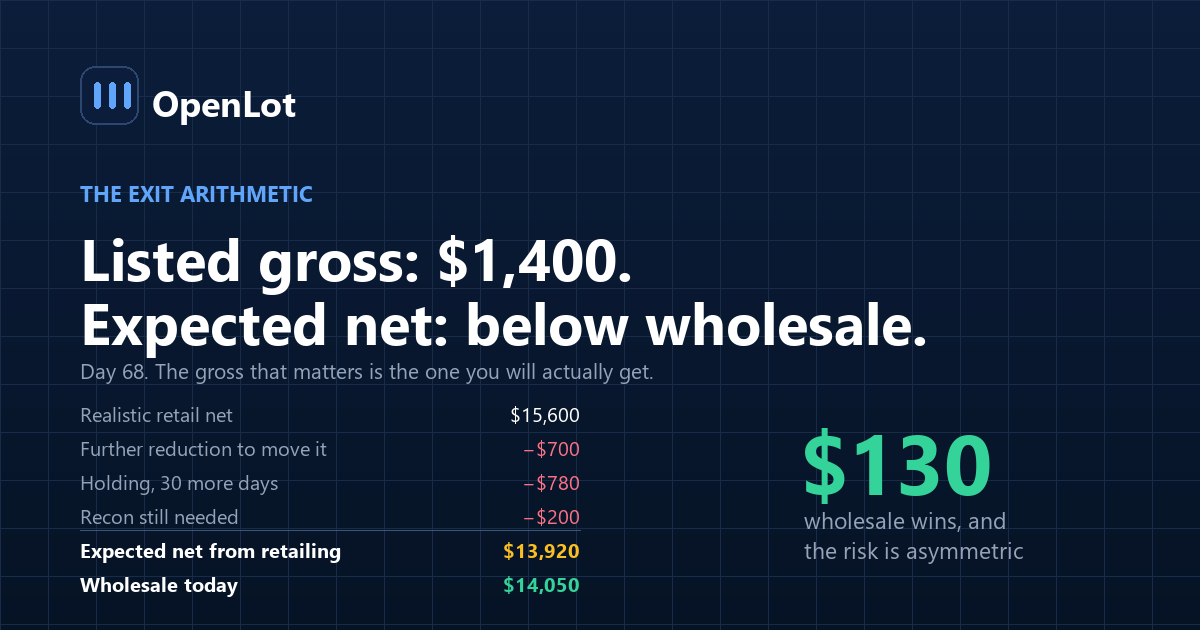
The exit decision is arithmetic, and it is usually made emotionally. The crossover point can be computed per unit in about a minute.
Read the guideData-backed guides on lead response, DMS and CRM integration, used-car turn and data security. Written for dealer principals, GMs and BDC managers who want the number, not the pitch.
The exit decision is arithmetic, and it is usually made emotionally. The crossover point can be computed per unit in about a minute.
Read the guide
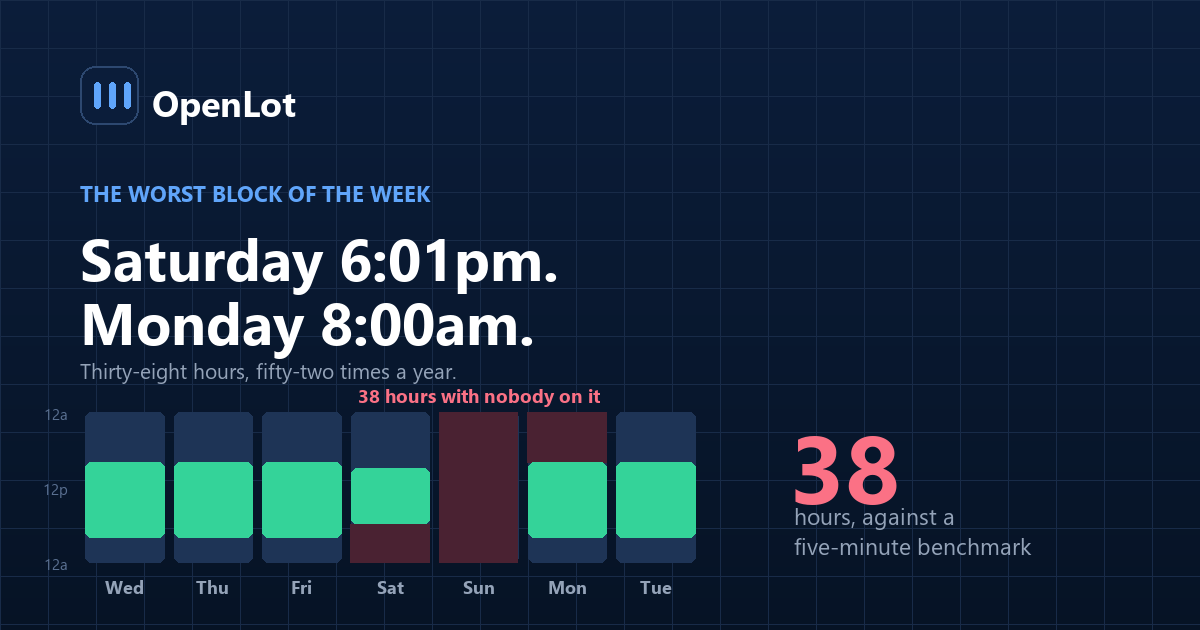
Saturday 6:01pm at a store closed Sunday means a 38-hour wait against a five-minute benchmark. It is the single longest gap in the week and almost nobody measures it separately.
Read
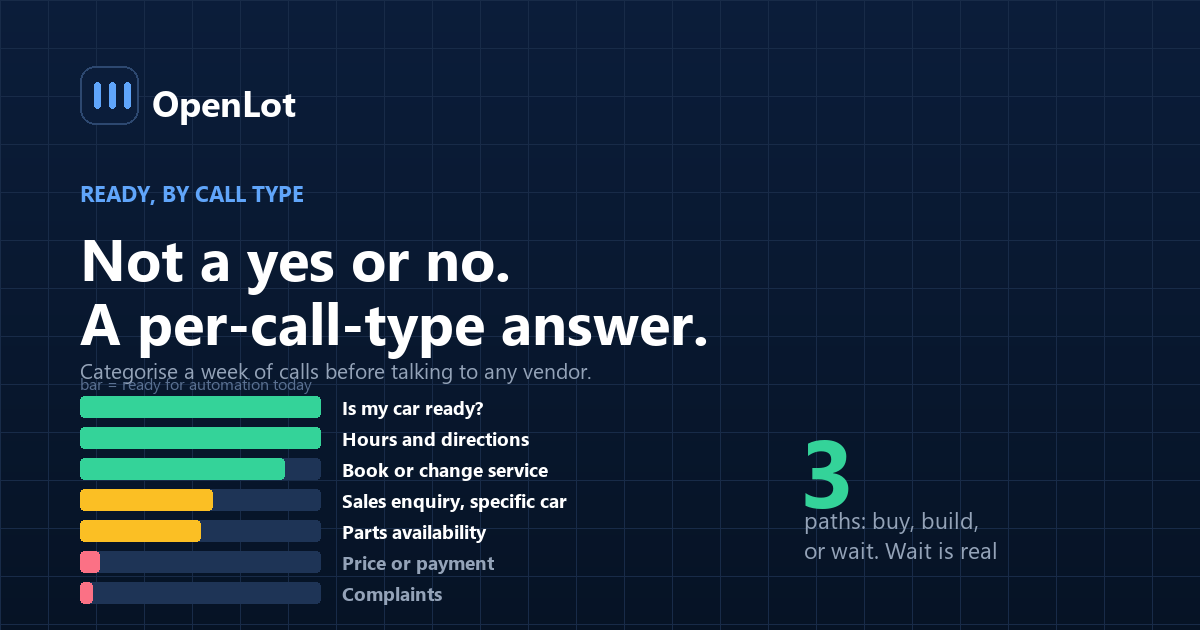
Voice is the hardest channel to automate and the one customers use when they are closest to buying. Two of the three paths are reasonable and one is usually wrong.
Read
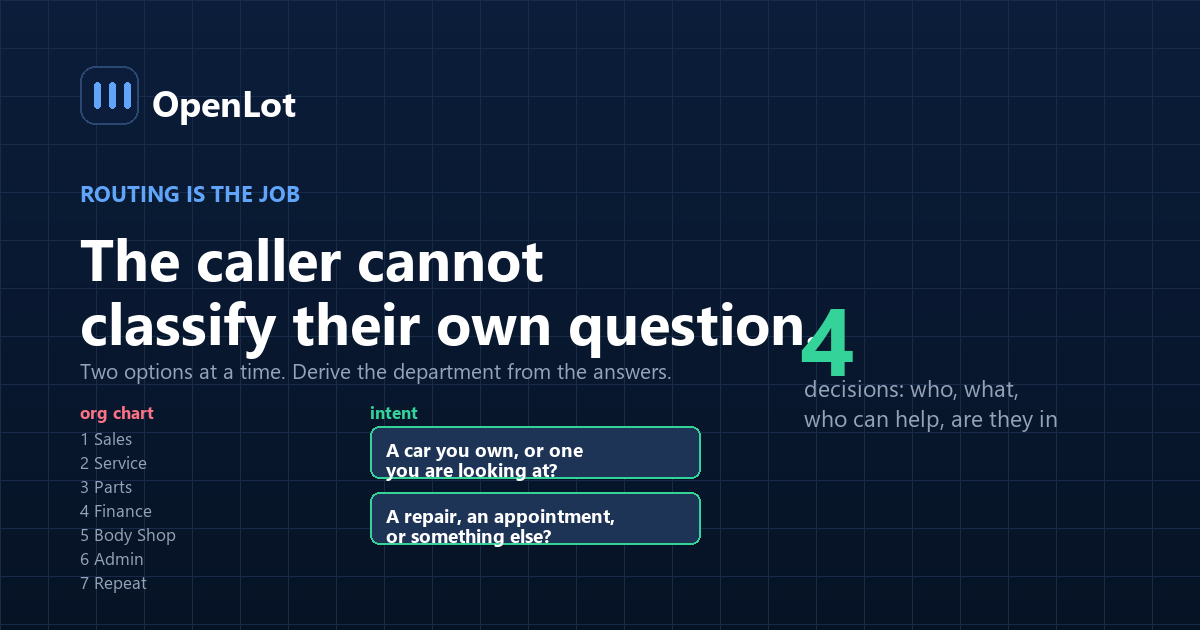
Answering is the easy part. Getting the caller to the one person who can help, first time, is the job — and most systems are organised around the wrong thing.
Read
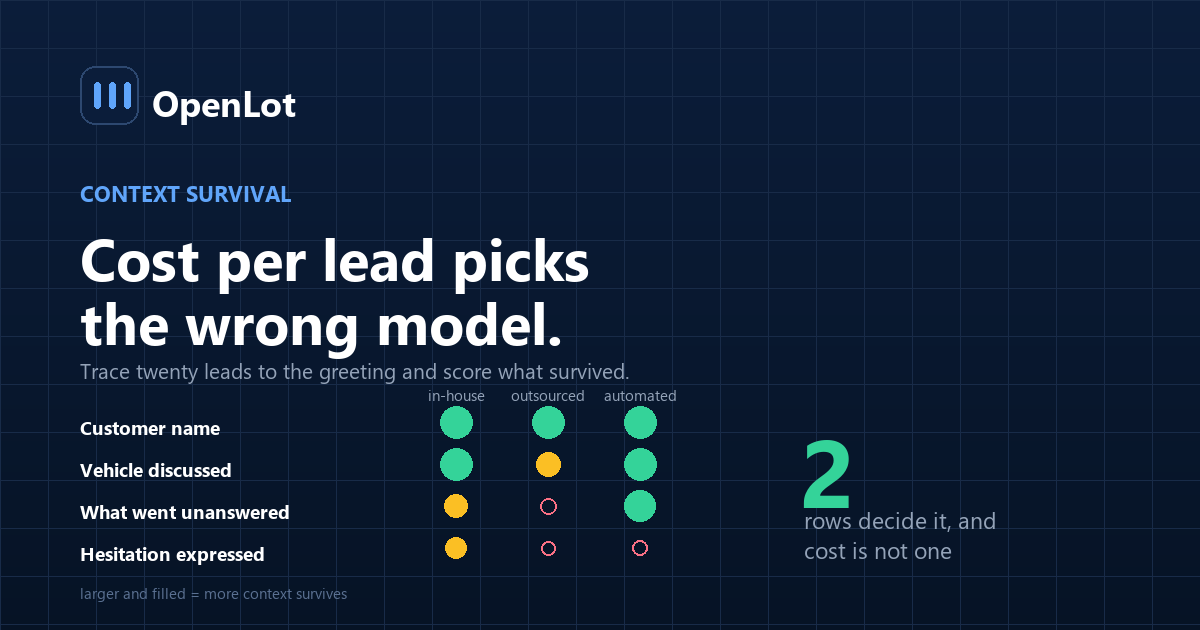
Outsourced BDCs solve coverage and create a handoff problem. The trade is real, and whether it is worth it depends on one measurement most stores skip.
Read
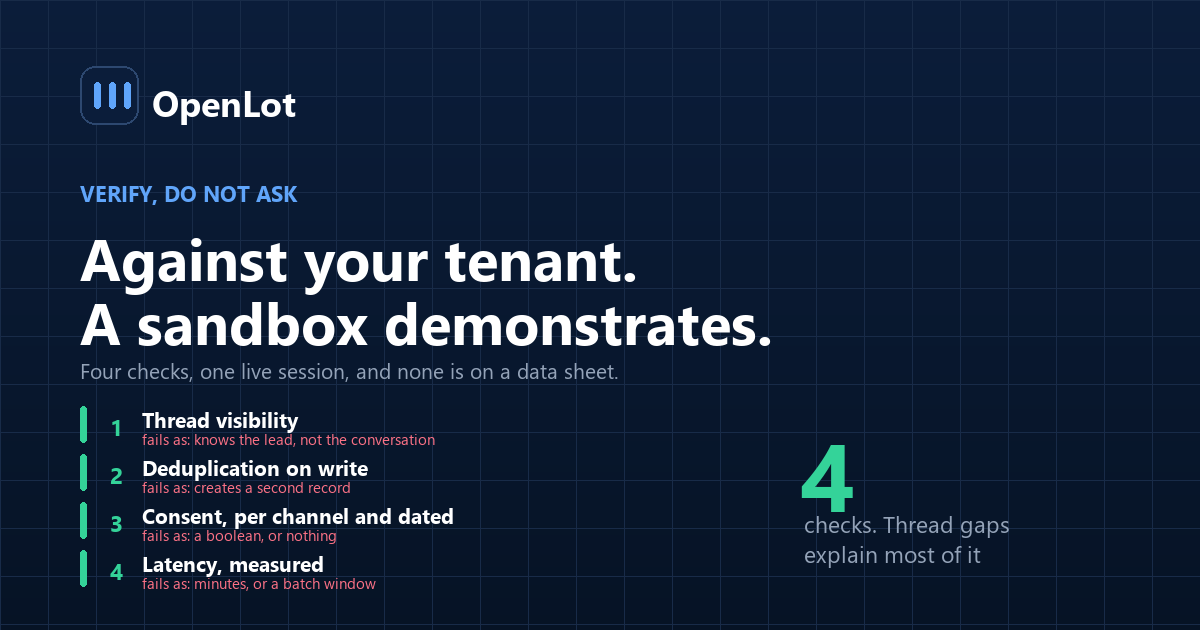
A CRM integration is judged on four things, and none of them appears in a vendor data sheet. All four can be verified in one live session.
Read
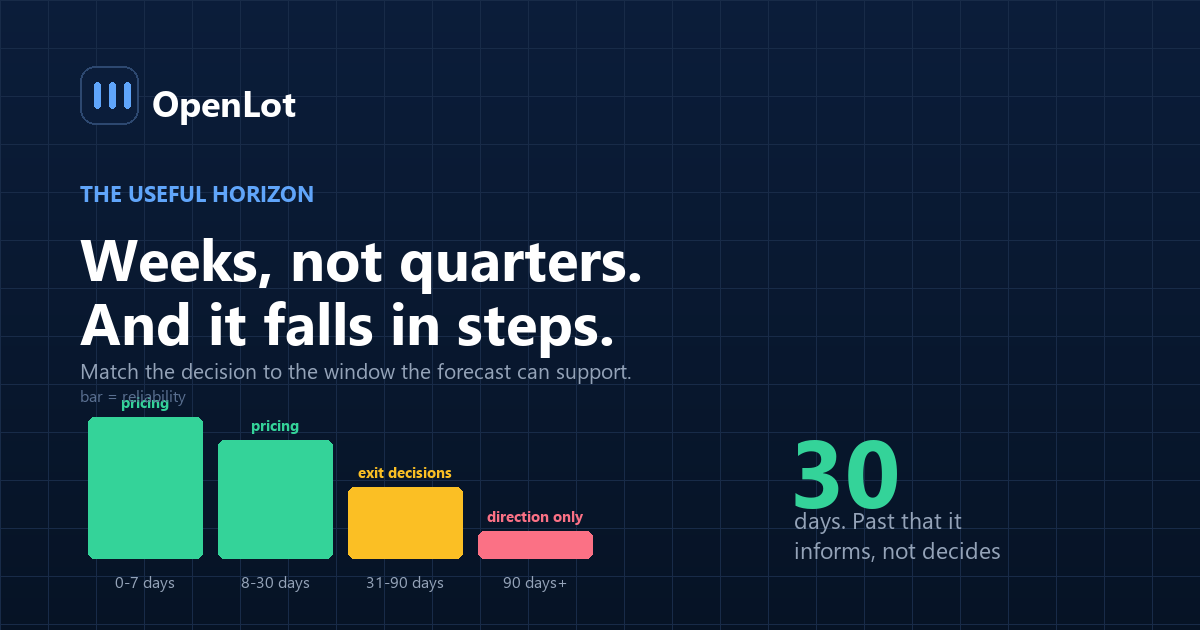
A forecast is reliable over the horizon where nothing structural changes. In used cars that is weeks, not quarters, and the decisions differ accordingly.
Read
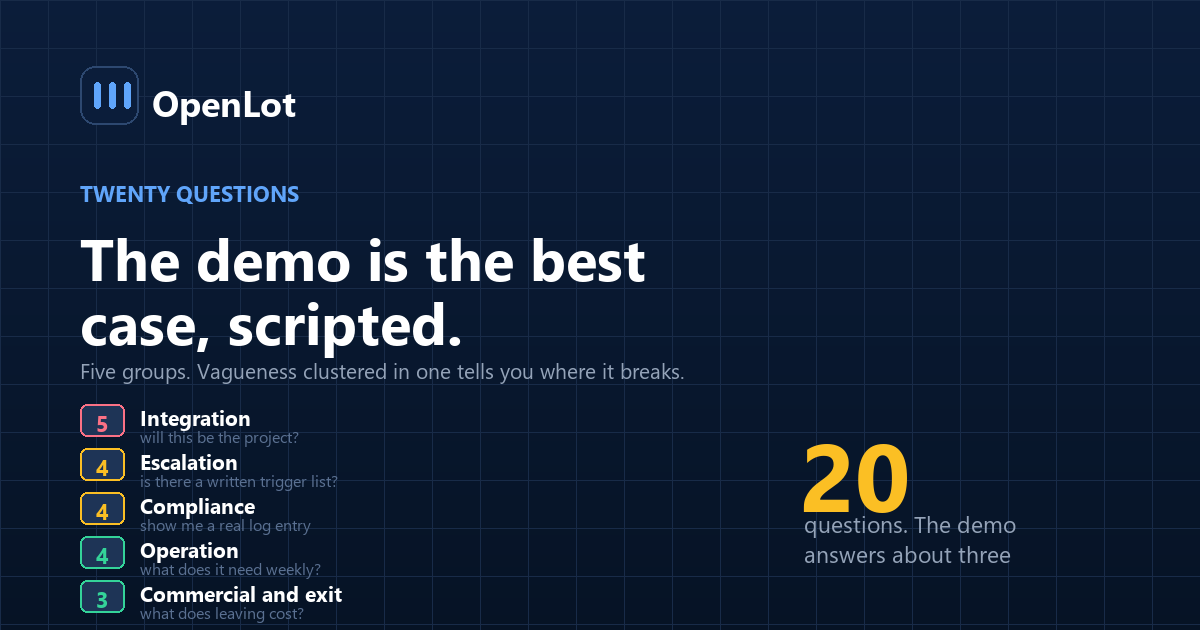
A demo shows you what the software does well. Twenty questions show you what happens on the days it does not, which is the part you will live with.
Read
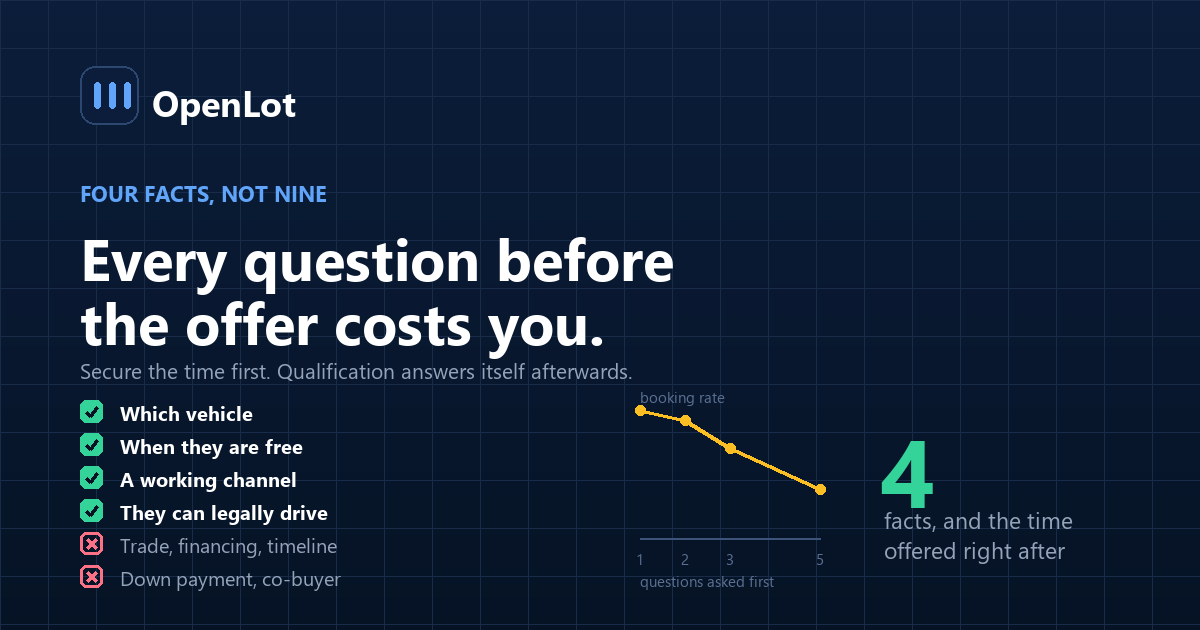
Four facts are needed to book a test drive. Most systems collect nine, and each extra question lowers the chance of getting any of them.
Read
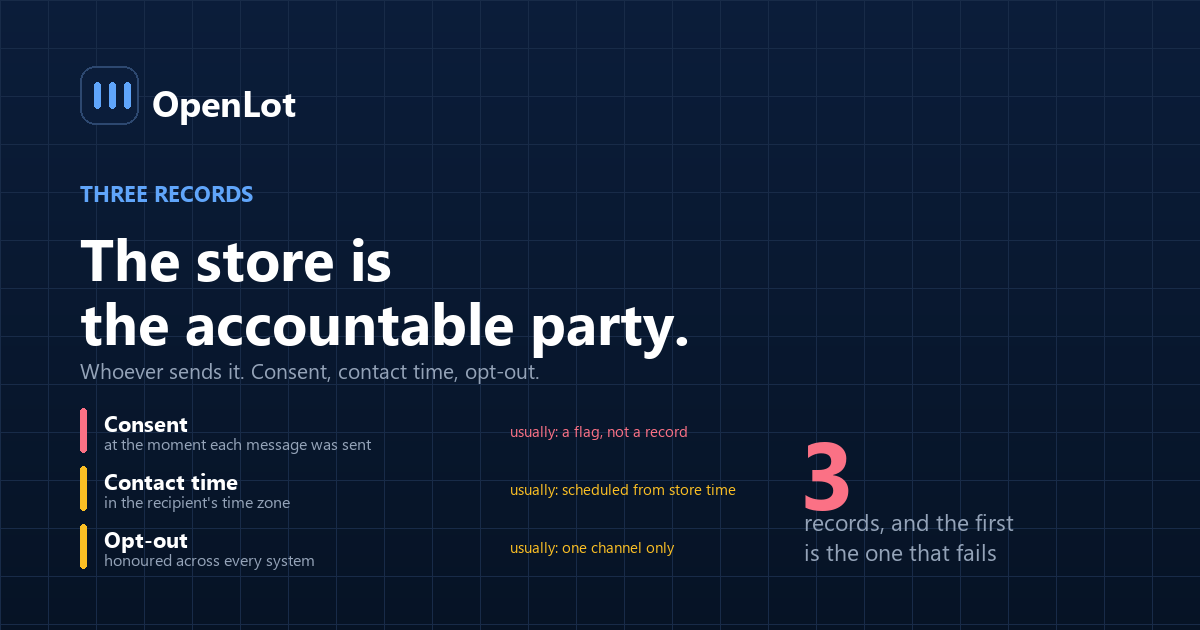
The dealership is the accountable party for every automated text, whoever sends it. Three records decide whether that exposure is manageable or not.
Read
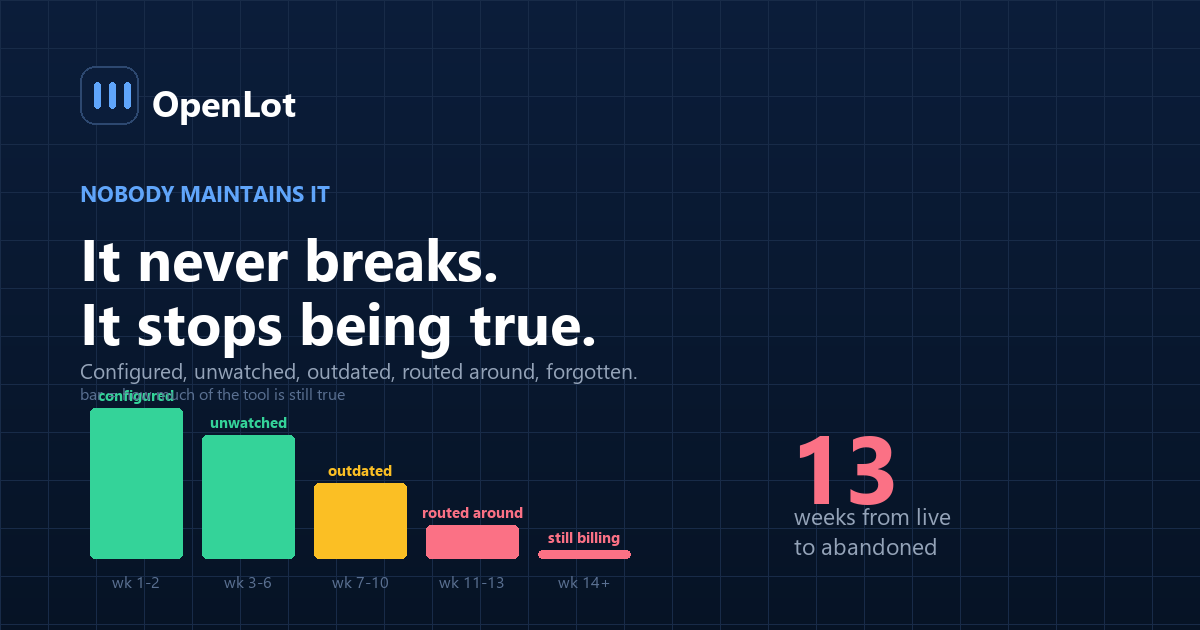
Every tool has a maintenance cost nobody quotes. At a store with no admin, that cost is paid in the tool quietly ceasing to work.
Read
The appointment was set, confirmed and attended. Then the customer repeated everything they had already said, to someone who was not expecting them.
Read
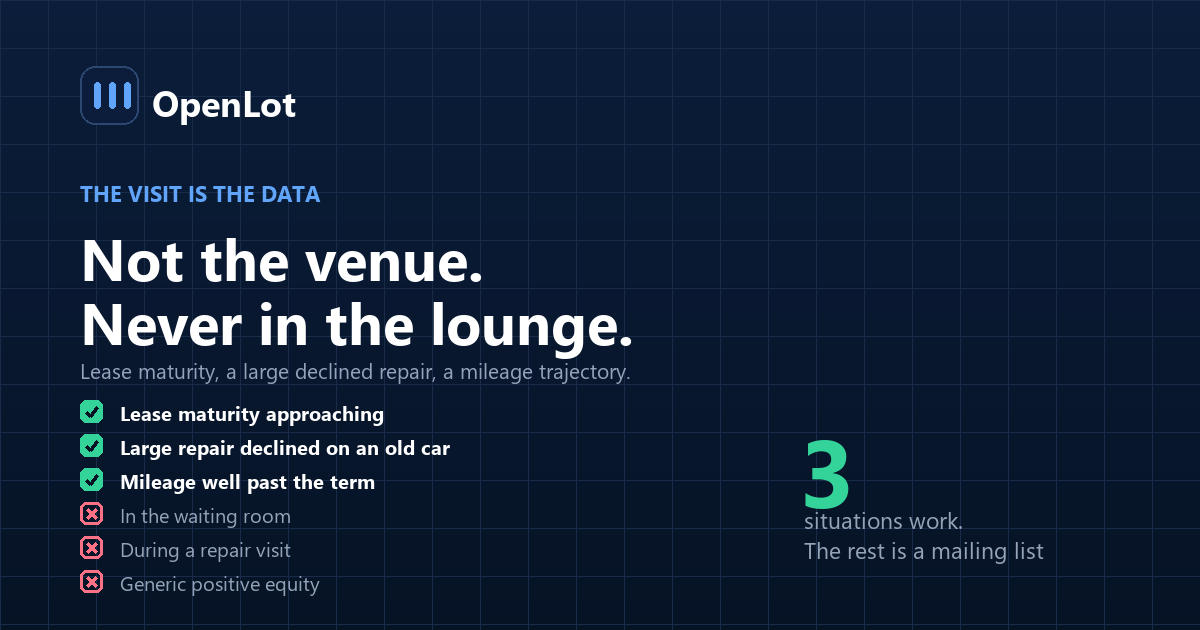
The customer in your waiting room may be in positive equity. Telling them that while they wait for an oil change is the fastest way to lose both the sale and the service visit.
Read
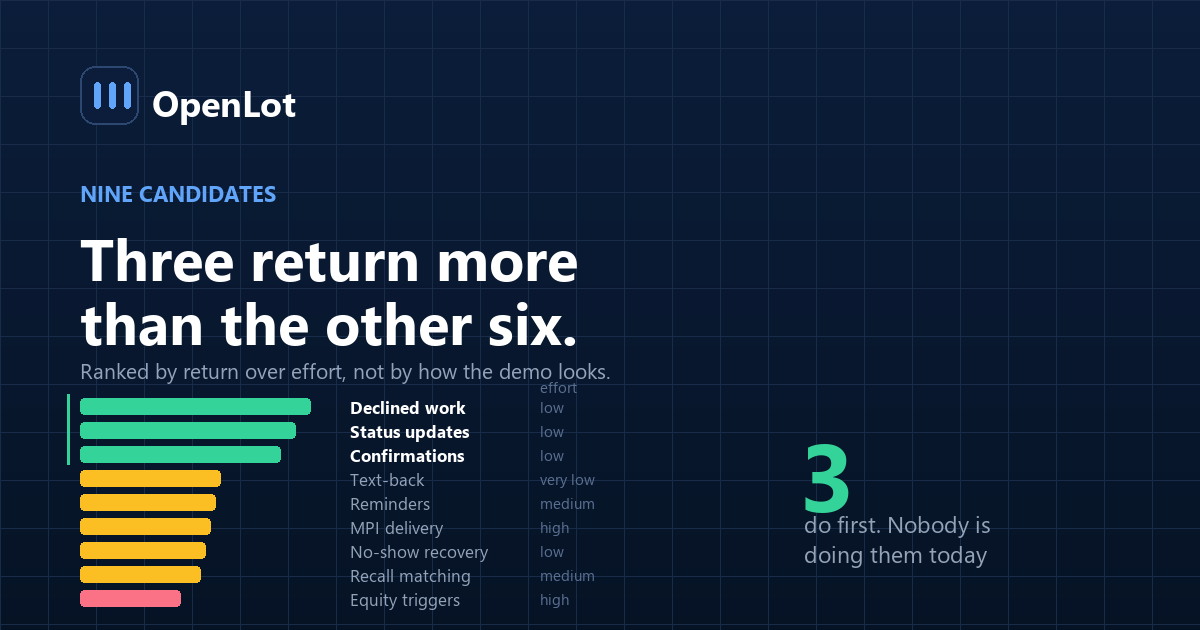
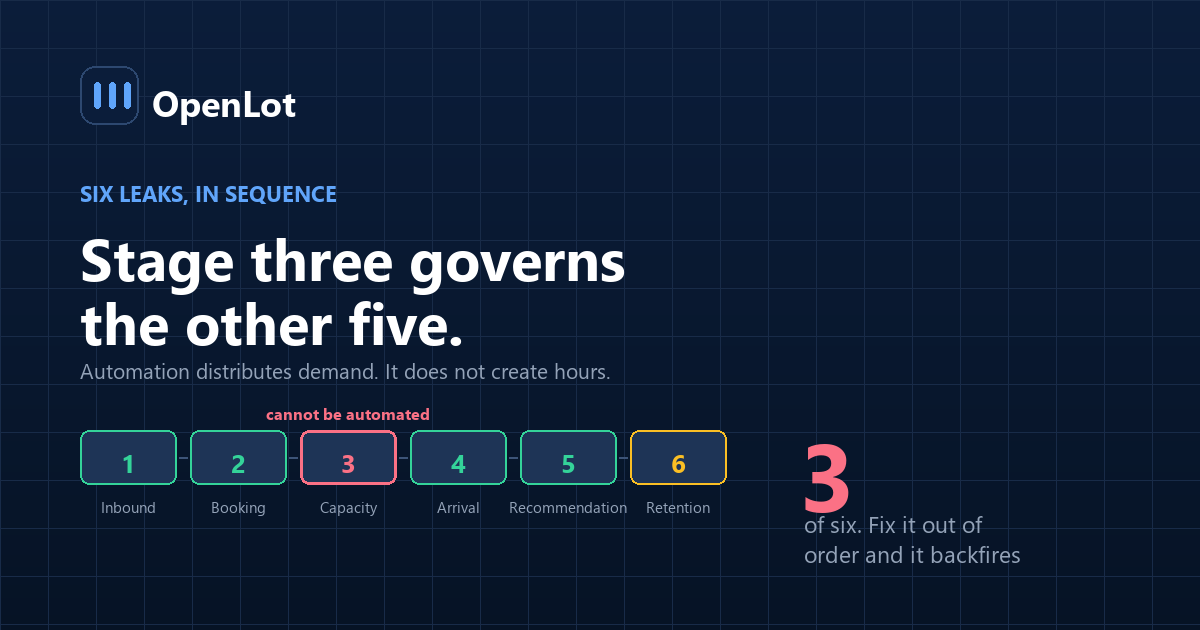
Nine things in a service department are worth automating. Three of them pay for the rest, and the order you do them in decides whether any of it works.
Read
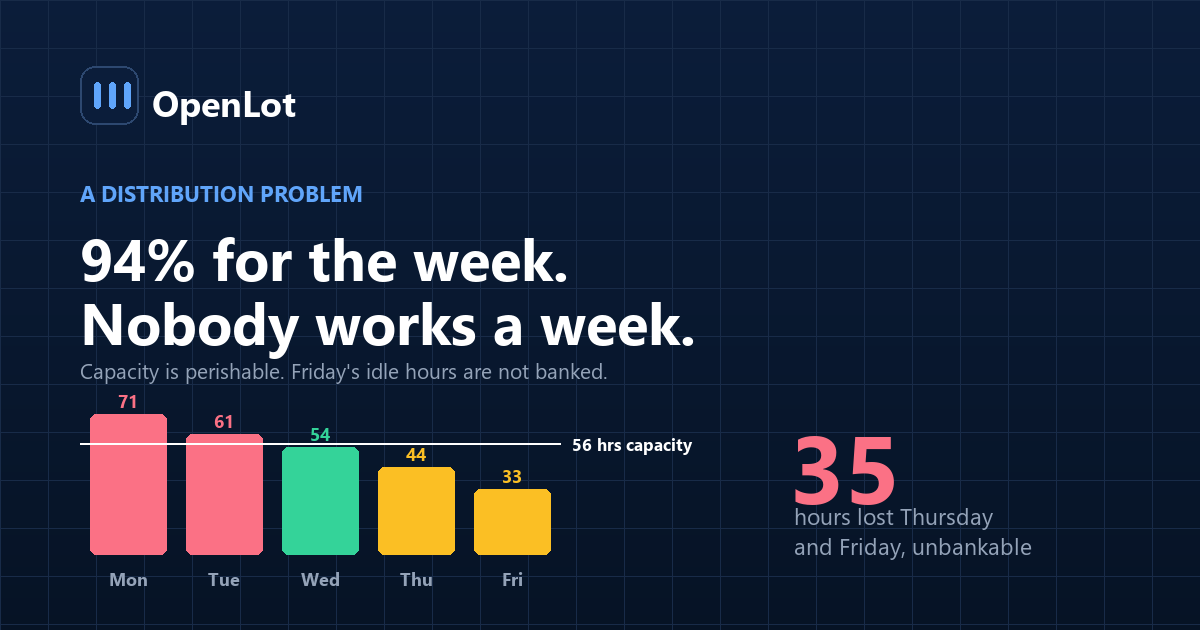
The shop is not short of capacity. It is short of capacity on Monday and oversupplied on Friday, and the week averages out to a number nobody experiences.
Read
Every vendor says your data is yours. The useful question is what you get when you ask for it, in what format, how often, and at what cost.
Read
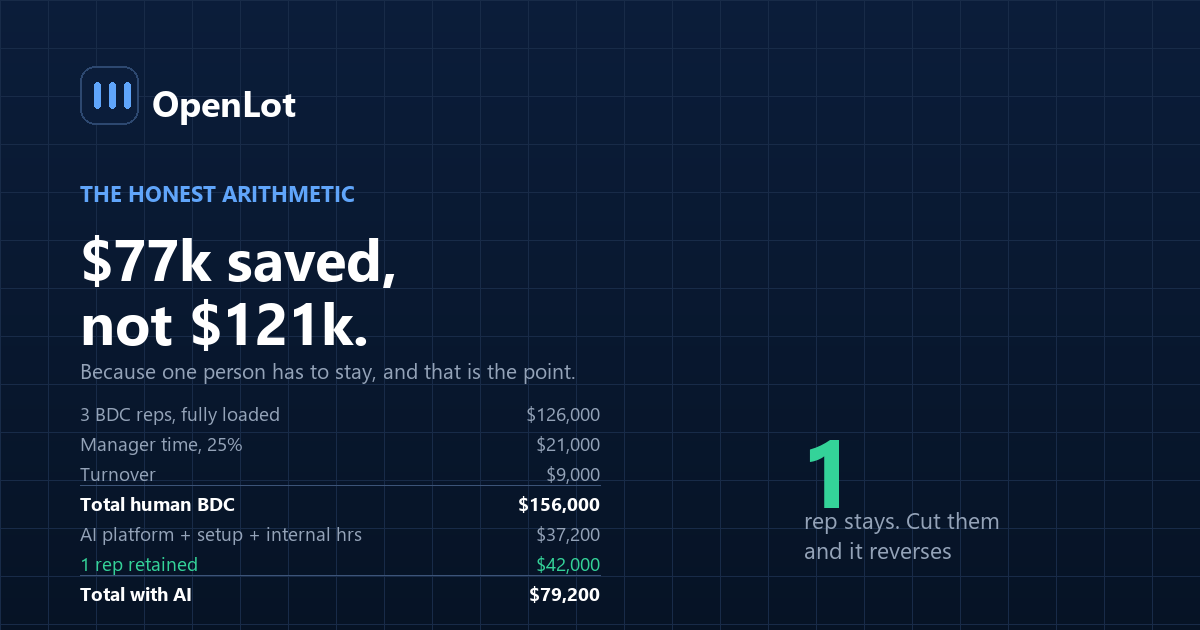
The saving is real and smaller than the pitch. And the thing you remove is the half that closes, not the half that answers.
Read
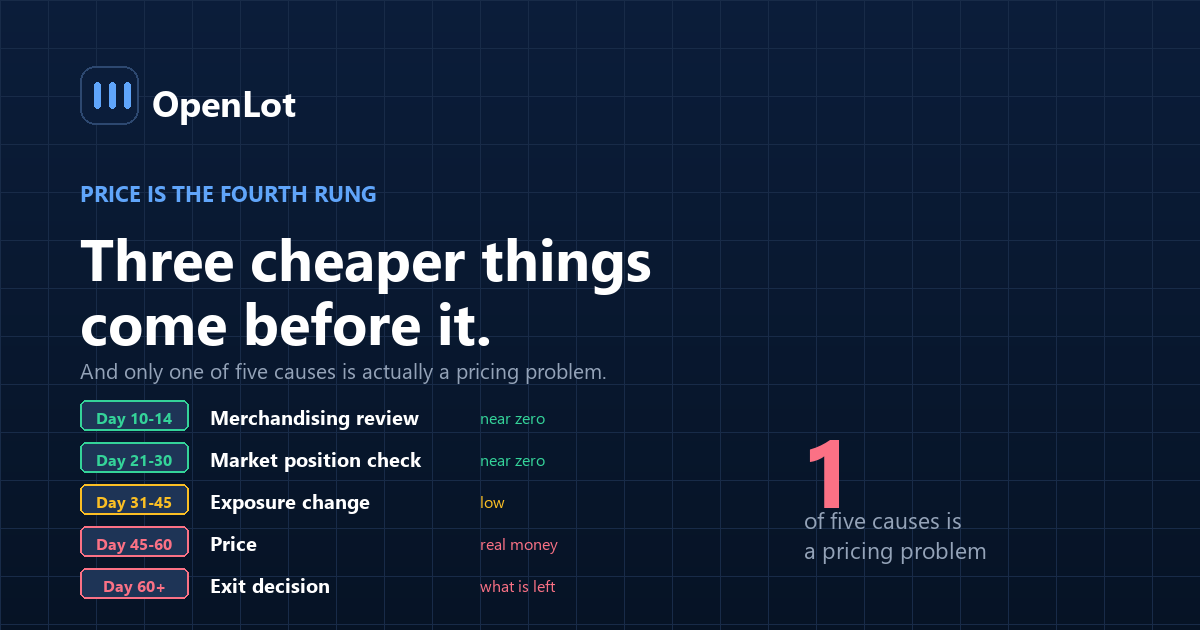
Discounting is the fourth thing to try, not the first. Three cheaper interventions come before it, and most stores skip straight past all of them.
Read
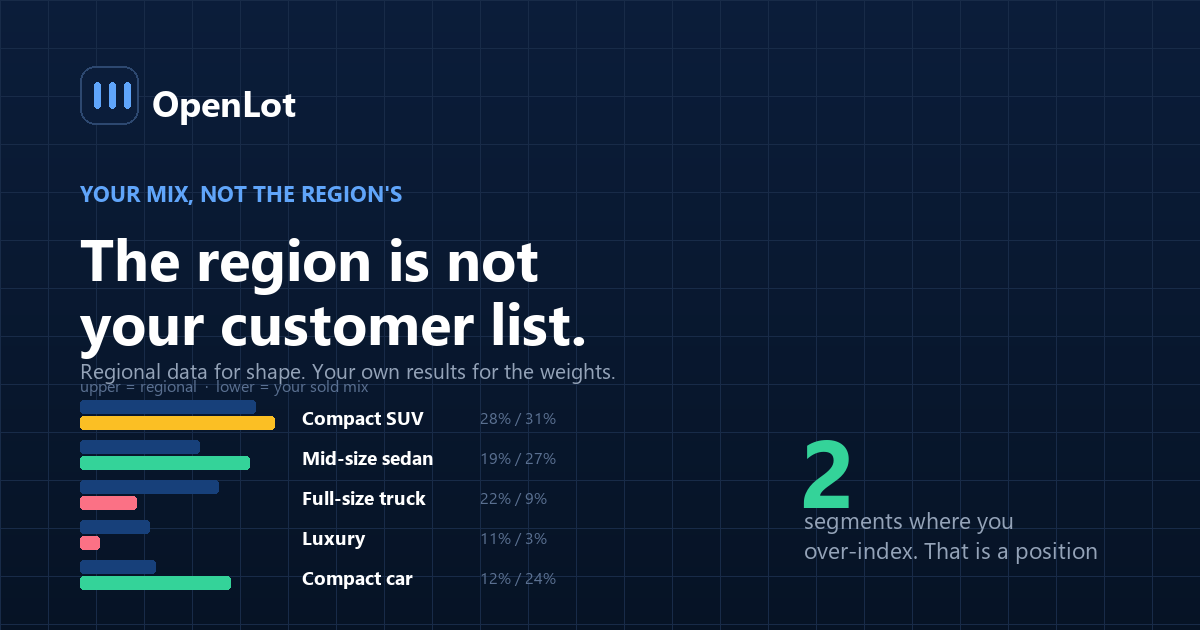
Regional demand data describes a market you only partly serve. Your own sales are a better guide and a worse sample, and the answer is a blend neither vendor offers.
Read
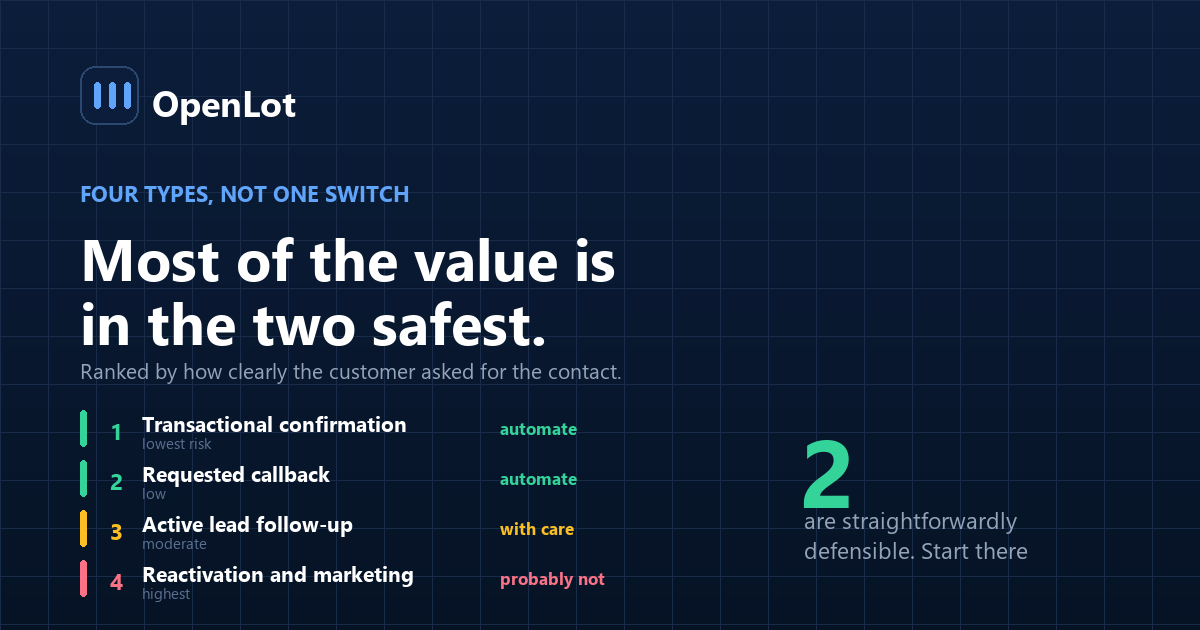
Four kinds of outbound call exist and they are not equally risky. Two are reasonable to automate, one needs care, and one should probably not be automated at all.
Read
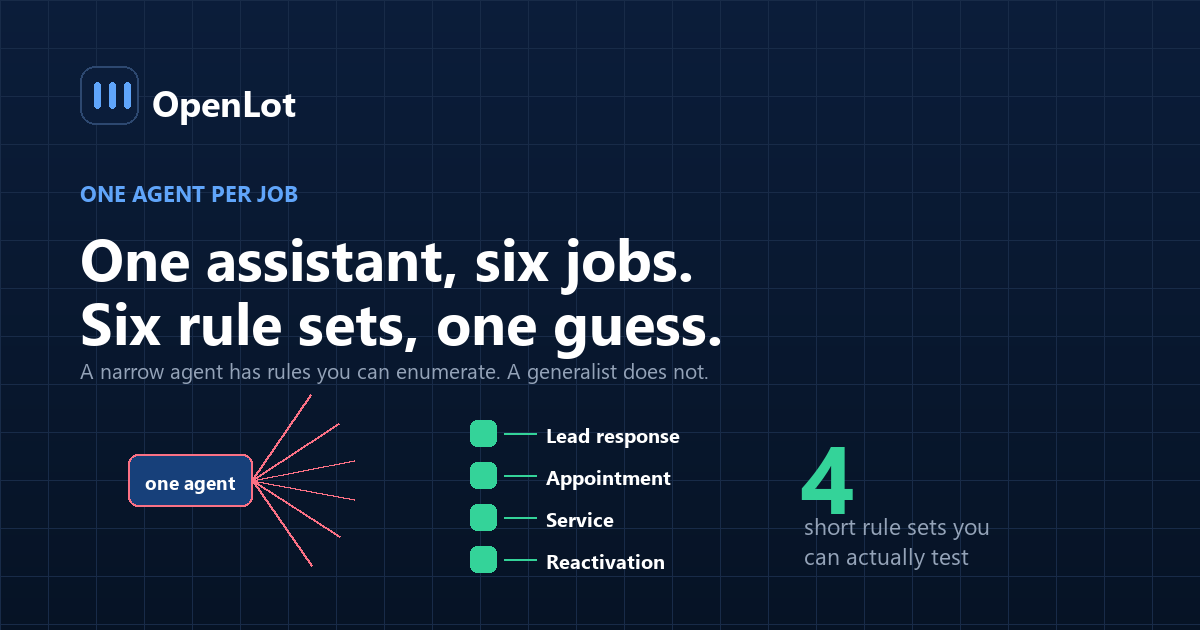
A single assistant asked to do six jobs does all six adequately and none reliably. Splitting the work is not an architecture fashion — it is how you keep escalation rules testable.
Read
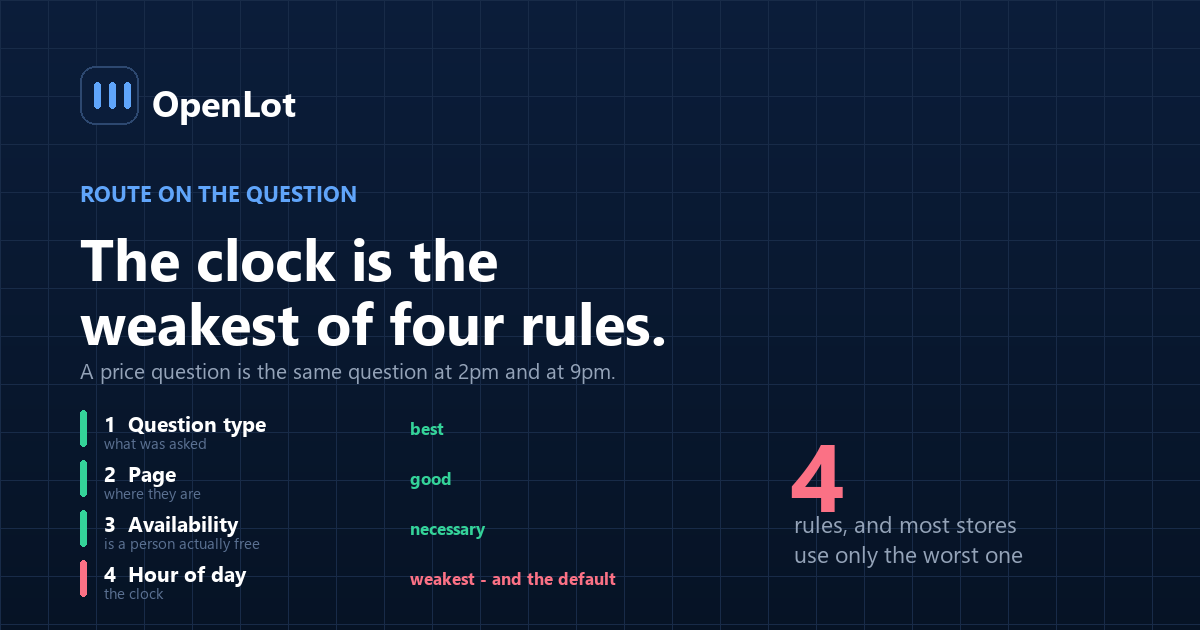
The question is not which is better but which handles which conversation. Four routing rules settle it, and none of them is about the hour of day.
Read
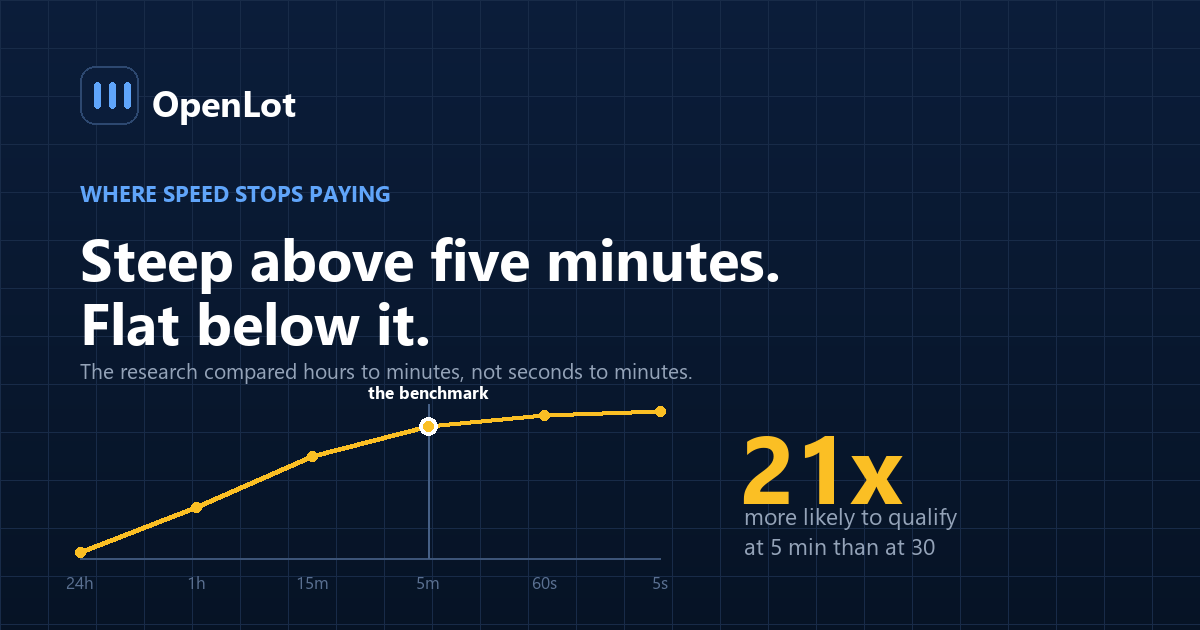
Going from nine hours to five minutes changes the outcome. Going from five minutes to five seconds mostly changes the timestamp — unless the message says something.
Read
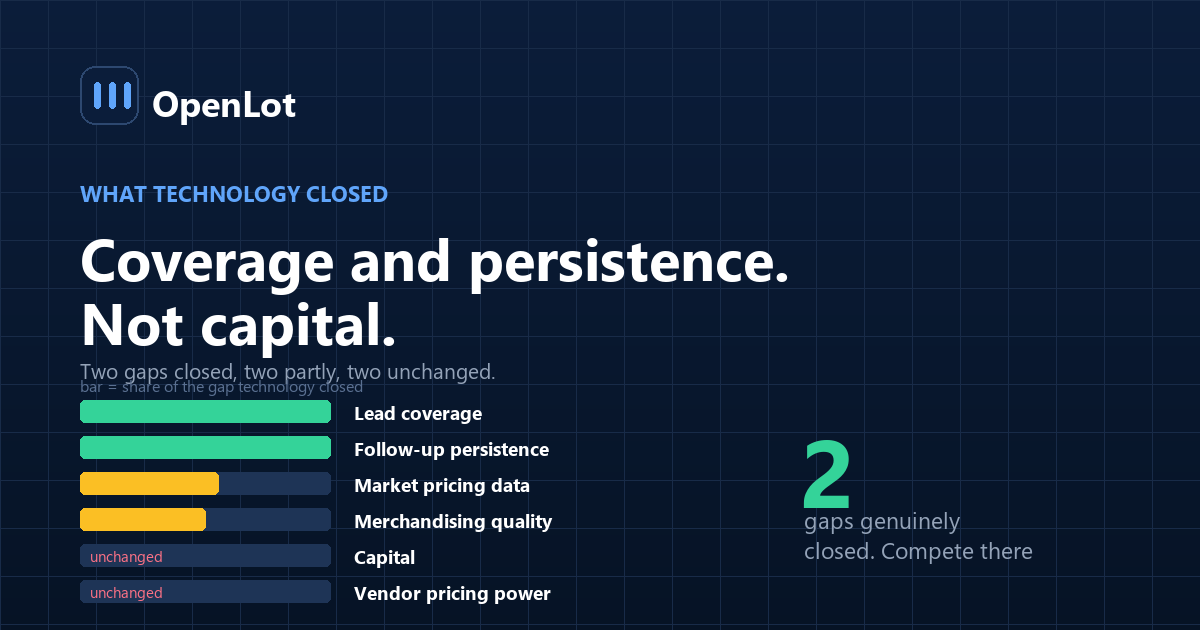
The independent wins on decision speed and loses on capital. Technology has narrowed one of those gaps considerably and not touched the other.
Read
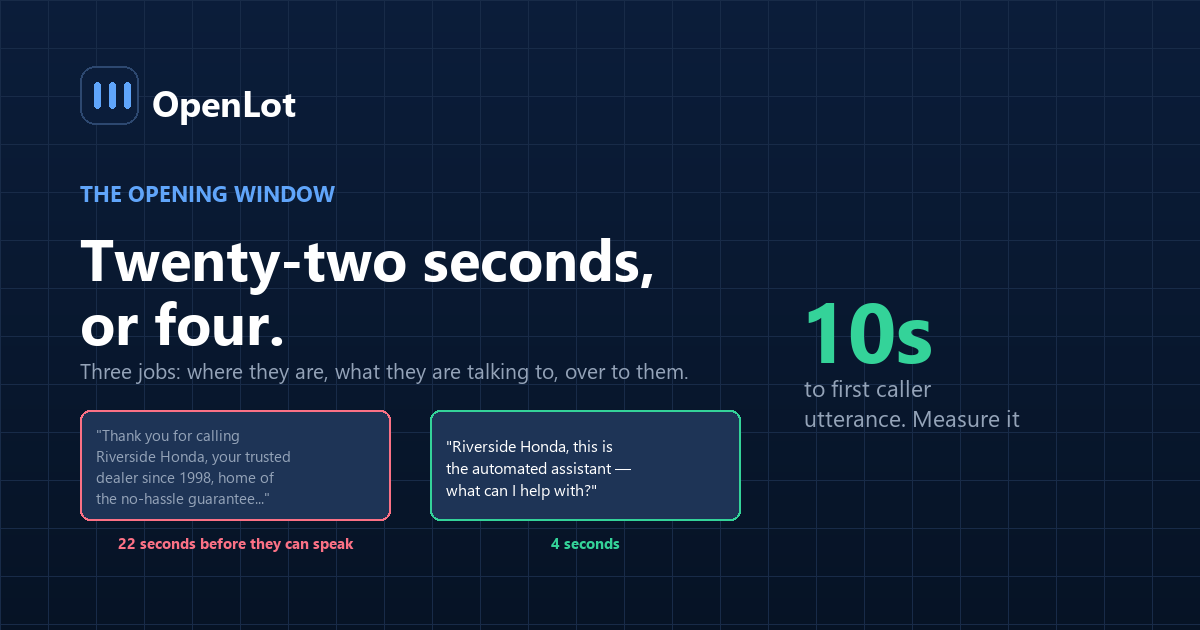
Most abandonment happens before the caller has said what they want. The opening is a ten-second window and most dealerships spend it on a greeting.
Read
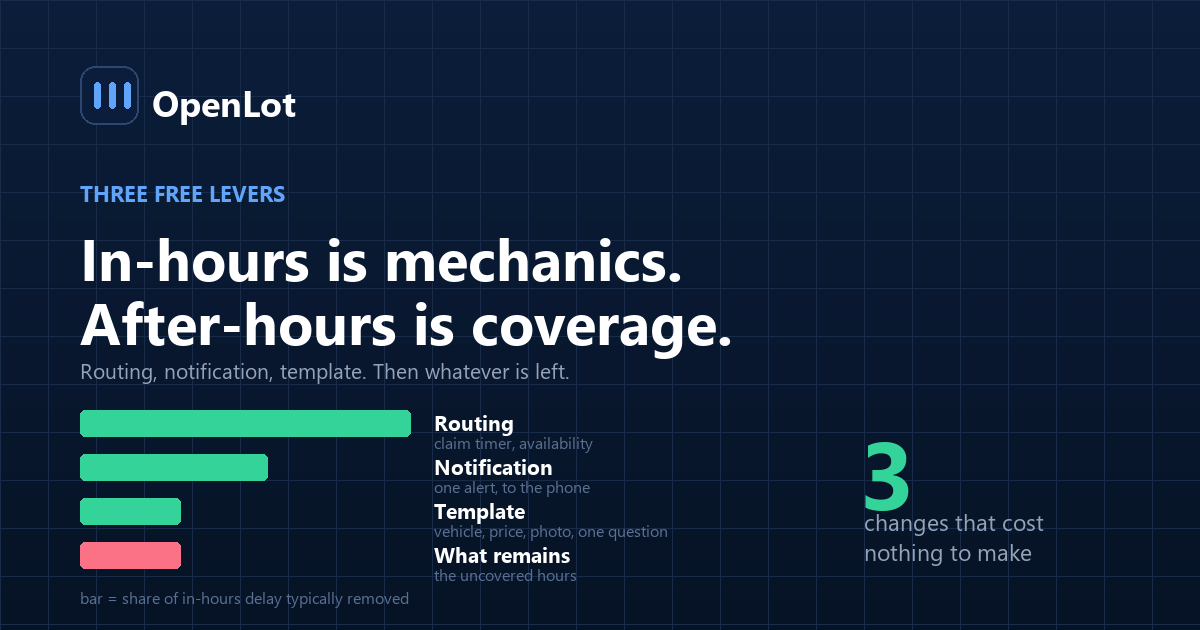
Before buying anything, three changes cost nothing and usually recover most of the in-hours delay: routing, notification and a template that answers the question.
Read
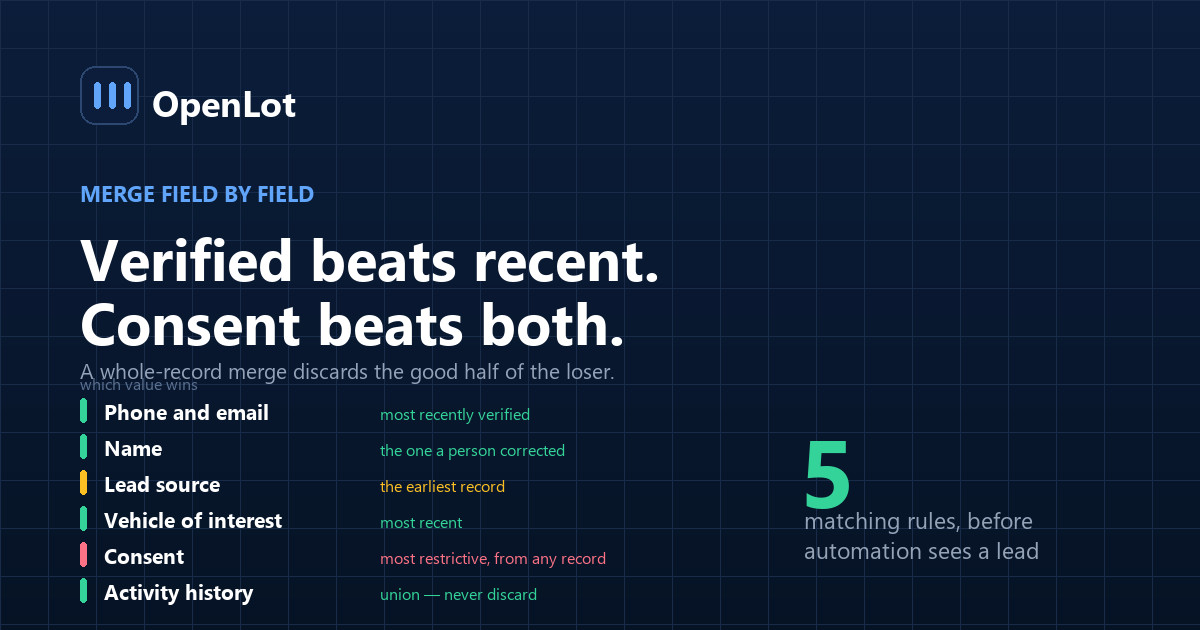
The same person submits on your site and on a marketplace within an hour. Whether that becomes one conversation or two is a matching-rules decision.
Read
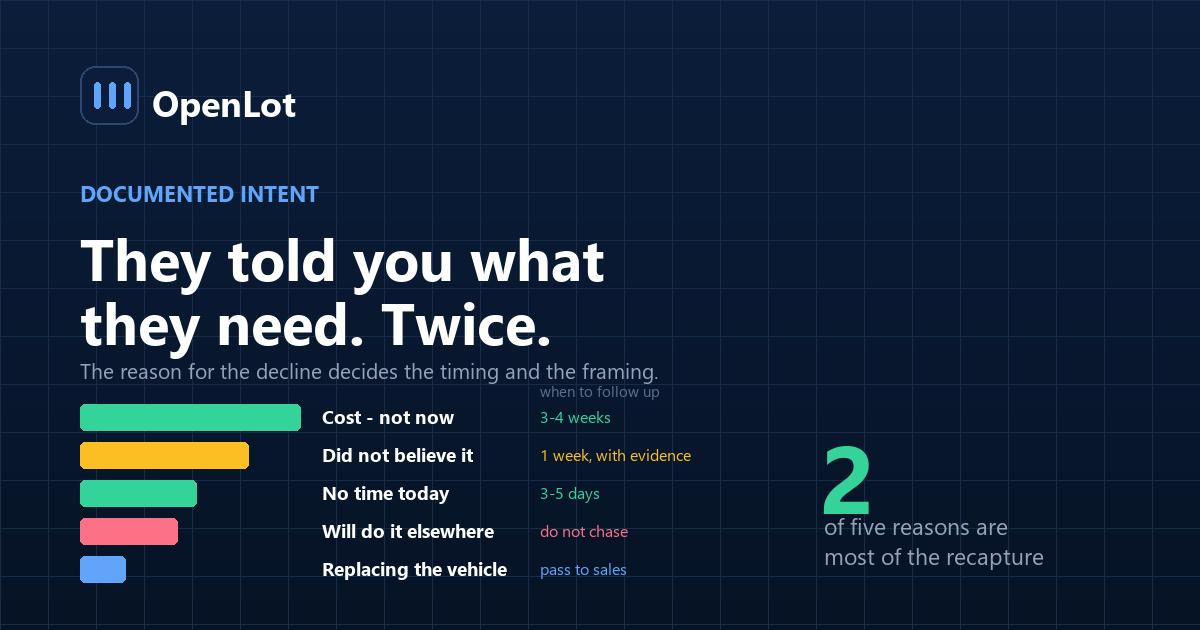
A customer who declined brakes told you three things: what they need, that they know they need it, and roughly what it costs. Almost no store ever contacts them again.
Read
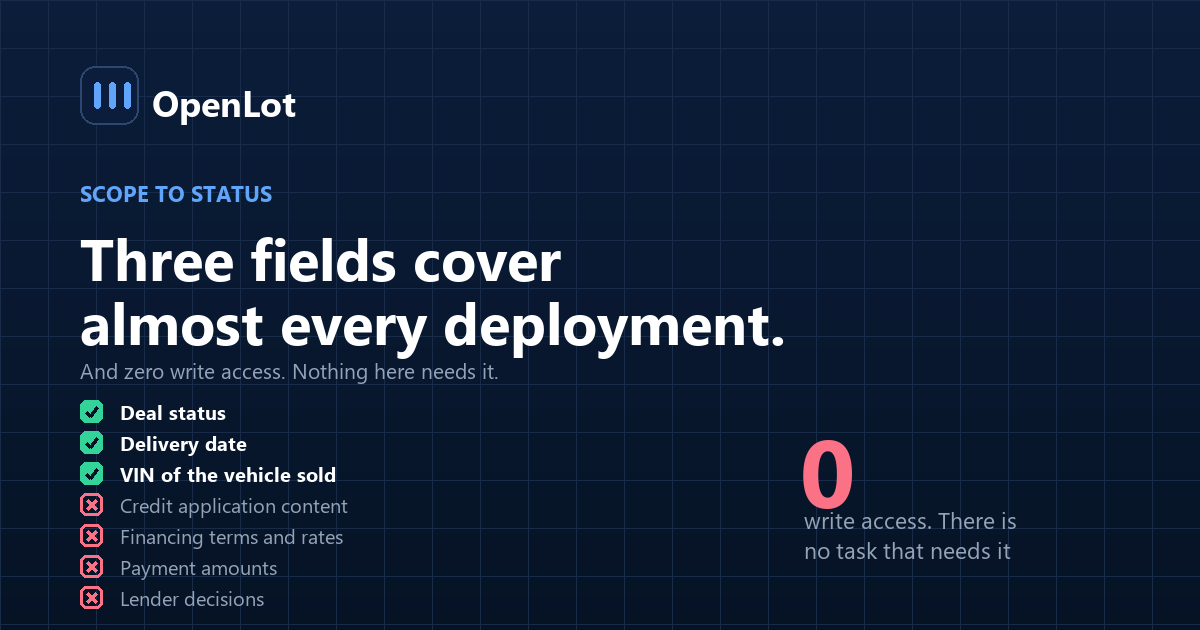
Deal and F&I data is the most sensitive in the building. The integration questions are about permission boundaries rather than about capability.
Read
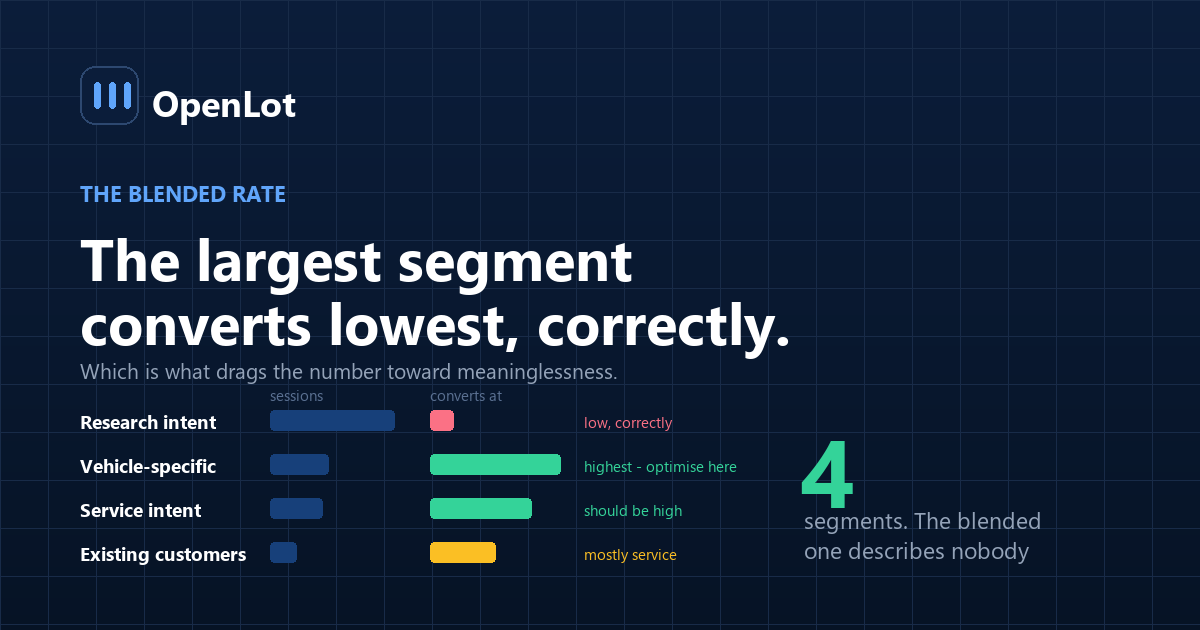
A site-wide conversion rate blends a bot, a service customer and a buyer into one number. Four segments make it mean something.
Read
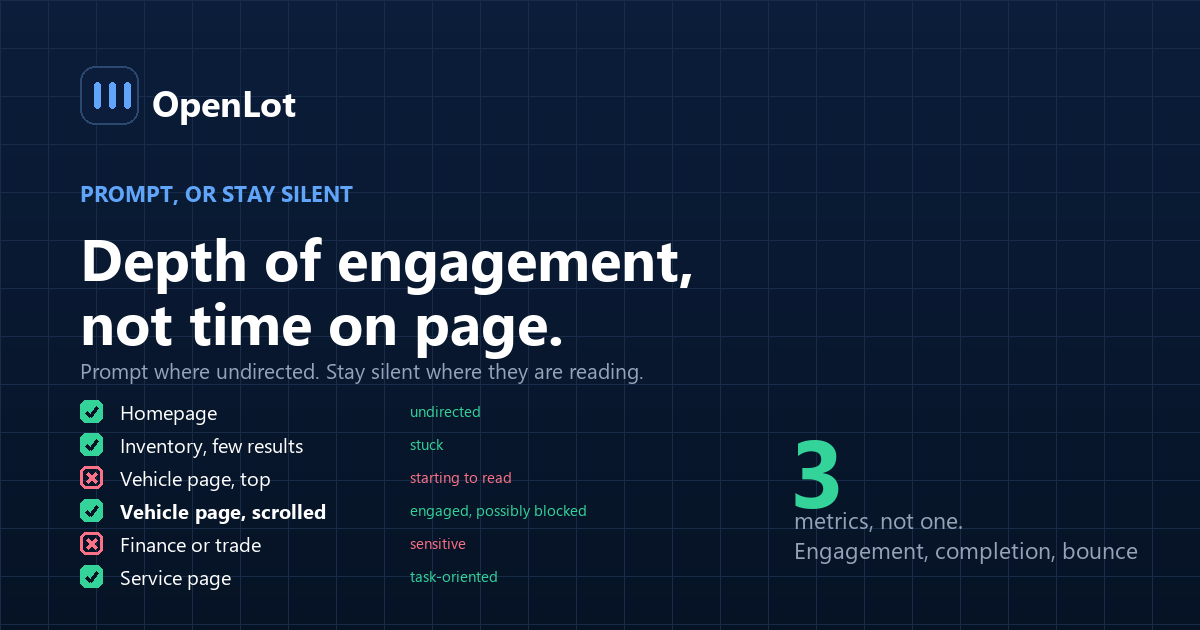
Proactive chat helps on some pages and costs you on others. The difference is measurable, and almost nobody runs the test that measures it.
Read
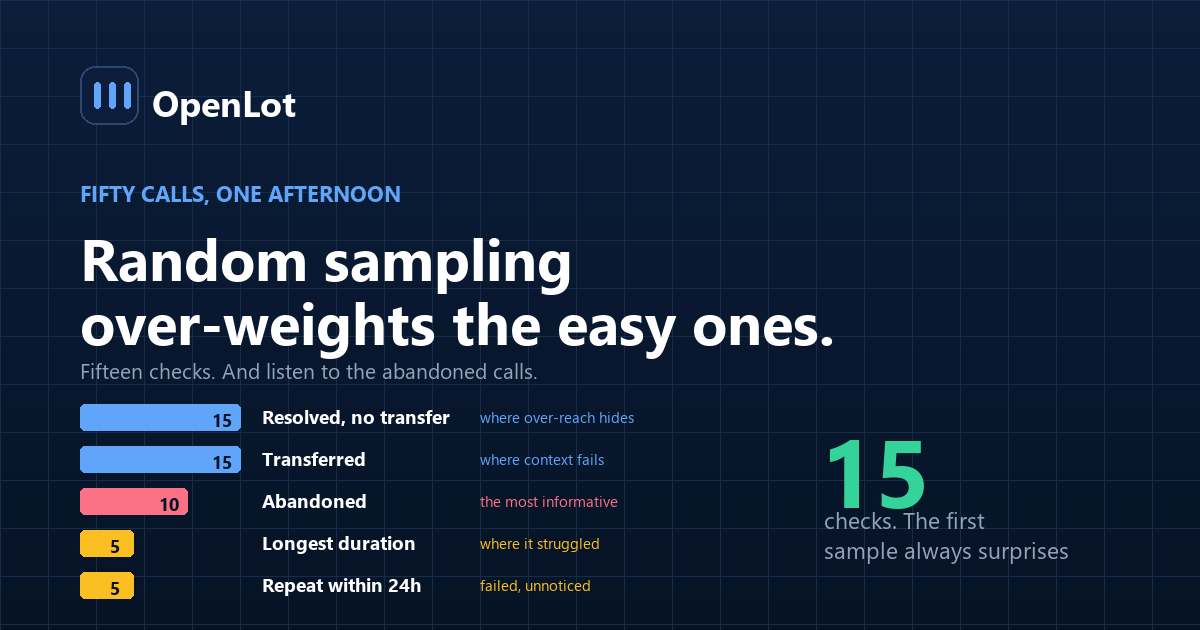
A voice system that nobody listens to is a system nobody knows the behaviour of. Fifteen checks, fifty calls, one afternoon a month.
Read
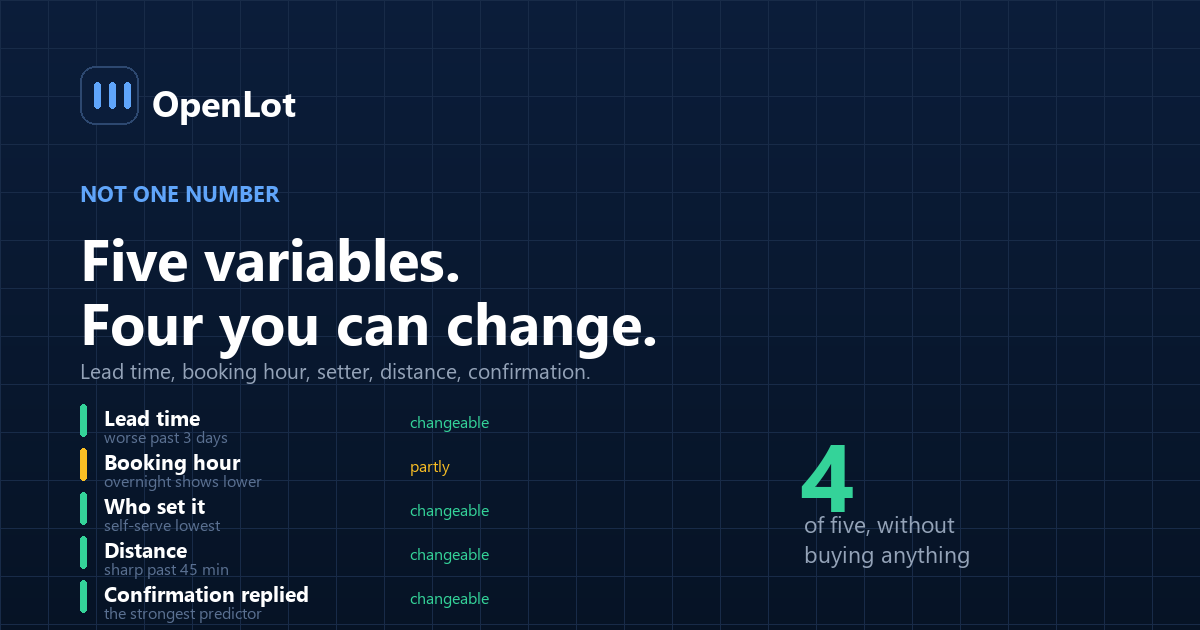
No-show rate is not one number. It varies by lead time, by booking hour, by who set it and by distance — and the segments move for different reasons.
Read
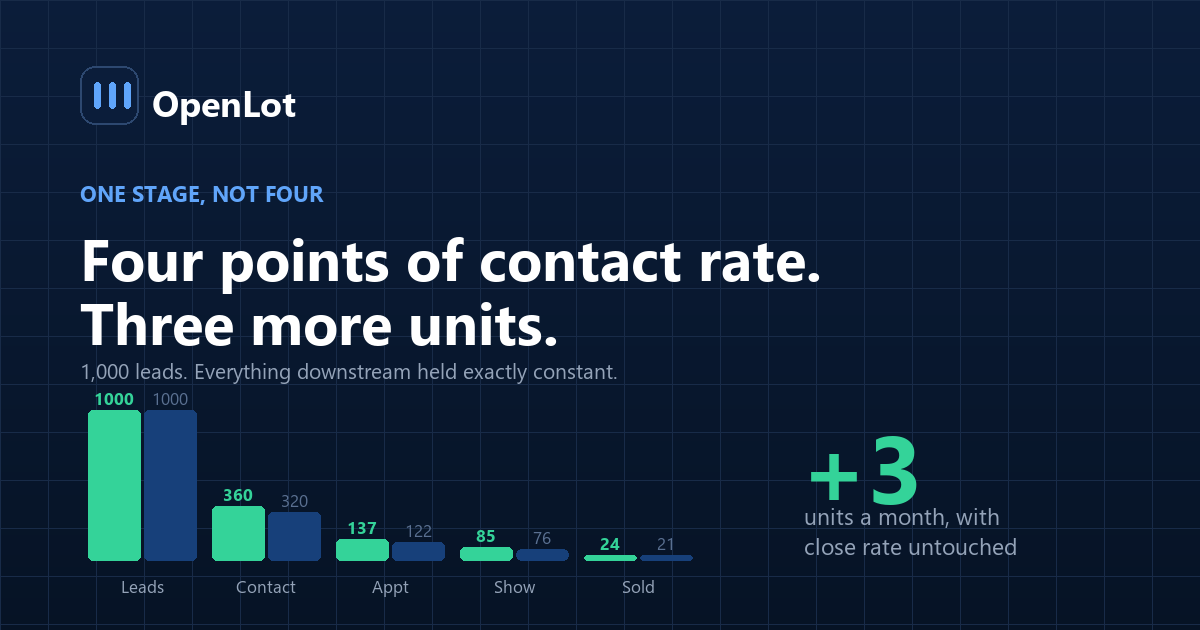
Every vendor ROI calculator moves the stage their product touches and holds the rest constant. Build your own funnel first and the demo becomes a test instead of a pitch.
Read
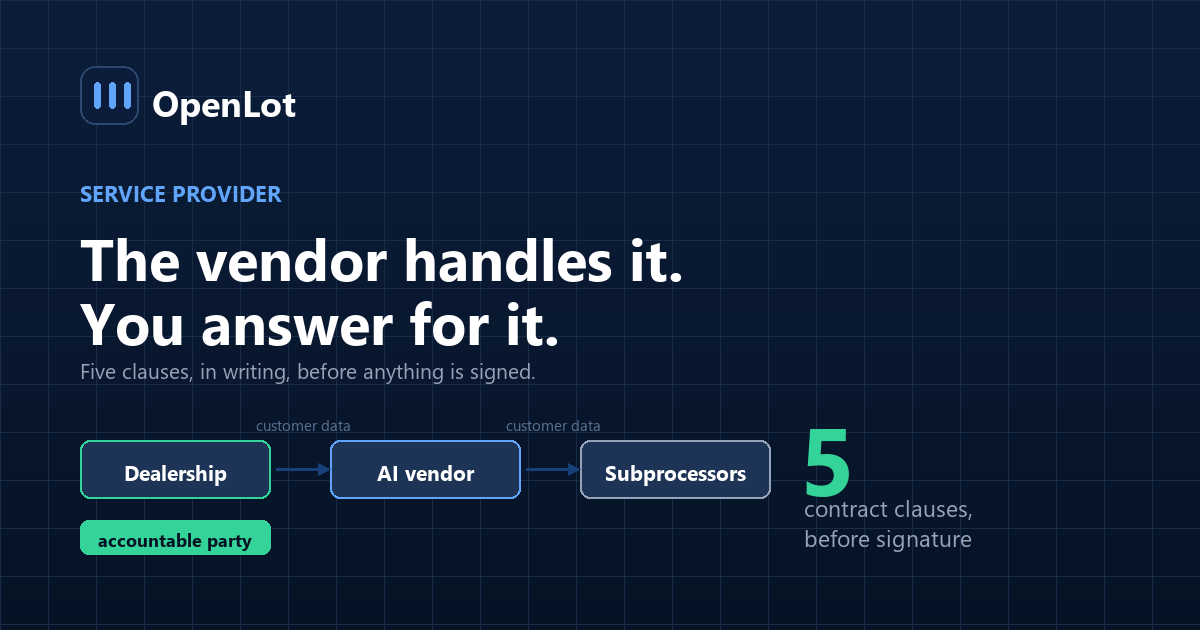
Adding an AI vendor adds a service provider to your program, with obligations you already have. The work is mostly contractual, and most of it has to happen before signature.
Read
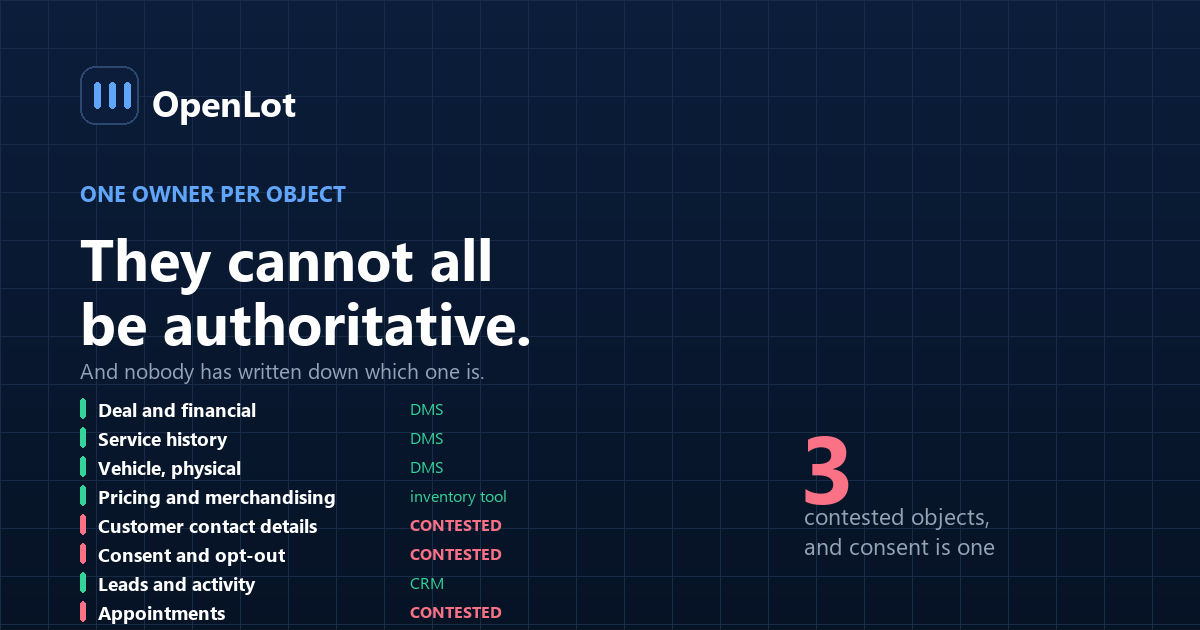
The DMS, the CRM and the inventory tool each believe they are authoritative. They cannot all be right, and nobody has written down which one is.
Read
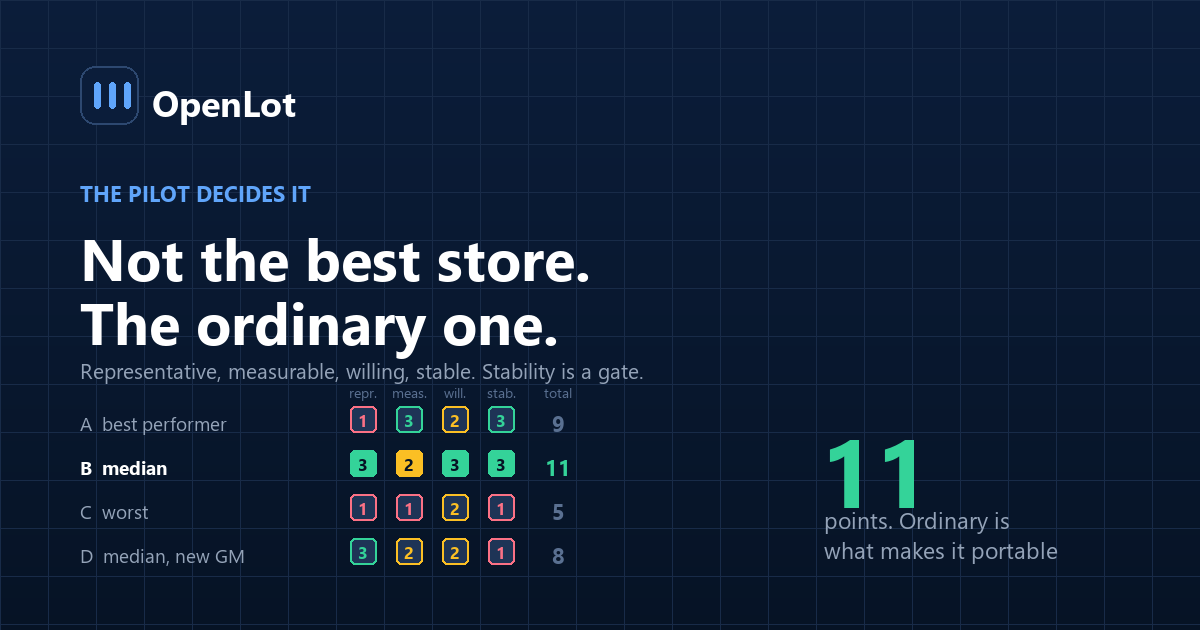
The best-performing store is the wrong pilot. So is the worst. The right one is representative, willing and measurable — and those three rarely coincide by accident.
Read
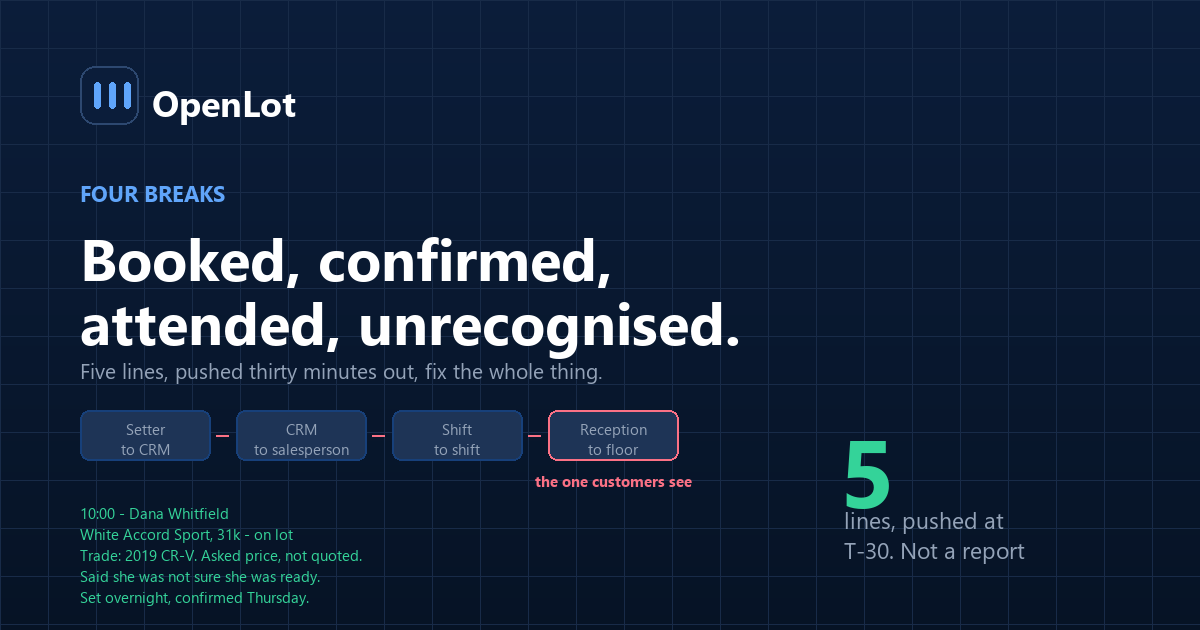
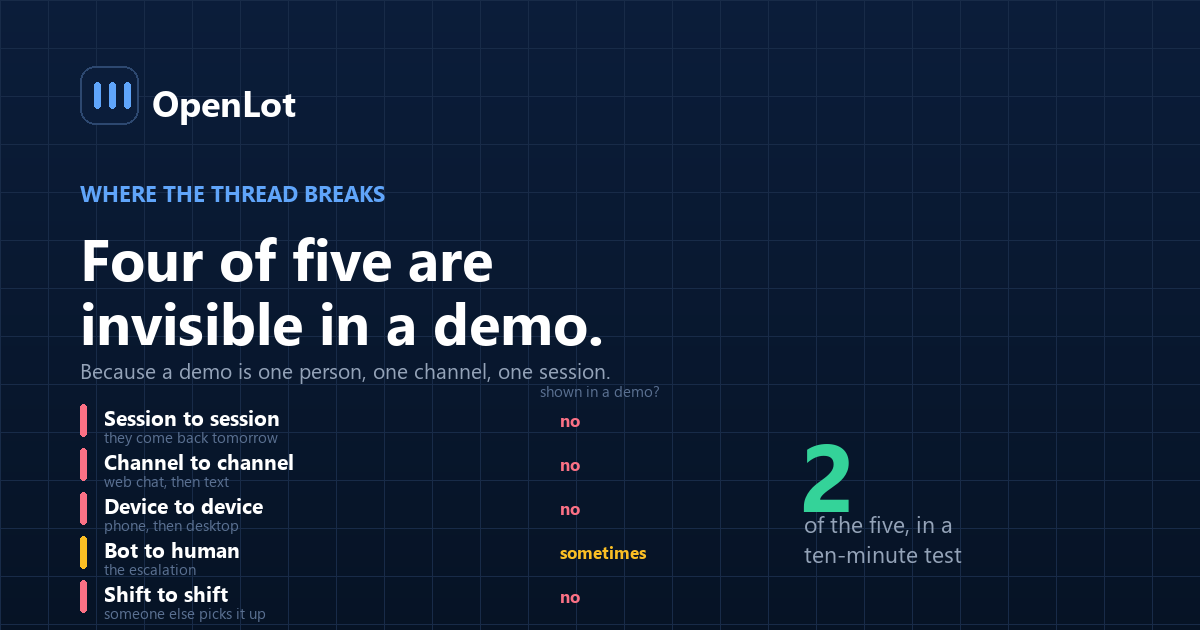
Continuity is the product. Five breaks exist, four of them are invisible in a demo, and one test finds all five in ten minutes.
Read
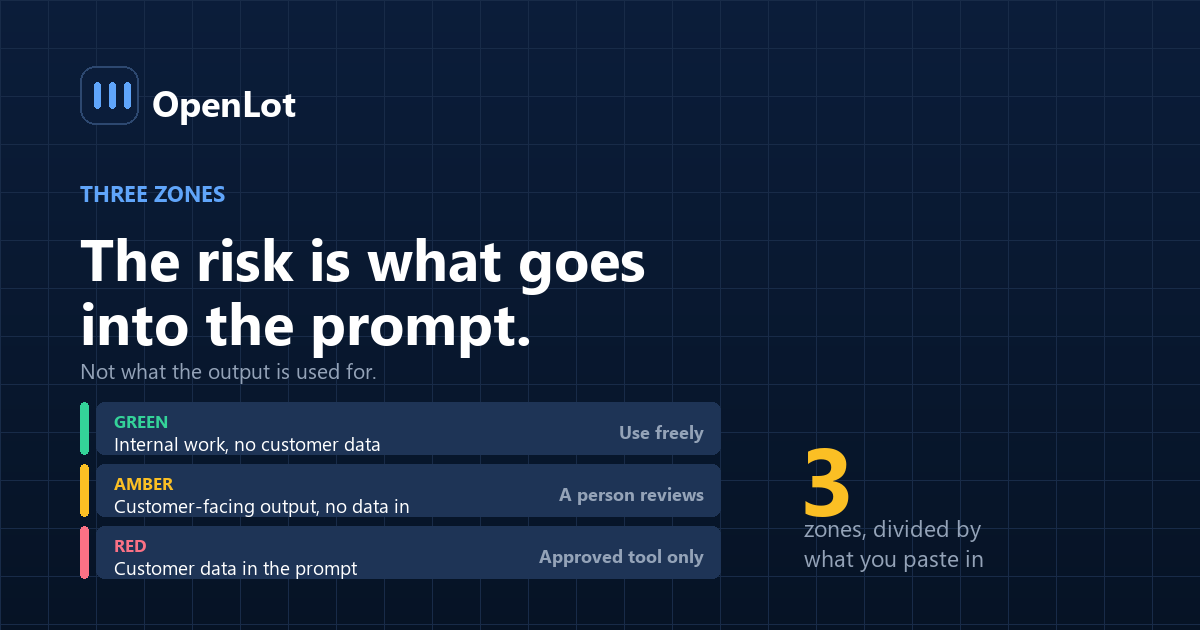
Staff are already using it. The question is no longer whether to allow it — it is which of the three zones each task falls into, and whether anyone has written that down.
Read
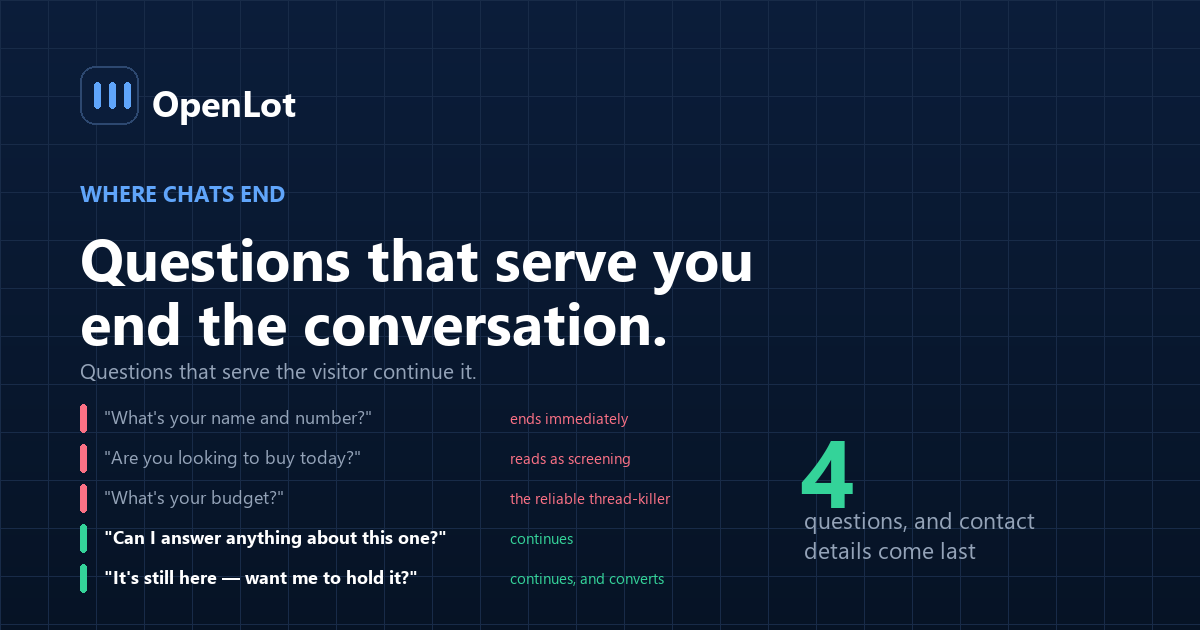
Four questions qualify a chat. Most bots ask nine, in the wrong order, starting with the one most likely to end the conversation.
Read
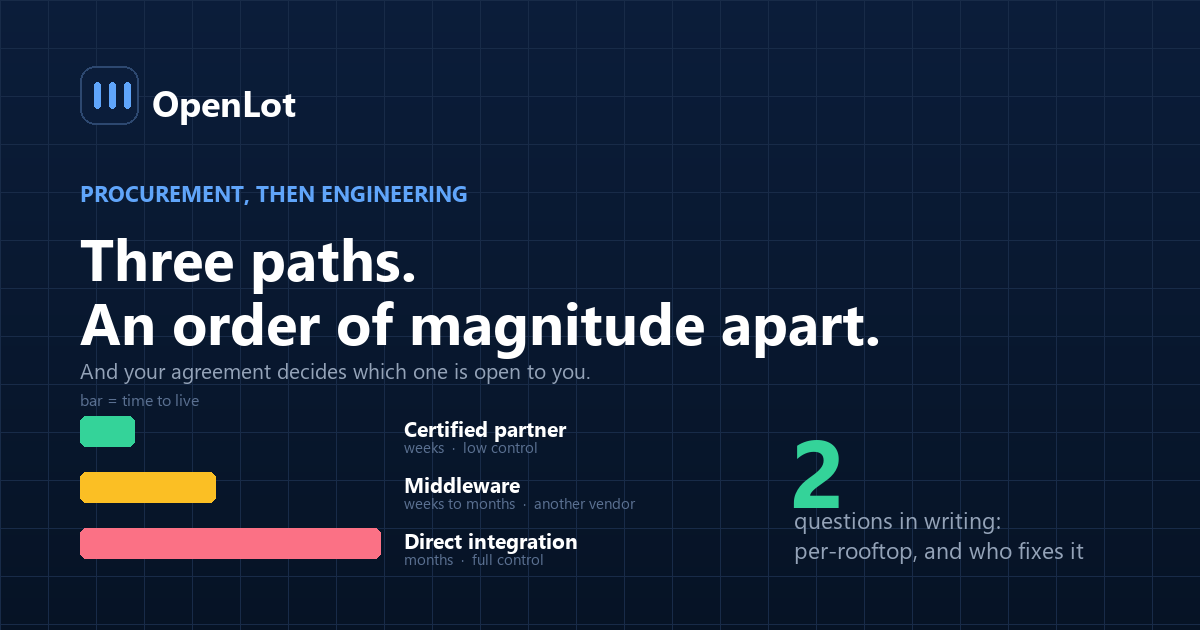
Enterprise DMS integration is a procurement exercise before it is a technical one. Three paths exist and they differ by an order of magnitude in time.
Read
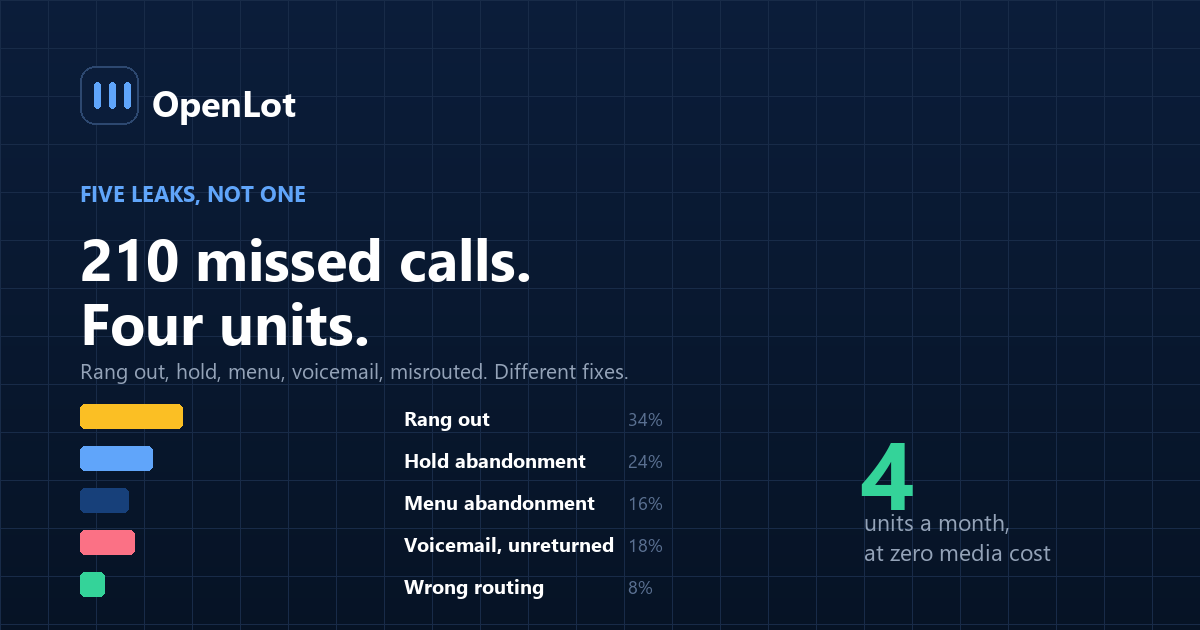
Nobody budgets for missed calls because nobody counts them. The number sits in your phone system, and in most stores it is larger than any line on the marketing spend.
Read
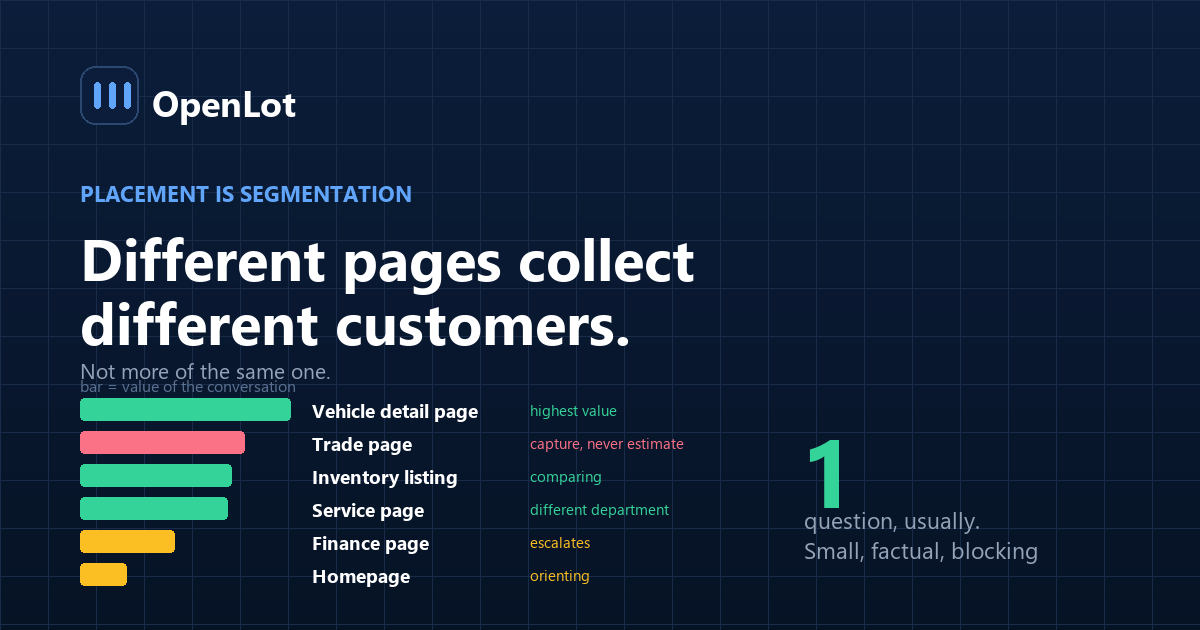
Placement changes which customers you capture, not just how many. A chat on the inventory page and one on a vehicle page collect different people.
Read
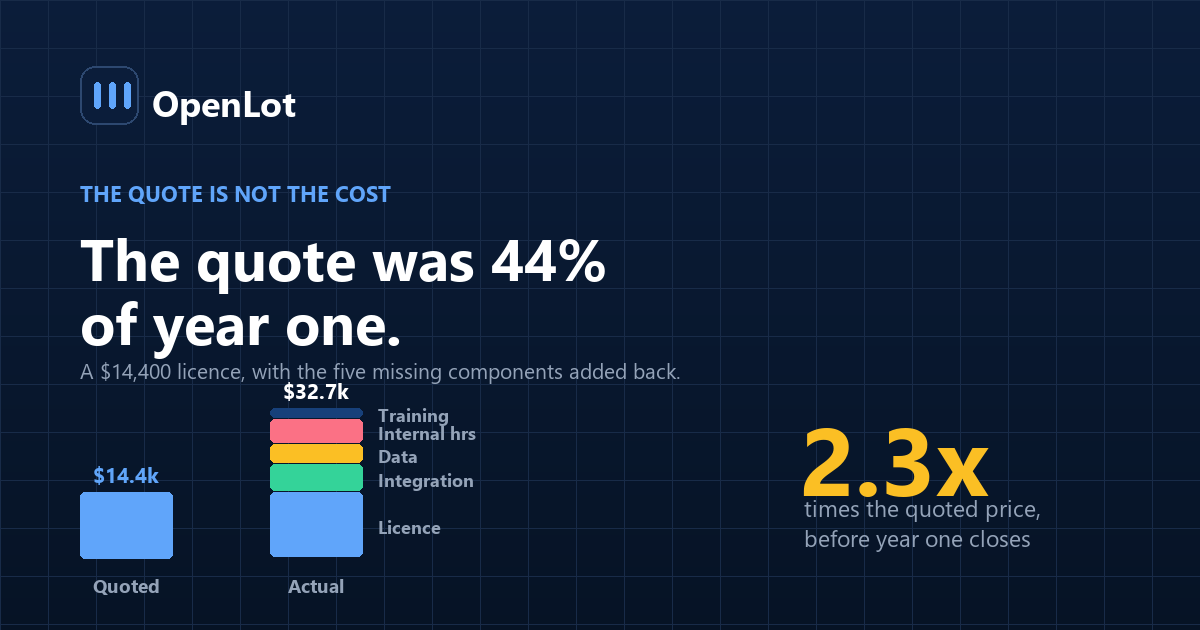
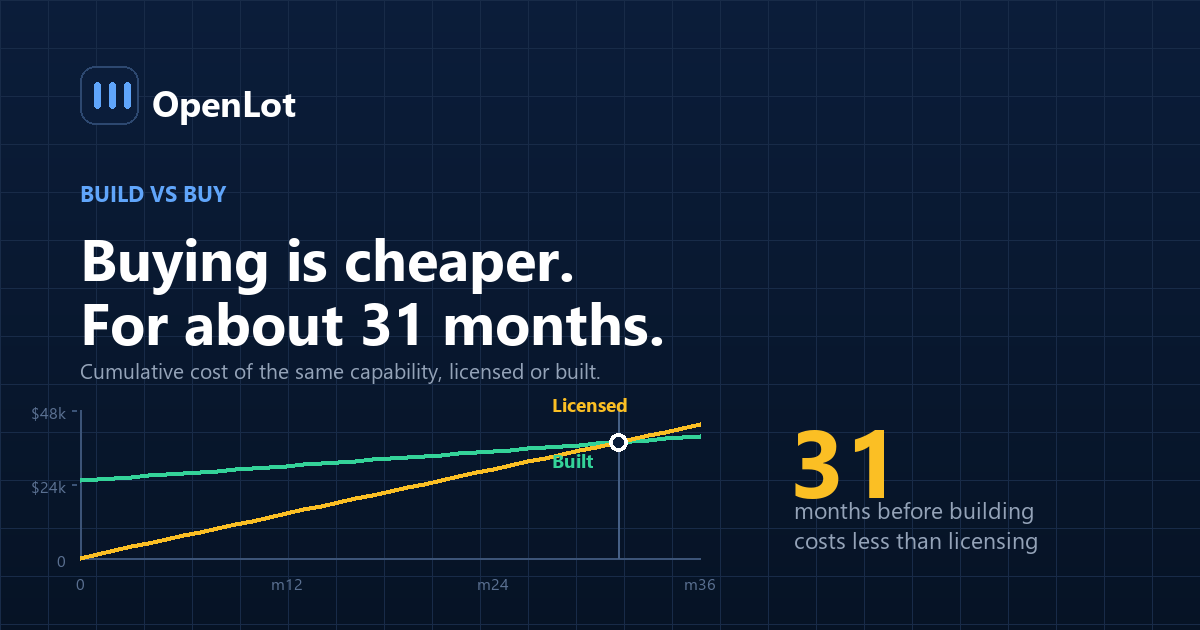
The licence quote and the build quote are both honest and both incomplete. Six costs sit outside them, and they are large enough to reverse the decision.
Read
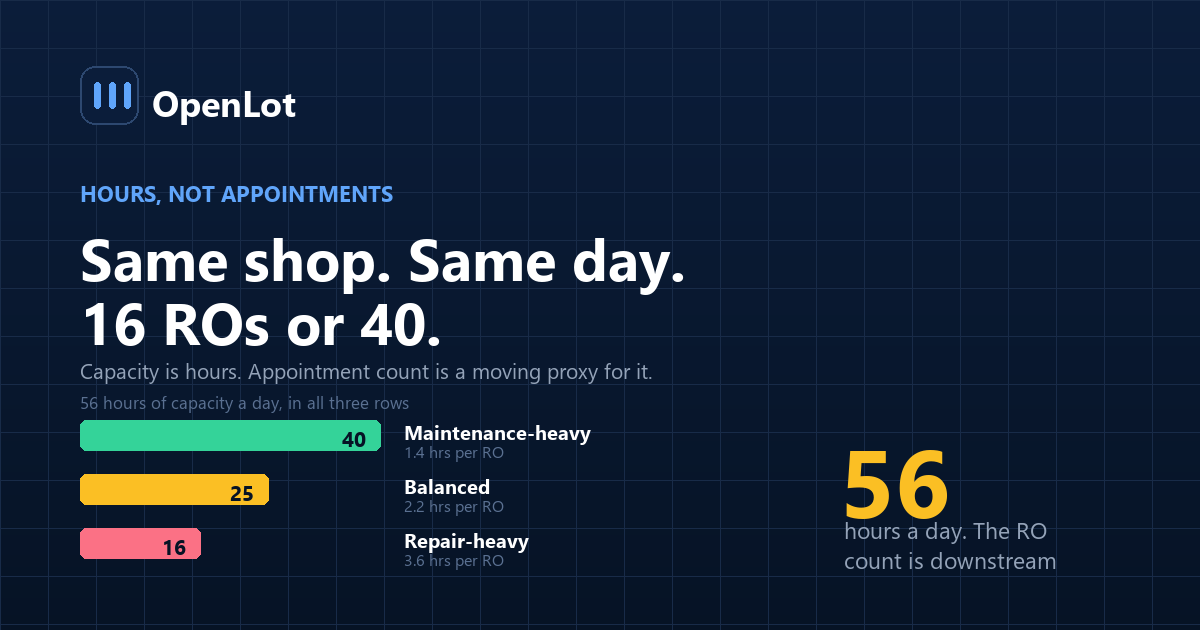
Appointments are the wrong unit. A shop sells hours, and until you know how many it has, every scheduling decision is a guess with a confident interface on top.
Read
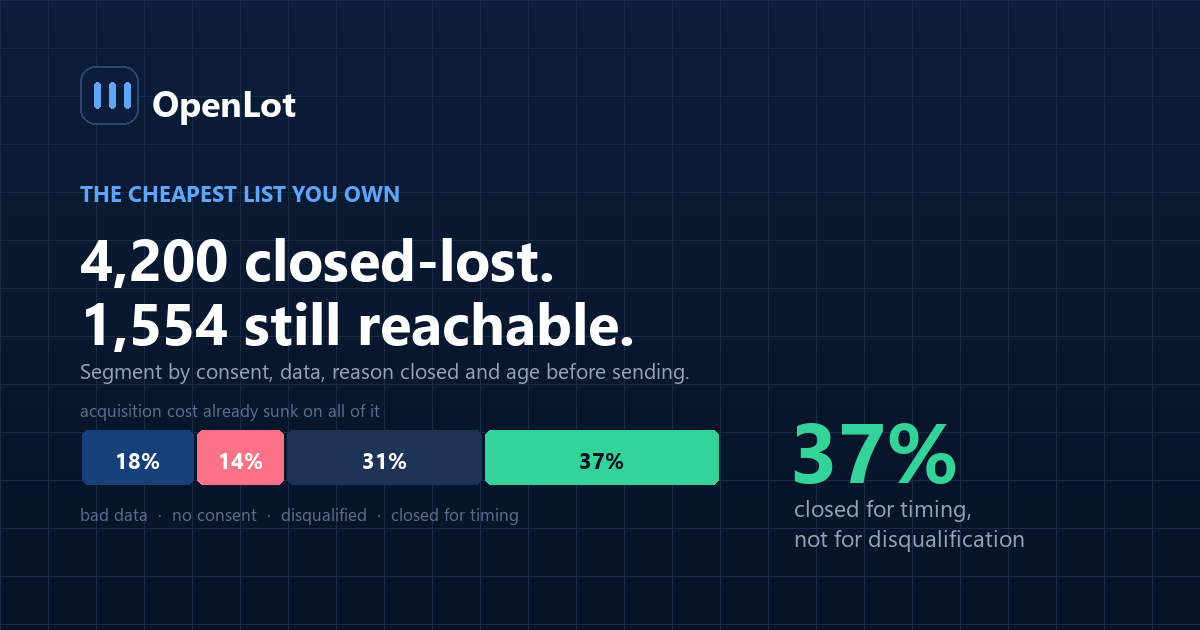
The cheapest list in the store is the one you already paid for. Most dealerships never work it, because working it by hand is impossible and automating it is a consent problem.
Read
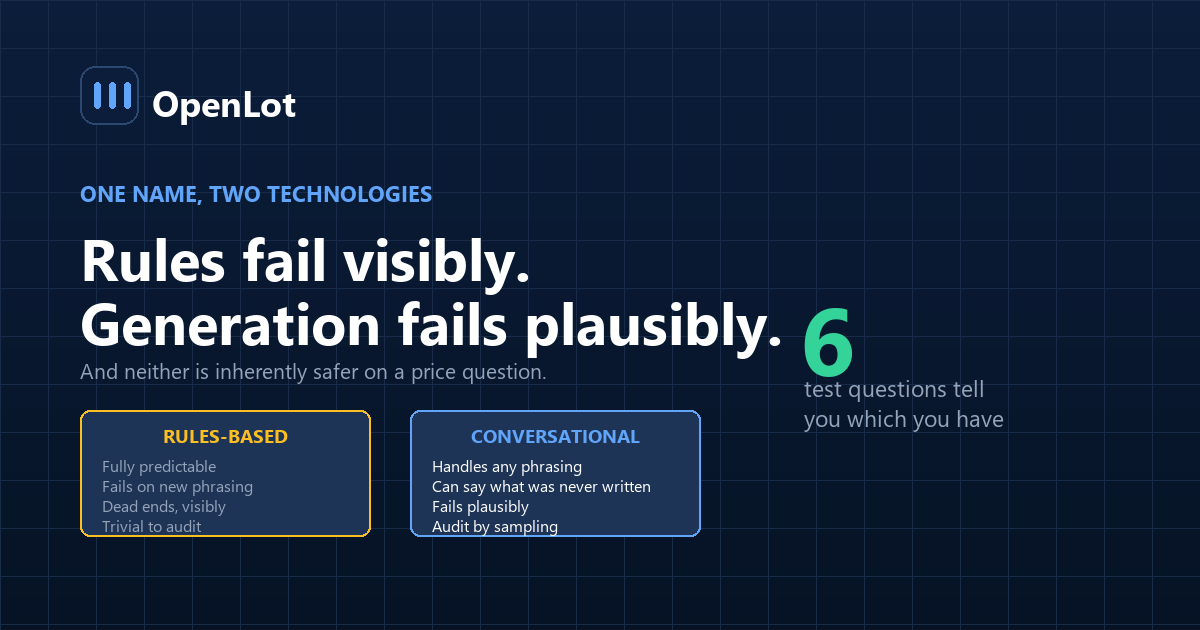
Two technologies, one product name, very different failure modes. One cannot handle the unexpected; the other cannot be fully predicted.
Read
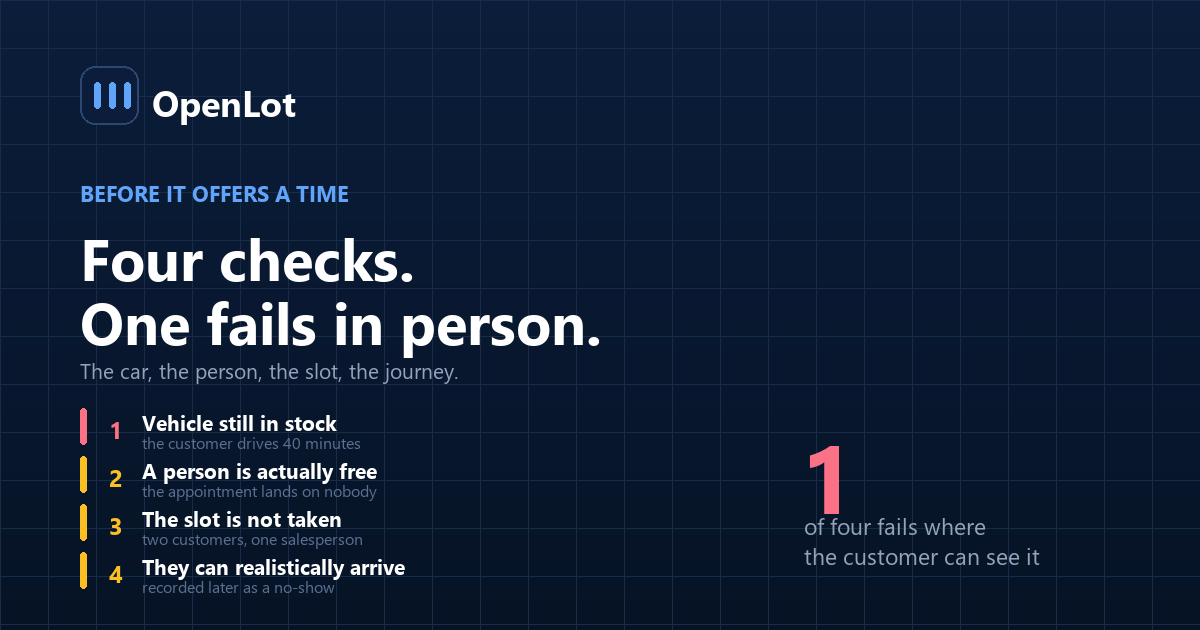
Offering a time is easy. Offering a time that a salesperson can keep, for a car that is still on the lot, is an integration problem most systems quietly skip.
Read
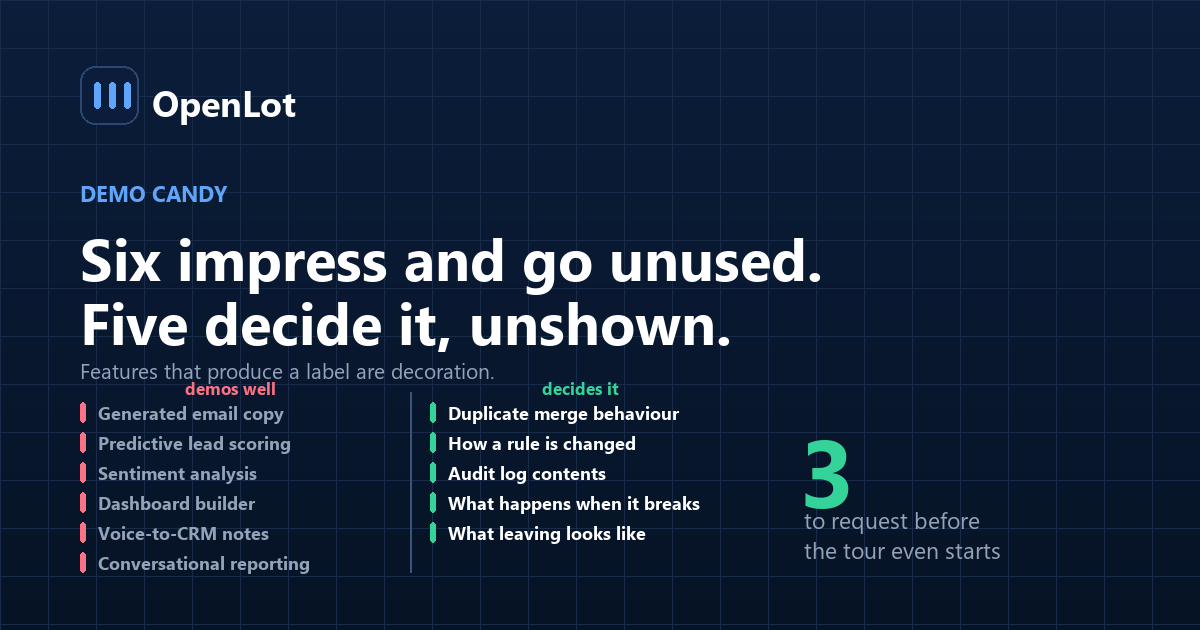
The features that demo best are rarely the ones you use daily. The ones that decide whether the deployment works are almost never shown.
Read
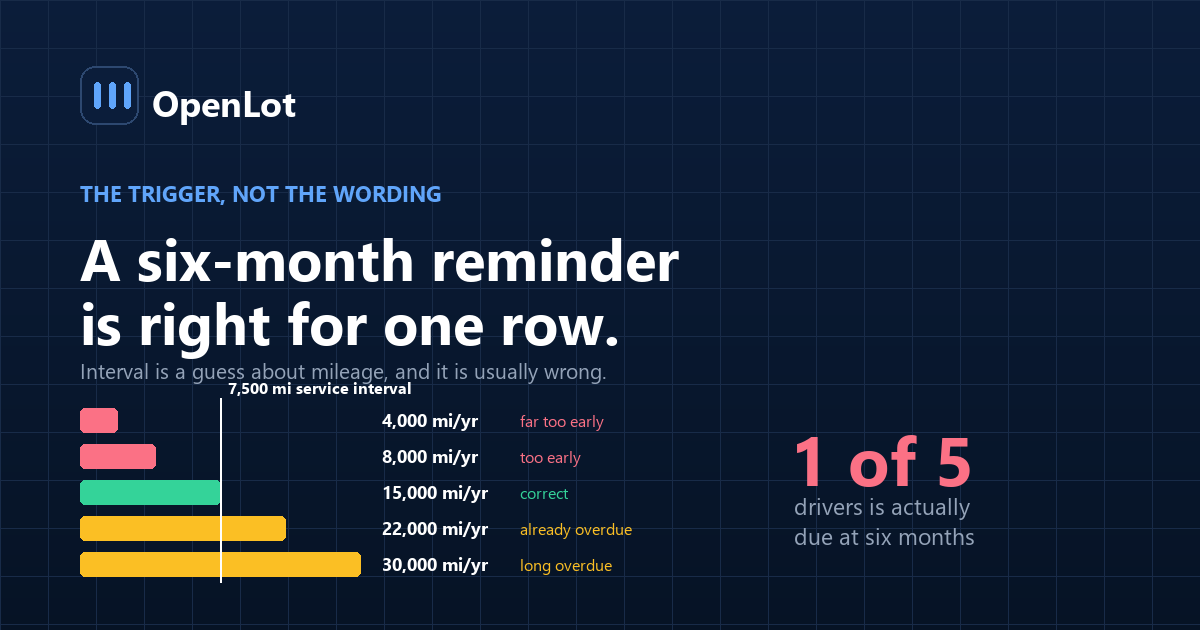
The reminder that arrives because six months passed is the one customers ignore. The trigger matters far more than the wording, and most stores only use the weakest one.
Read
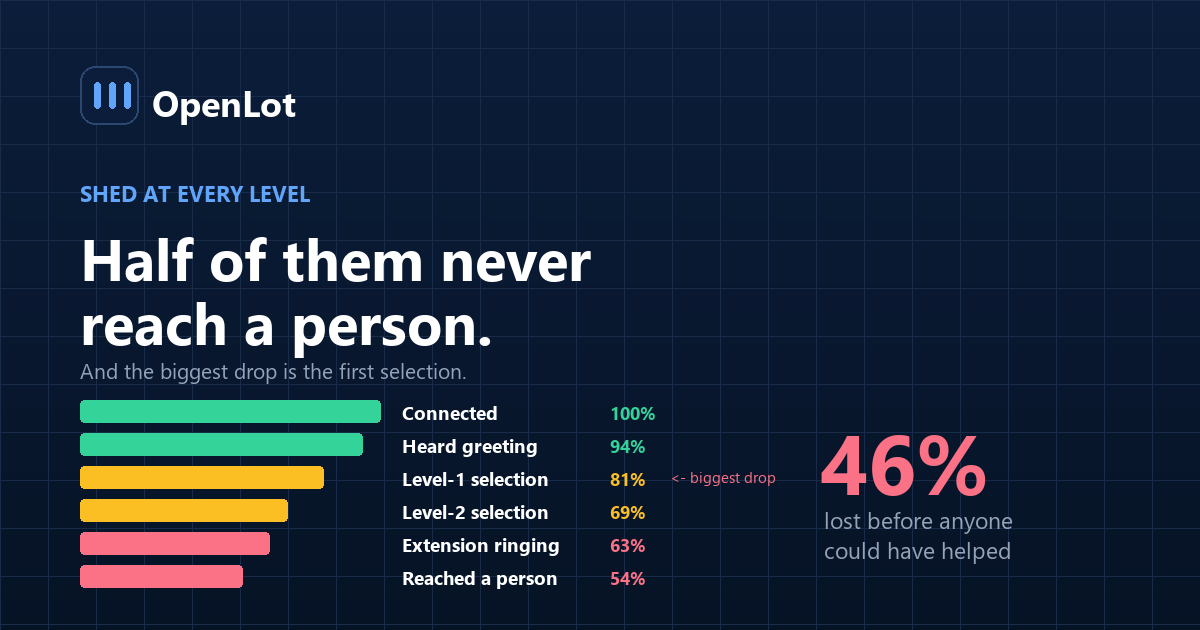
A phone tree sheds callers at every level and the shedding is measurable. Most stores have never looked, which is why the seven-option menu survives.
Read
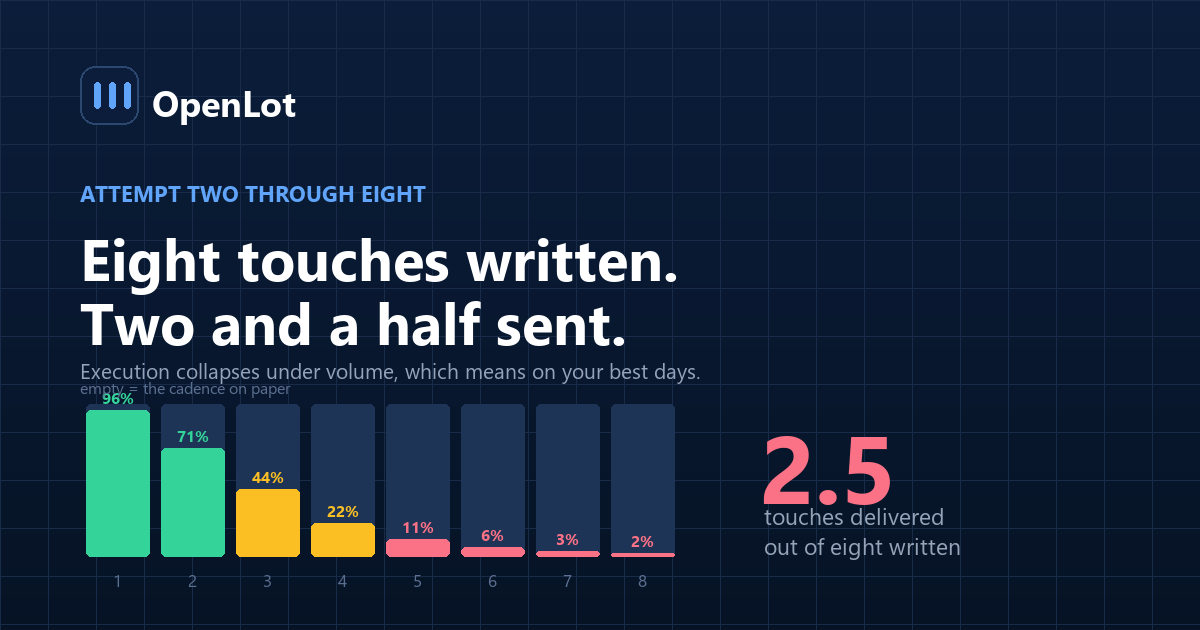
Almost every store has a follow-up cadence written down. Almost none executes past attempt three — and the collapse happens on your highest-volume days, which are your best ones.
Read
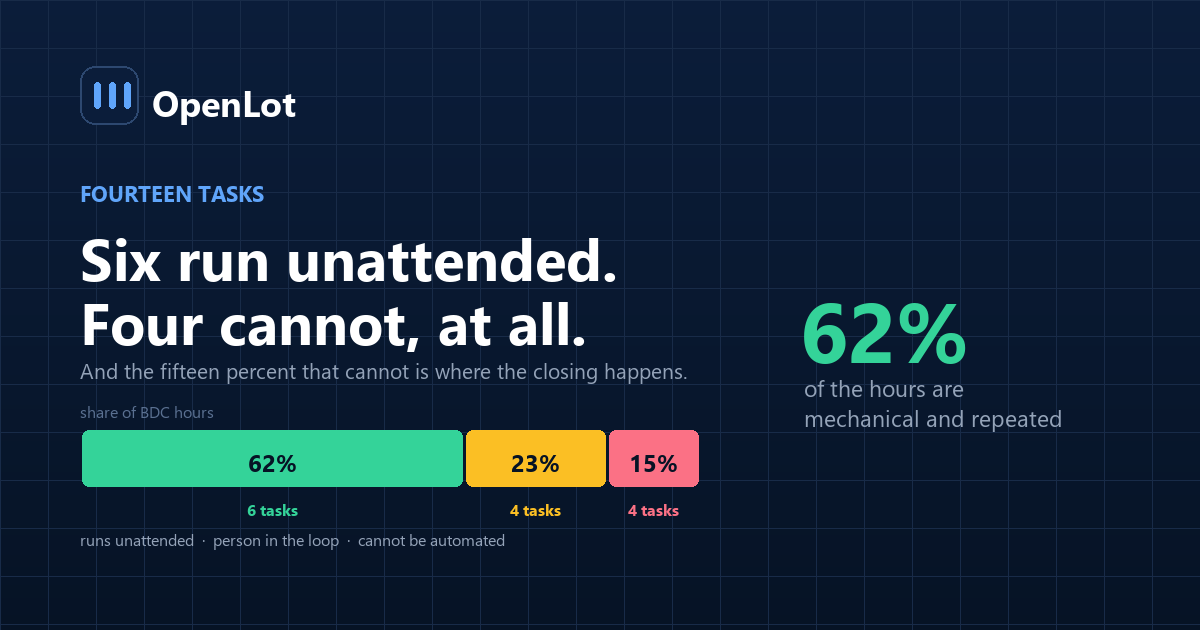
A BDC does fourteen distinct things. Six run unattended, four need a person in the loop, and four cannot be automated — and the split is not where people assume.
Read
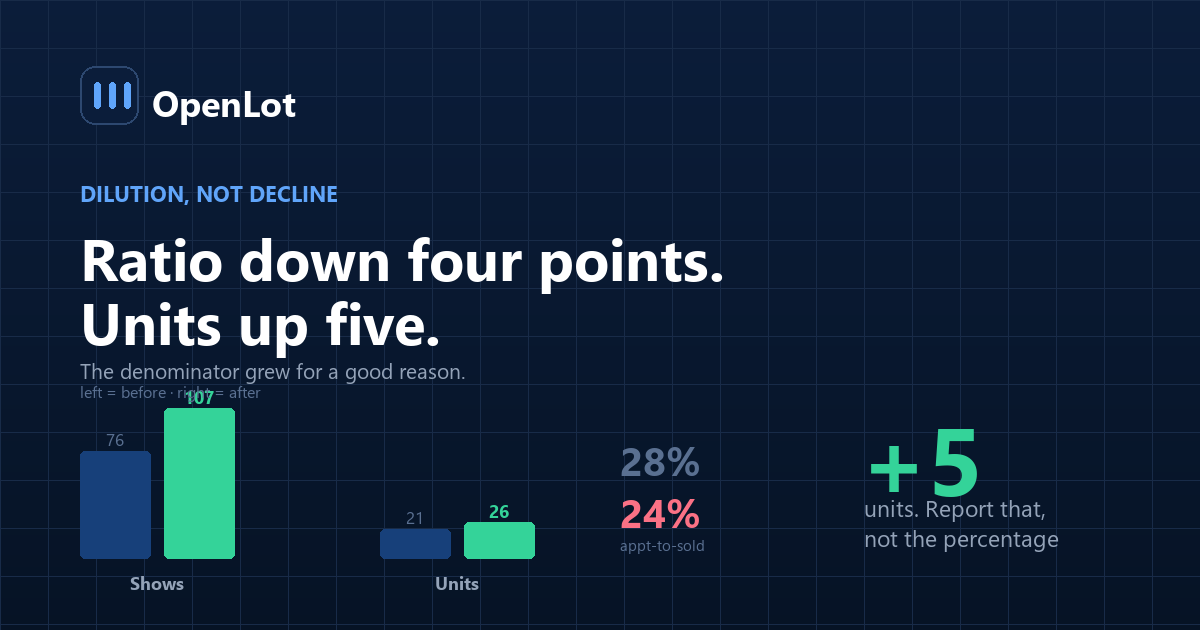
A falling appointment-to-sold ratio is usually good news misread. Booking customers nobody was reaching dilutes the ratio and raises the units.
Read
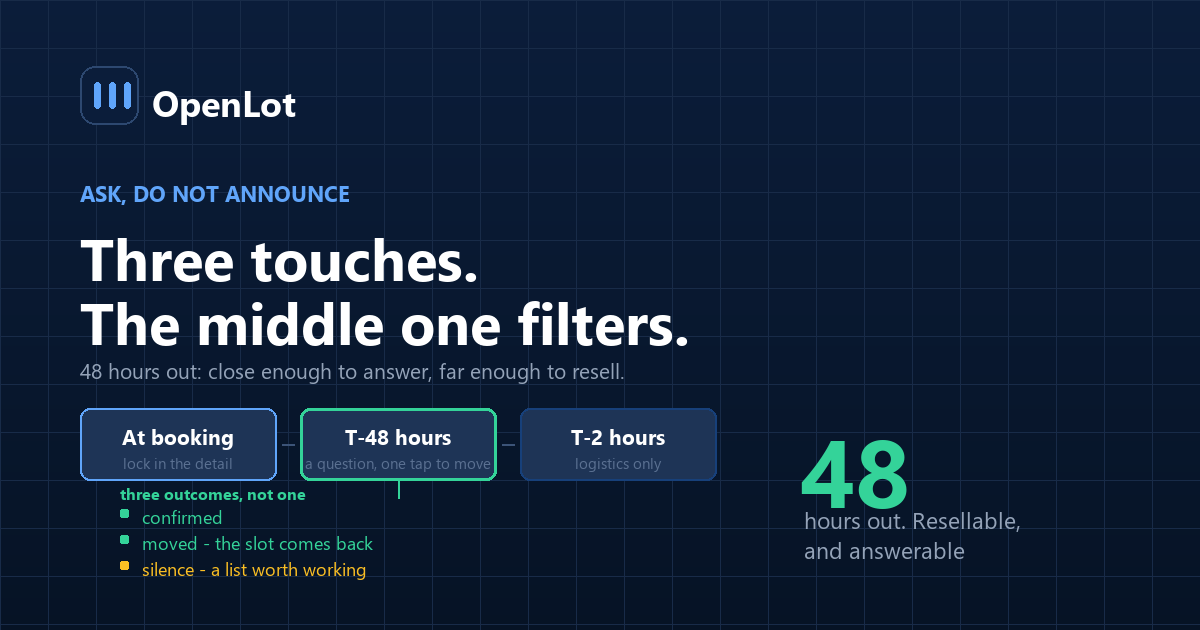
A confirmation that announces is a reminder. A confirmation that asks is a filter — and the difference is the whole programme.
Read
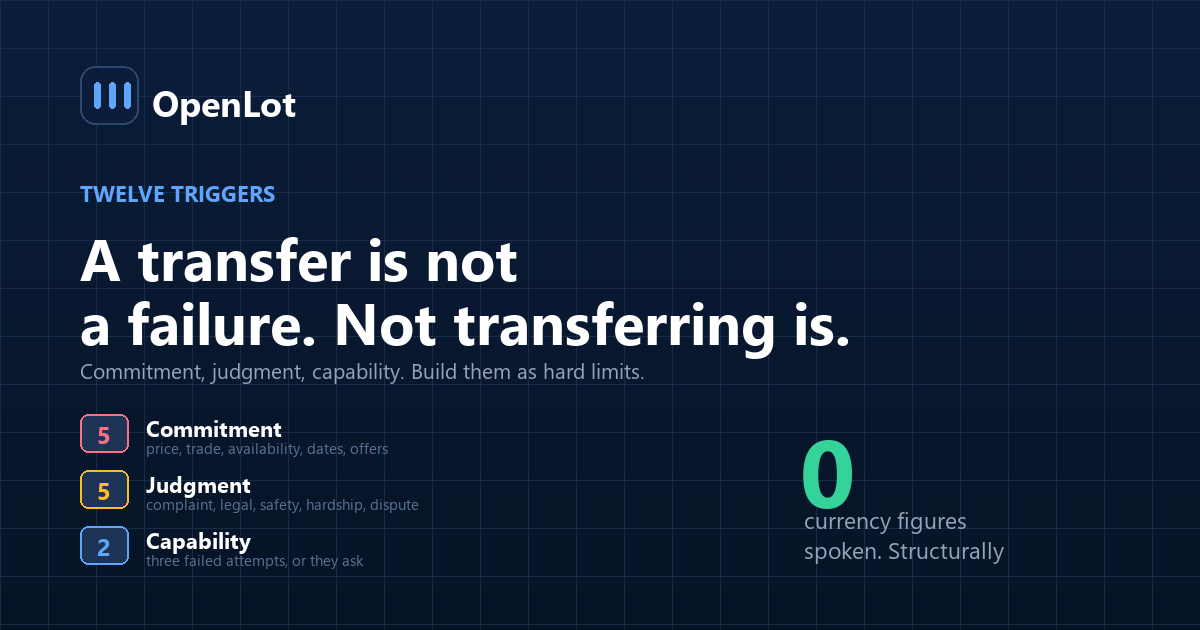
A transfer is not a failure of the system. Failing to transfer is, and the triggers that should force one are a short enumerable list.
Read
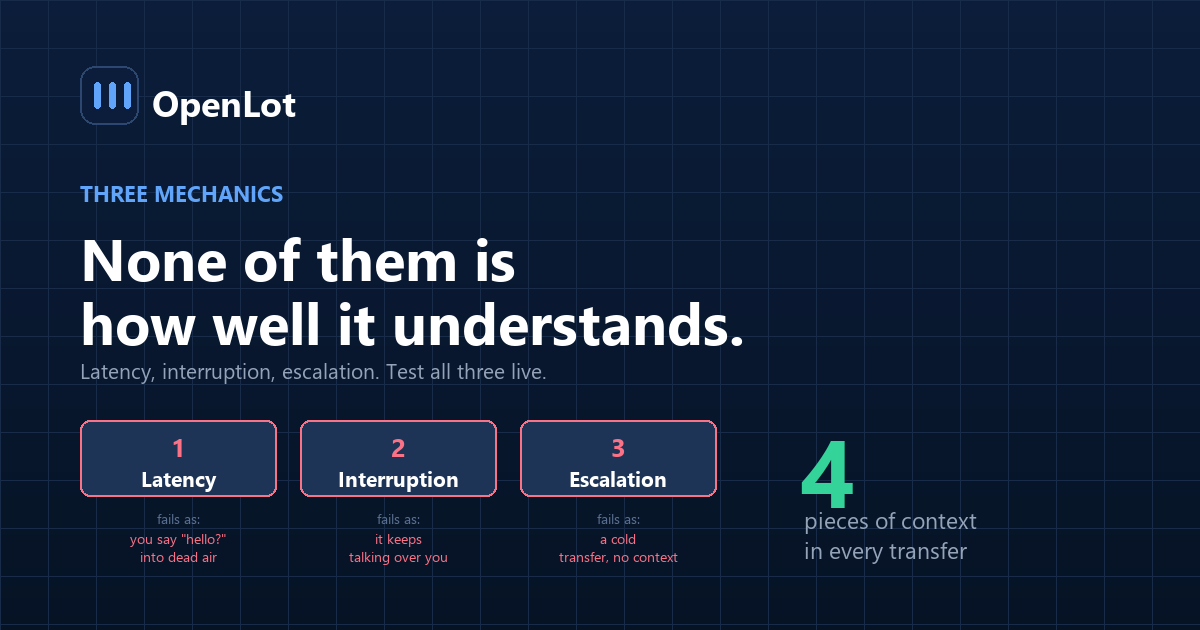
Three mechanics decide whether a voice agent works, and none of them is how well it understands. Dead air, failure to yield, and a bad transfer.
Read
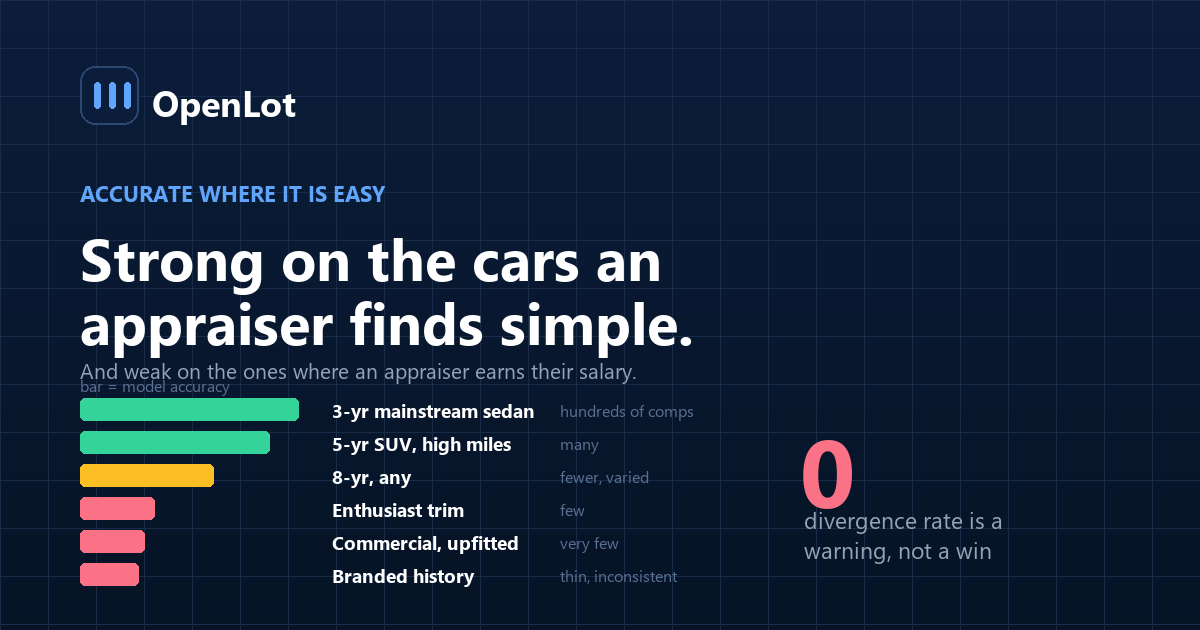
A model is most accurate on exactly the cars that need an appraiser least, and least accurate on the ones where the money is.
Read
An instant trade number that the store then revises downward has not saved time. It has started the conversation from a worse place than having said nothing.
Read
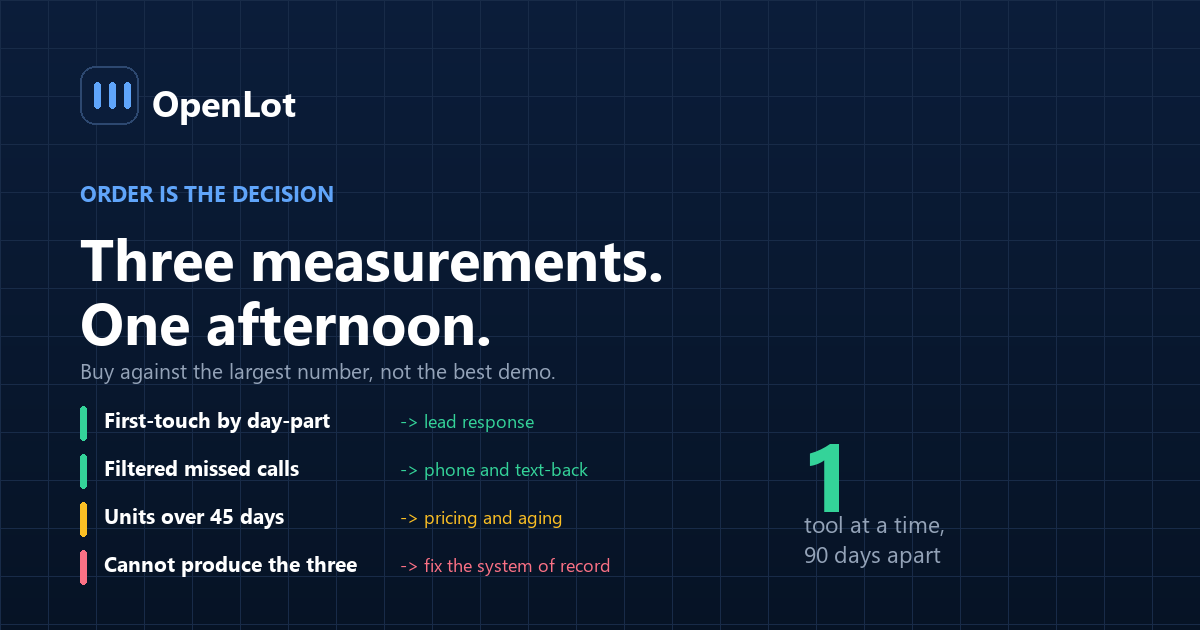
Three measurements decide which tool to buy first, and they take an afternoon. Buying in the wrong order is how small stores conclude that none of it works.
Read
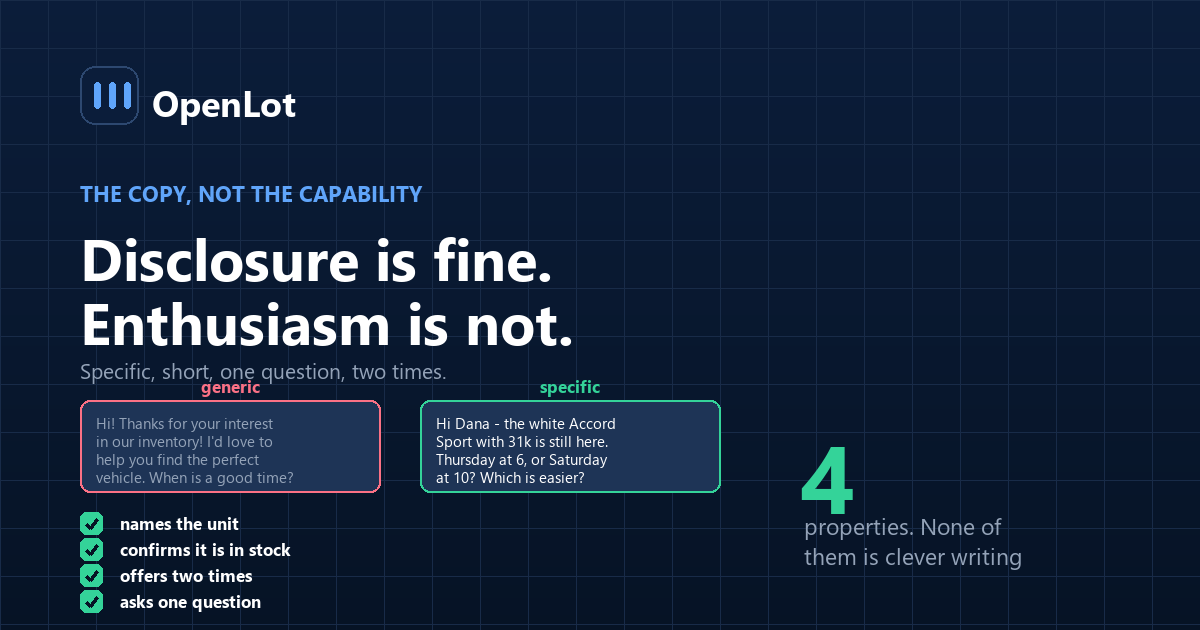
Disclosure is not the problem. Generic, over-eager copy is. Customers object to being sold to by a machine that is pretending, not to the machine.
Read
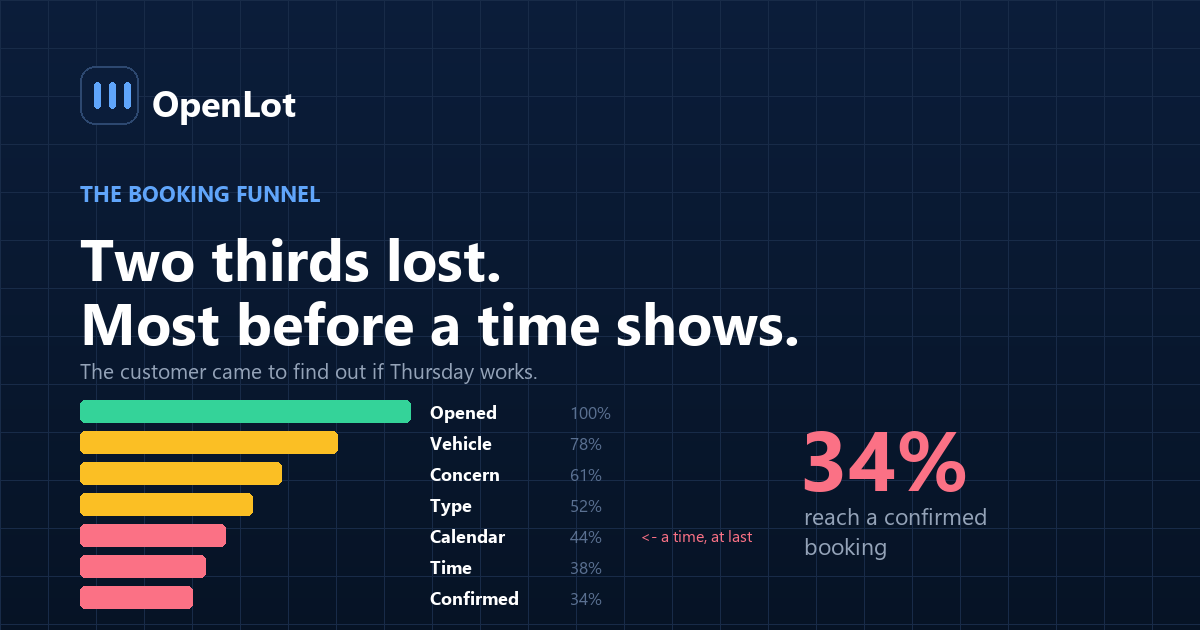
The online scheduler is not failing because customers prefer the phone. It is failing because it asks eleven questions to book an oil change.
Read
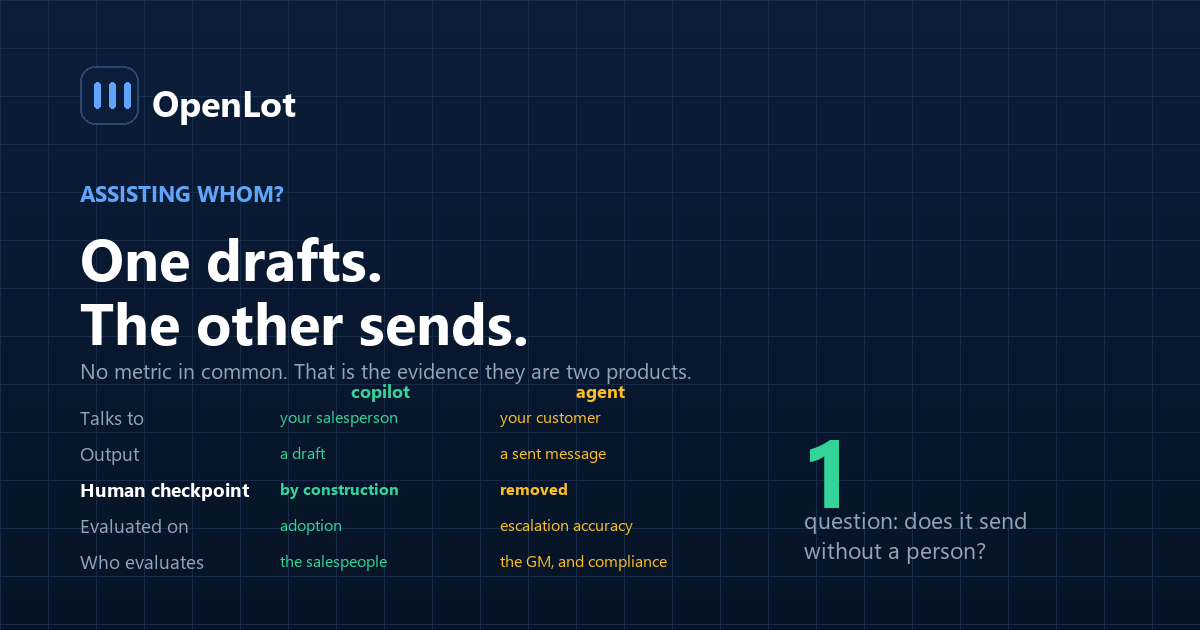
A copilot for your salespeople and an agent that talks to customers are different products with the same name, different risks, and different buyers.
Read
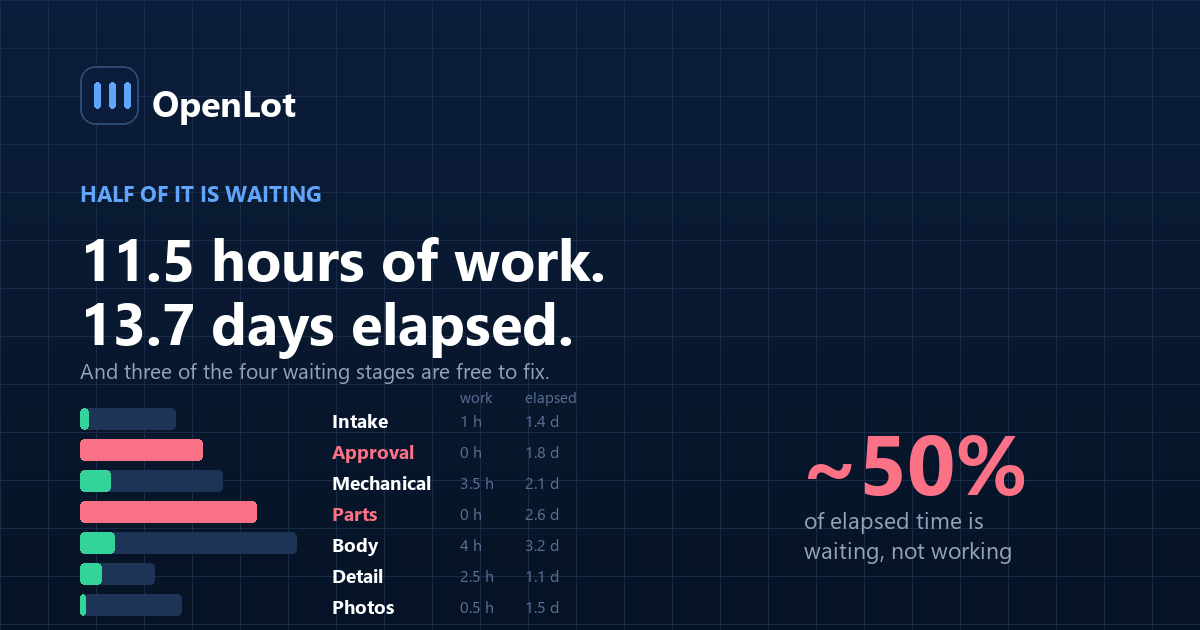
Every day in recon is a day of holding cost with no exposure. Most stores cannot say where the time goes, because nobody records when stages start and end.
Read
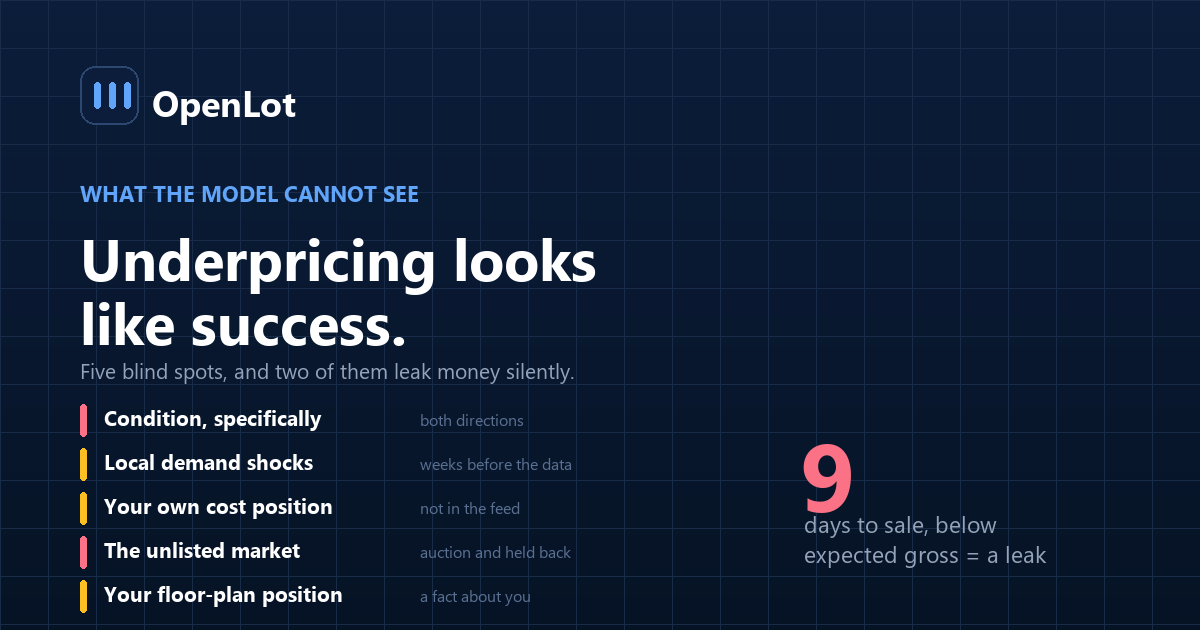
Market data knows what comparable cars list for. It does not know that yours has a repaint, or that the plant two towns over just announced a shift cut.
Read
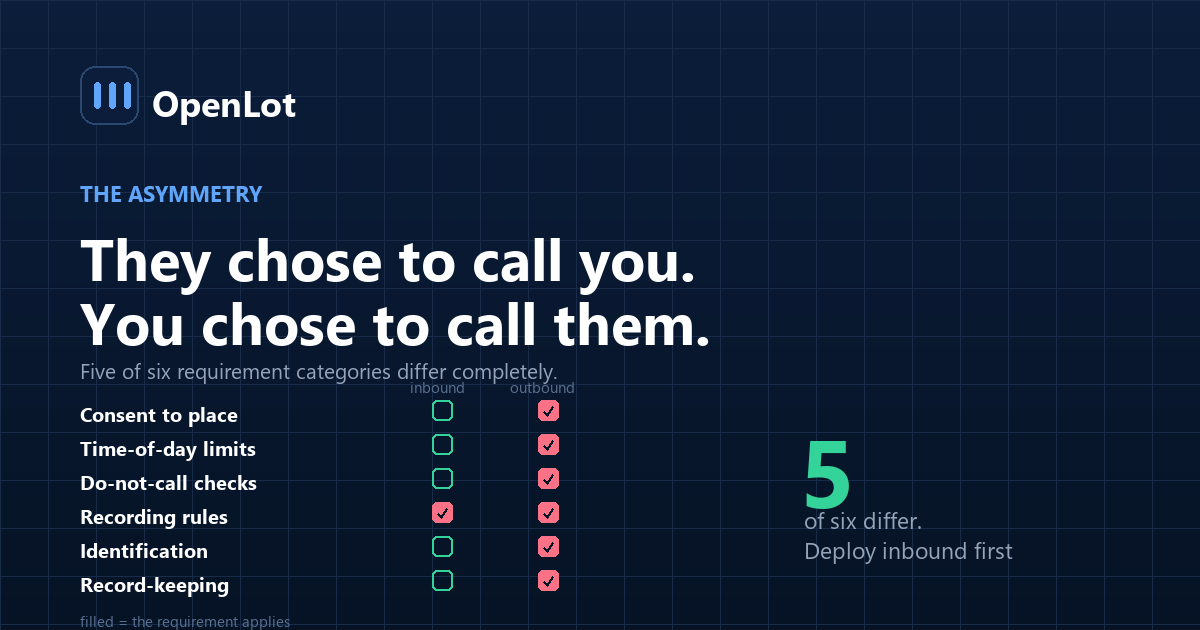
Answering a call the customer made and placing one they did not are different activities with different rules. Most products treat them as one feature.
Read
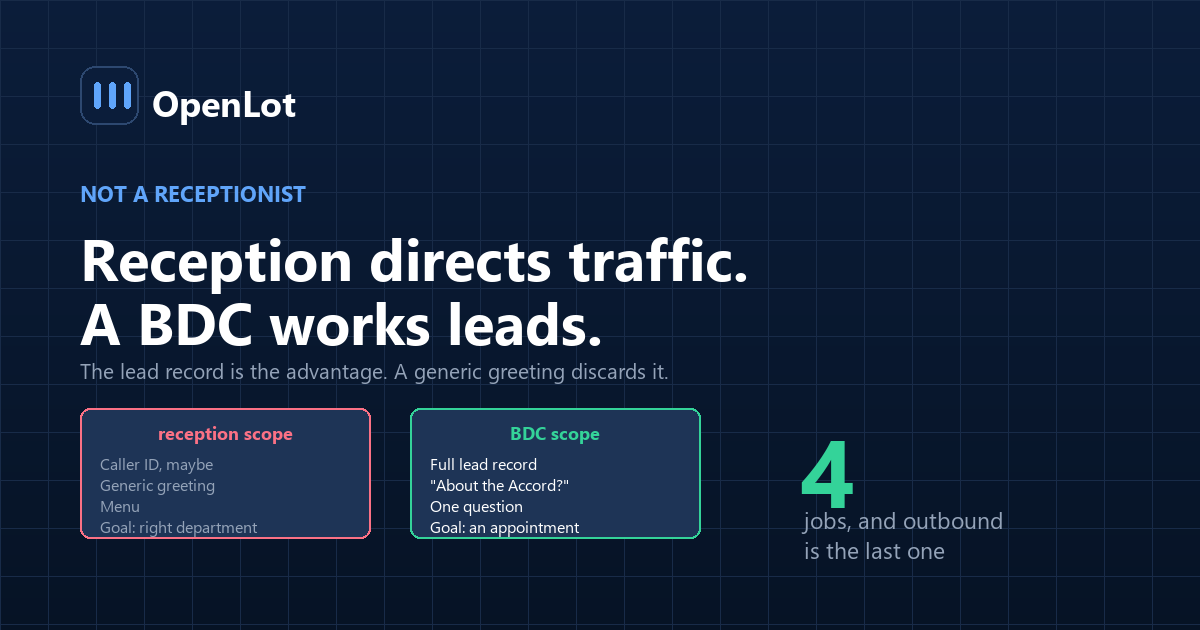
A BDC phone agent is not a receptionist. It works leads rather than directing traffic, and the two jobs need different scope, scripts and metrics.
Read
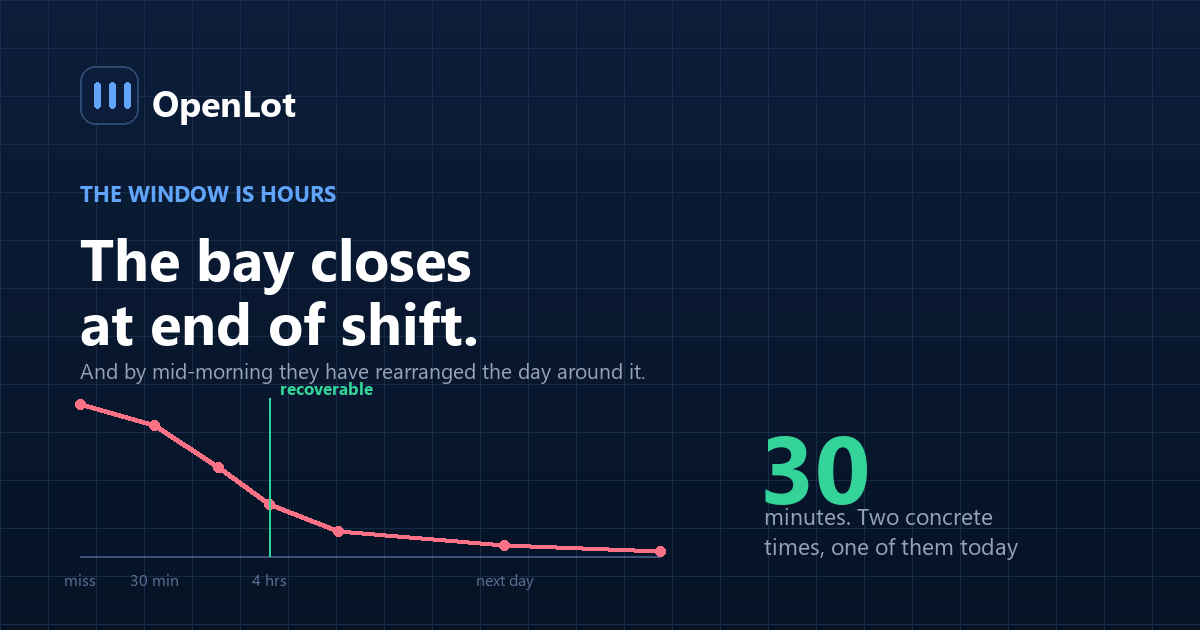
A service no-show is recoverable for about four hours. After that the customer has rearranged their week and you are booking a new appointment, not saving one.
Read
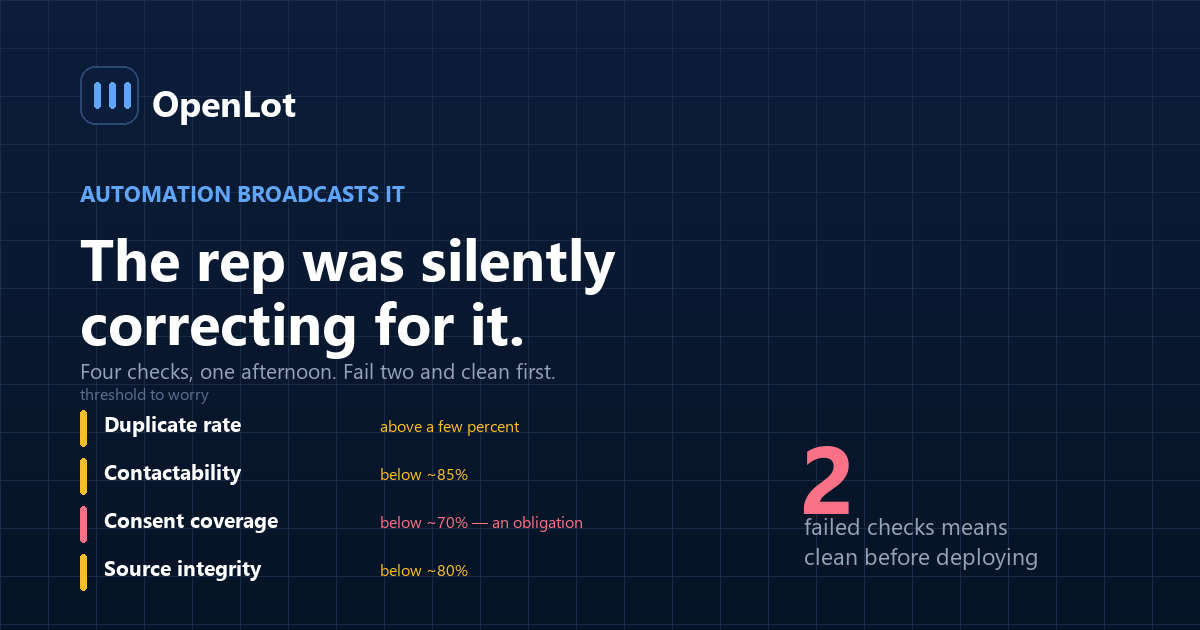
Automation turns an internal reporting problem into something customers experience. Four checks tell you whether yours is bad enough to fix first.
Read
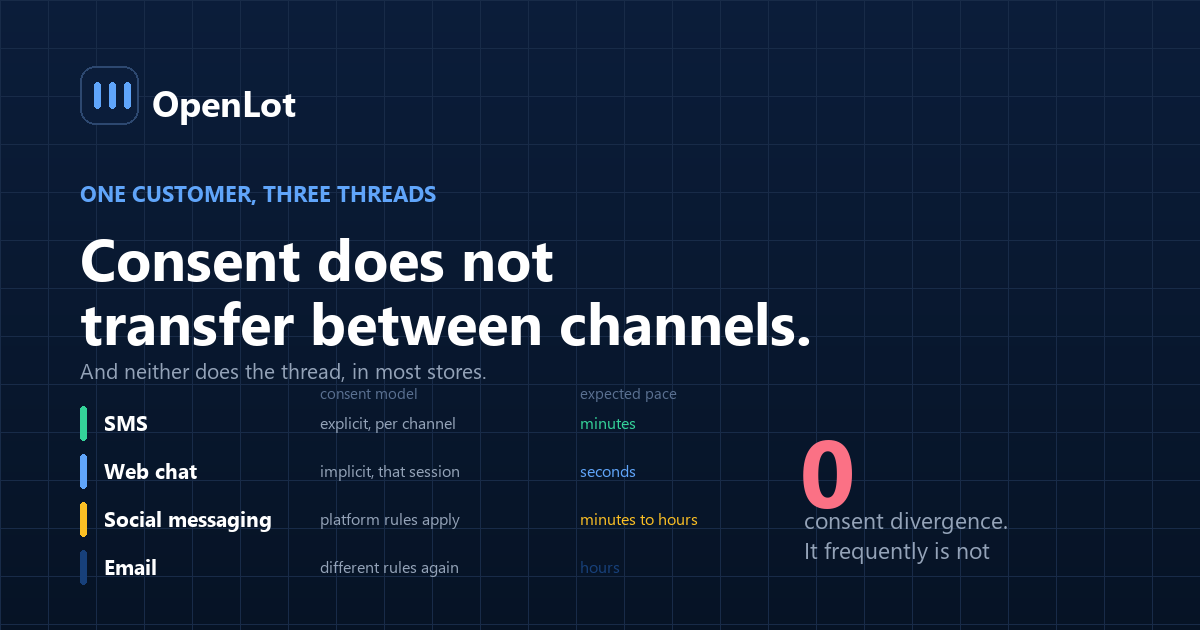
A customer who texts, then messages on Facebook, then calls is one conversation. In most stores it is three, and none of them knows about the others.
Read
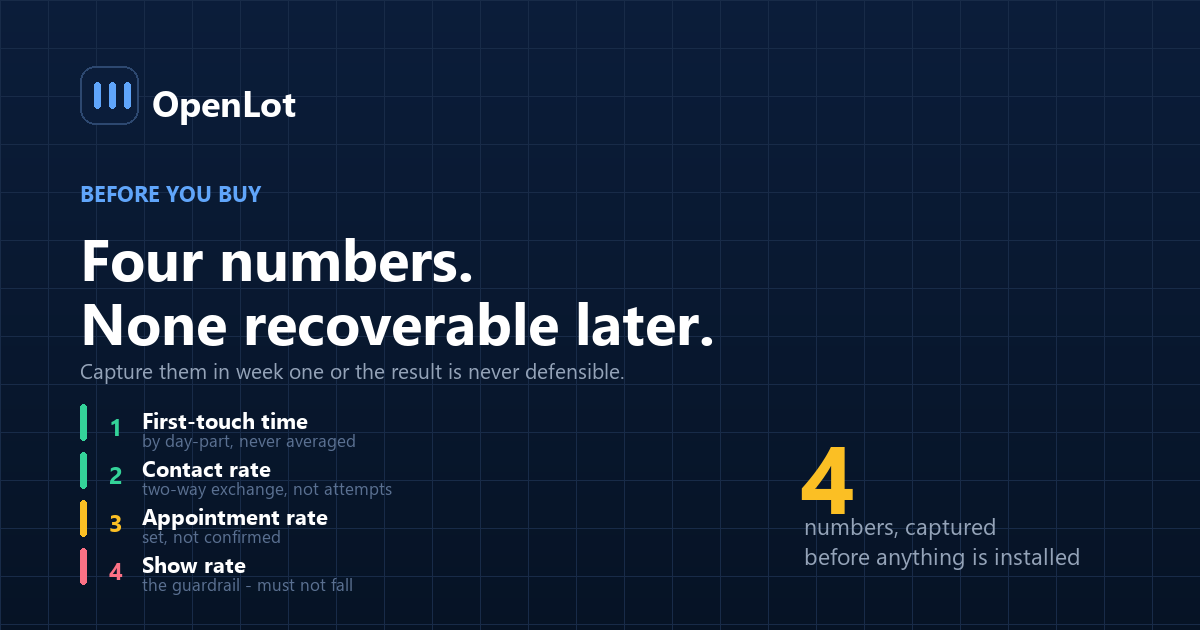
Four numbers decide whether an AI lead response system worked. Three of them are computed wrong in most stores, and none can be recovered after go-live.
Read
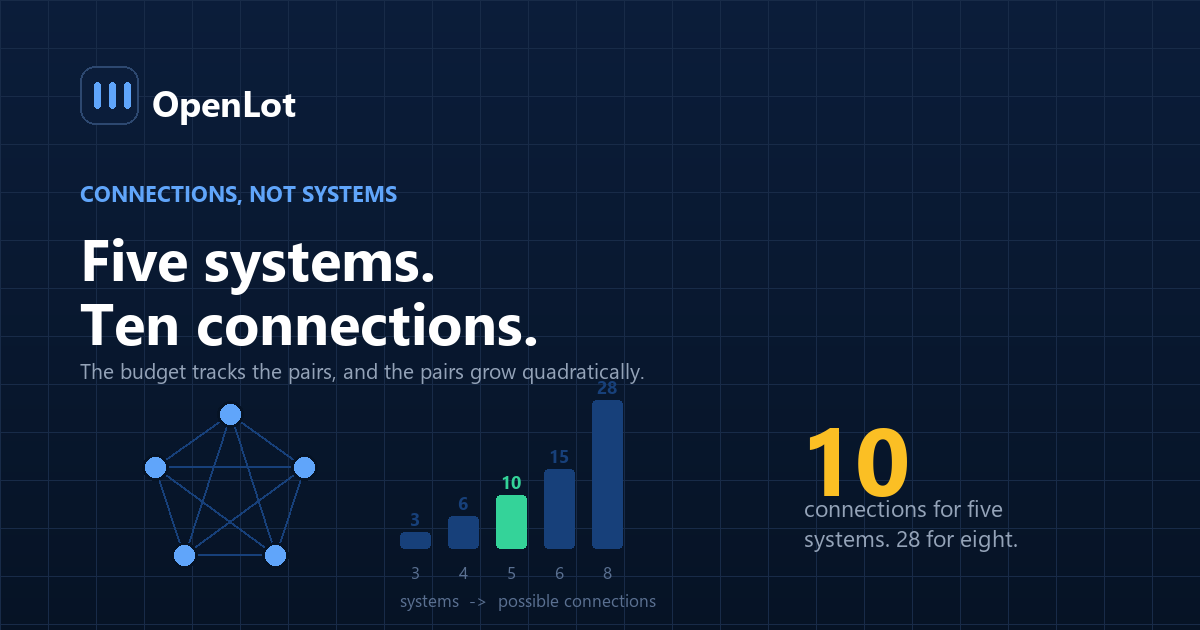
Five systems do not need five integrations. They need up to ten, and each one is a separate relationship with its own fees, its own permissions and its own way of breaking.
Read
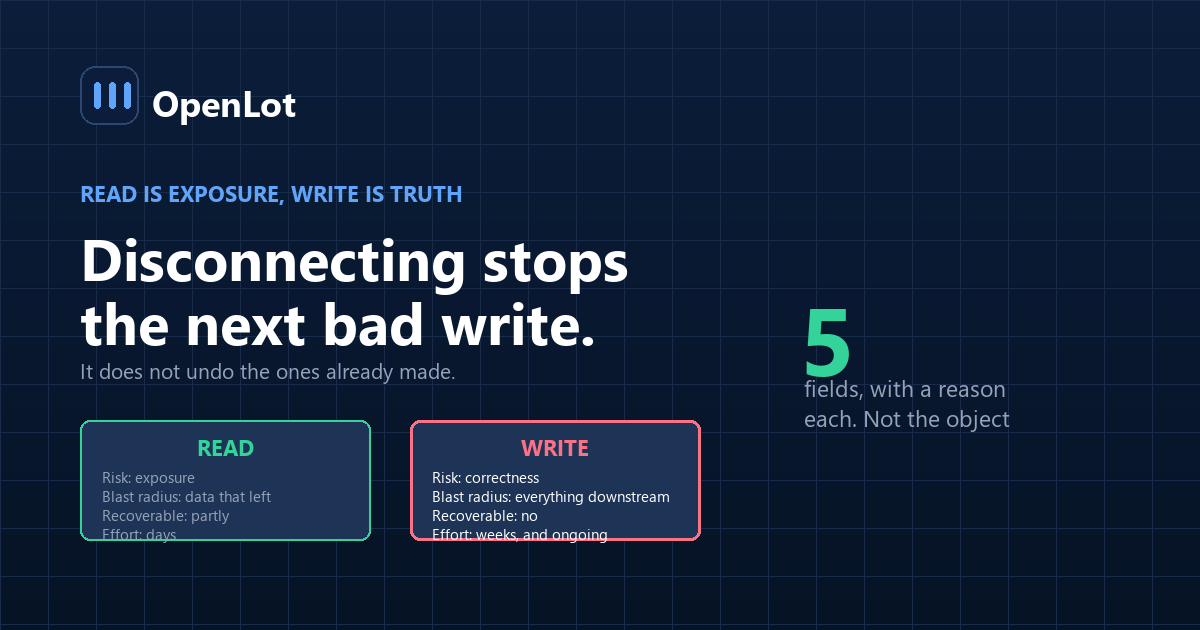
Read access is a conversation. Write access is a project, and it touches the system every other system trusts.
Read
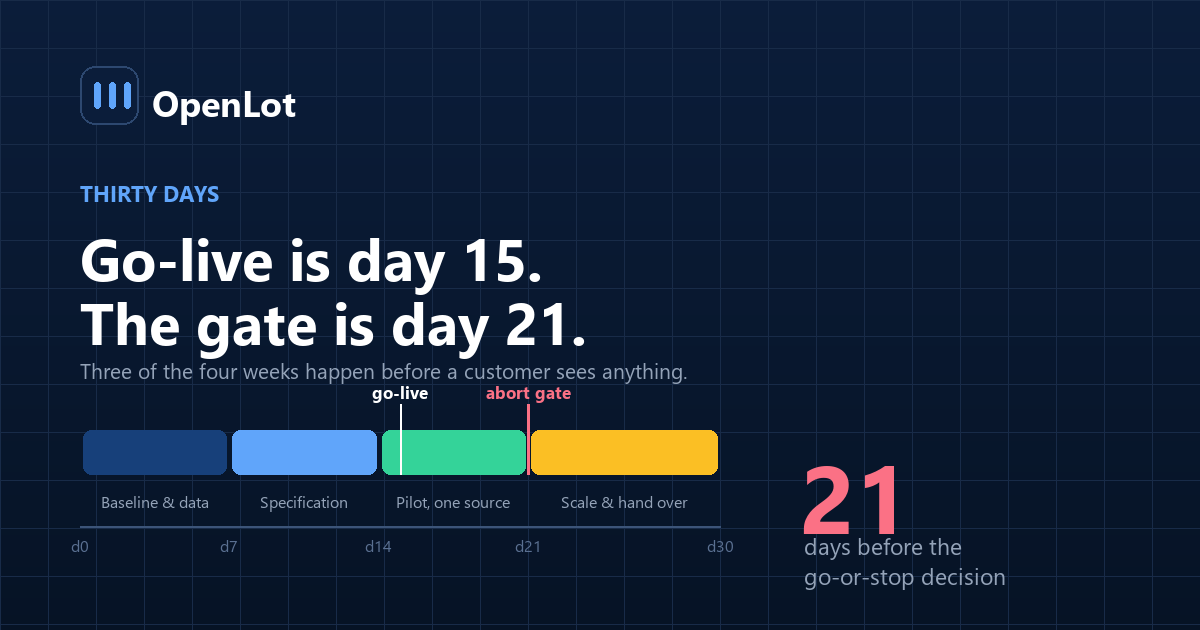
Most failed deployments were decided in week one, when nobody wrote down what the system should do with a price question. The plan below front-loads that work on purpose.
Read
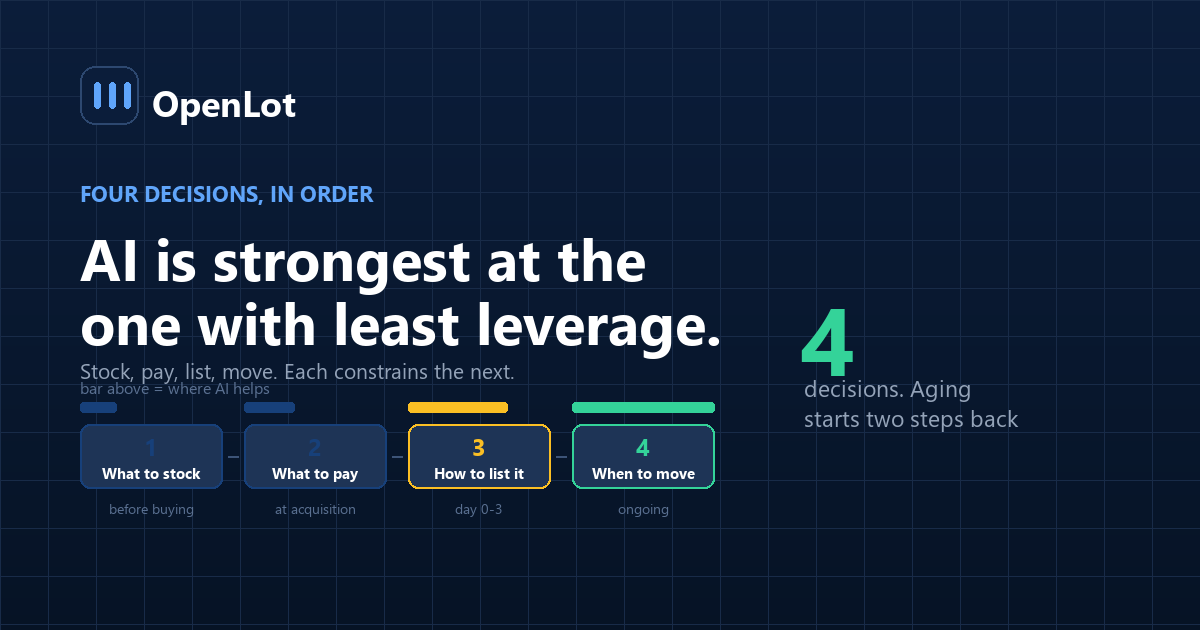
Turn, mix and stocking are usually managed by three different habits. They are one system, and the decisions in it compound in a specific order.
Read
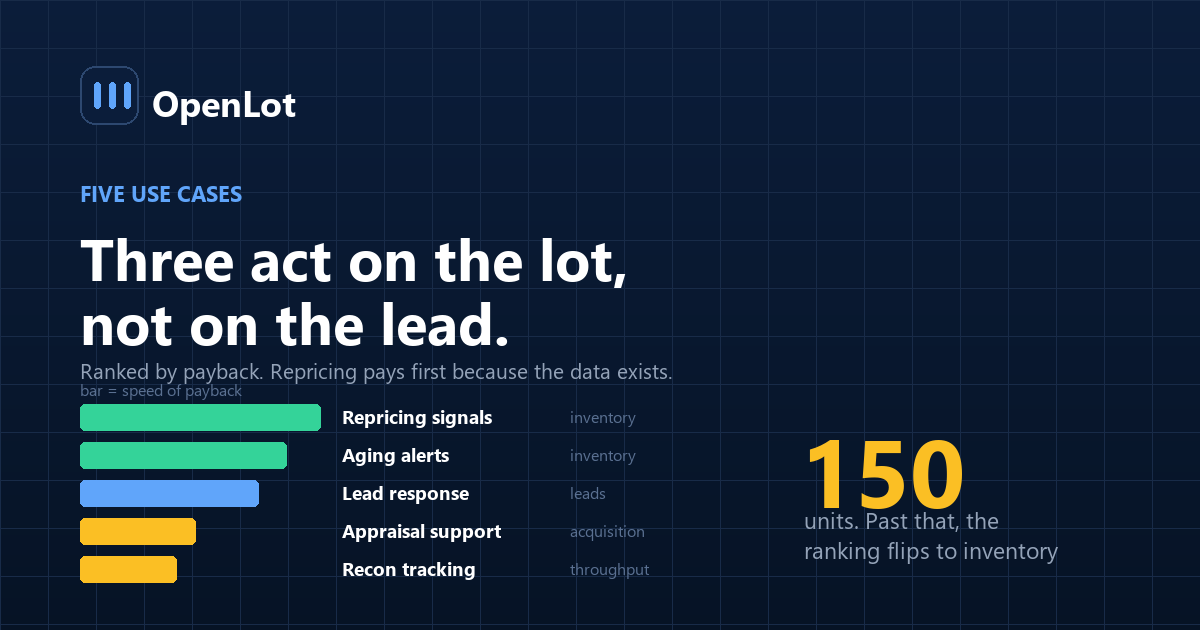
Five applications in a used car operation pay for themselves. Three of them act on inventory, and those three are where the money is at any lot size.
Read
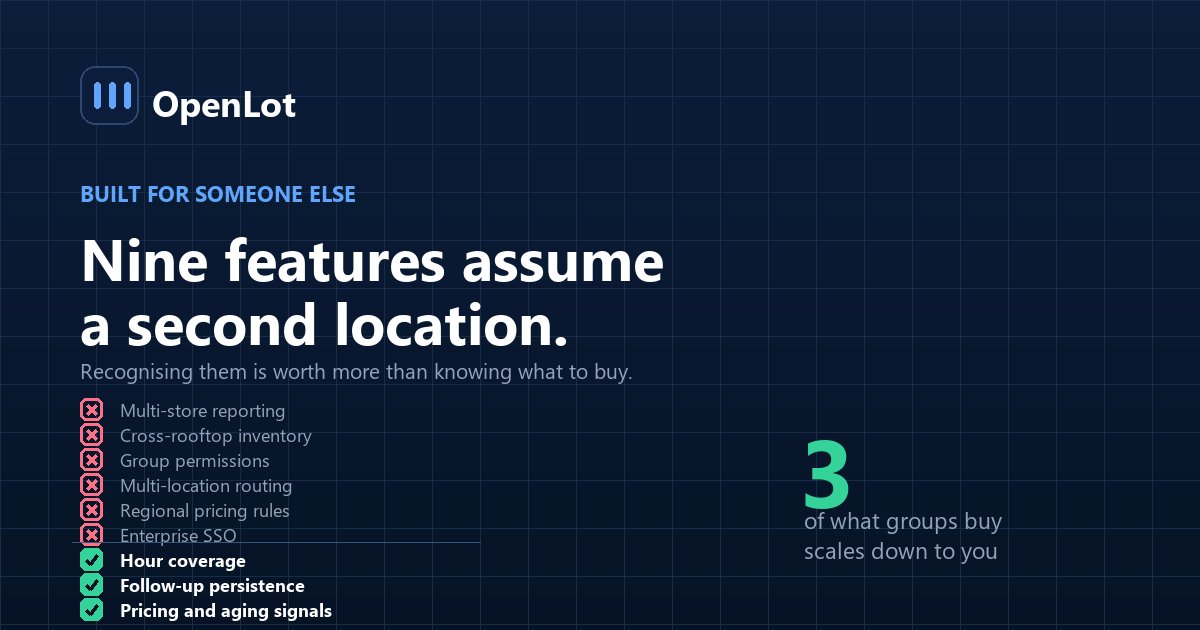
Most of what a platform demo shows a small store is a group feature. Knowing which nine to skip is worth more than knowing which two to buy.
Read
Fixed ops does not have one problem. It has six, they occur in sequence, and automating the wrong one makes the bottleneck worse rather than better.
Read
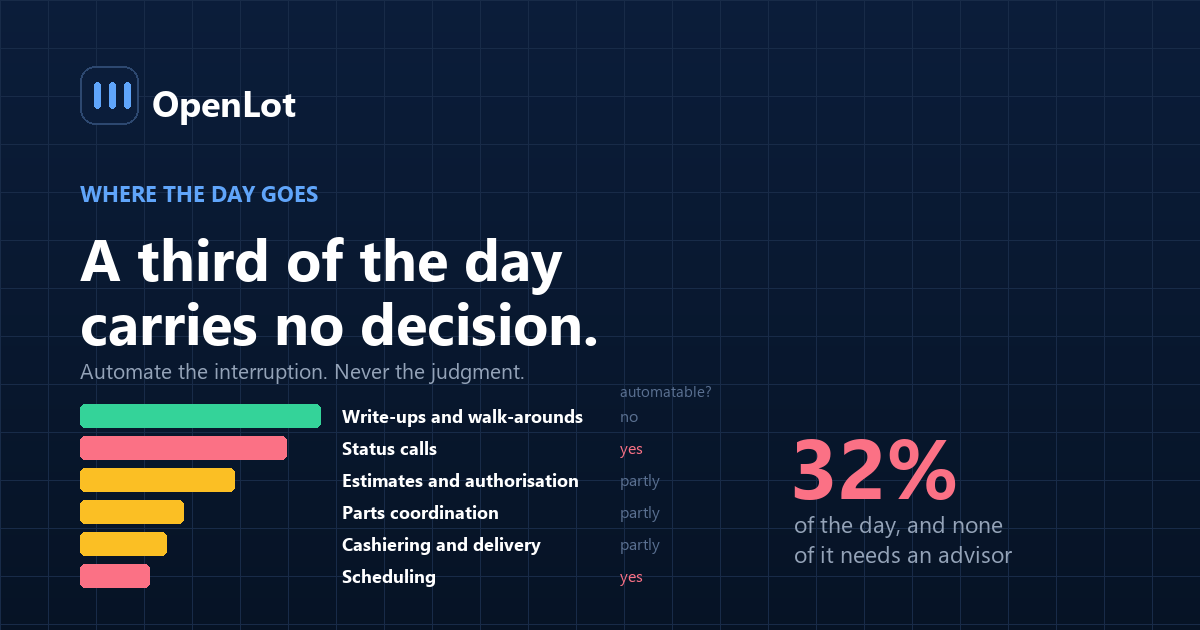
An advisor on the phone is not writing an RO. Status calls alone consume a large share of the day, and they are the easiest thing in the department to hand off.
Read
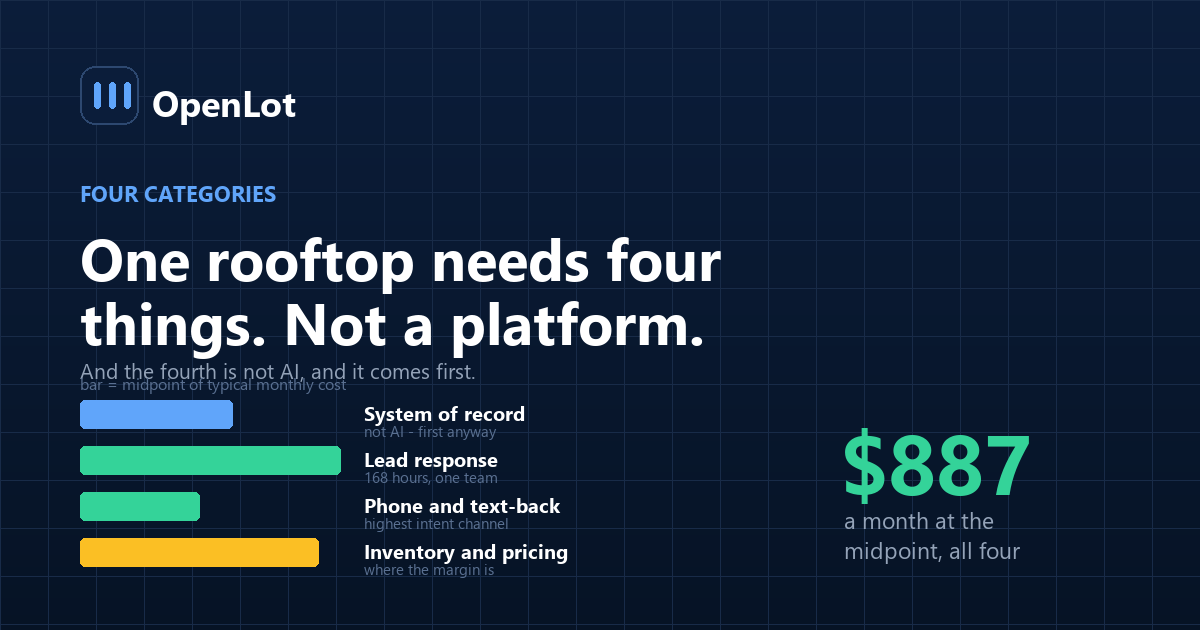
Four categories cover almost everything an independent actually needs. The platforms are built for franchise groups, and most of what they charge for does not apply.
Read
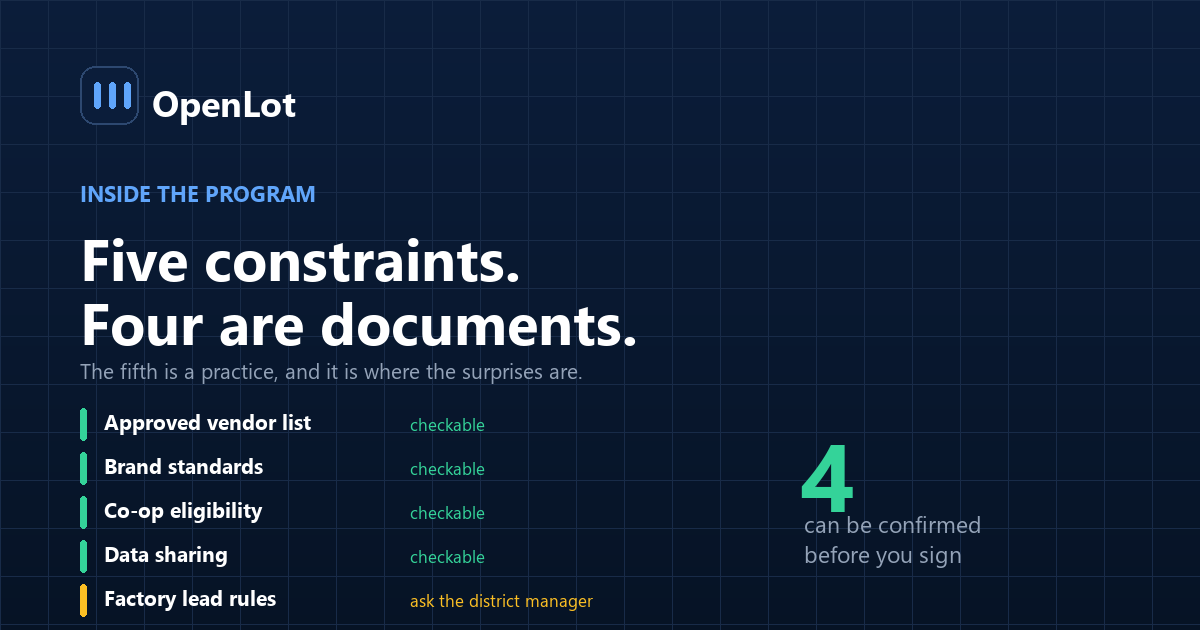
A franchise dealer buys software inside a set of rules an independent never sees. Four of the five are checkable before signing, and one is checkable only by asking.
Read
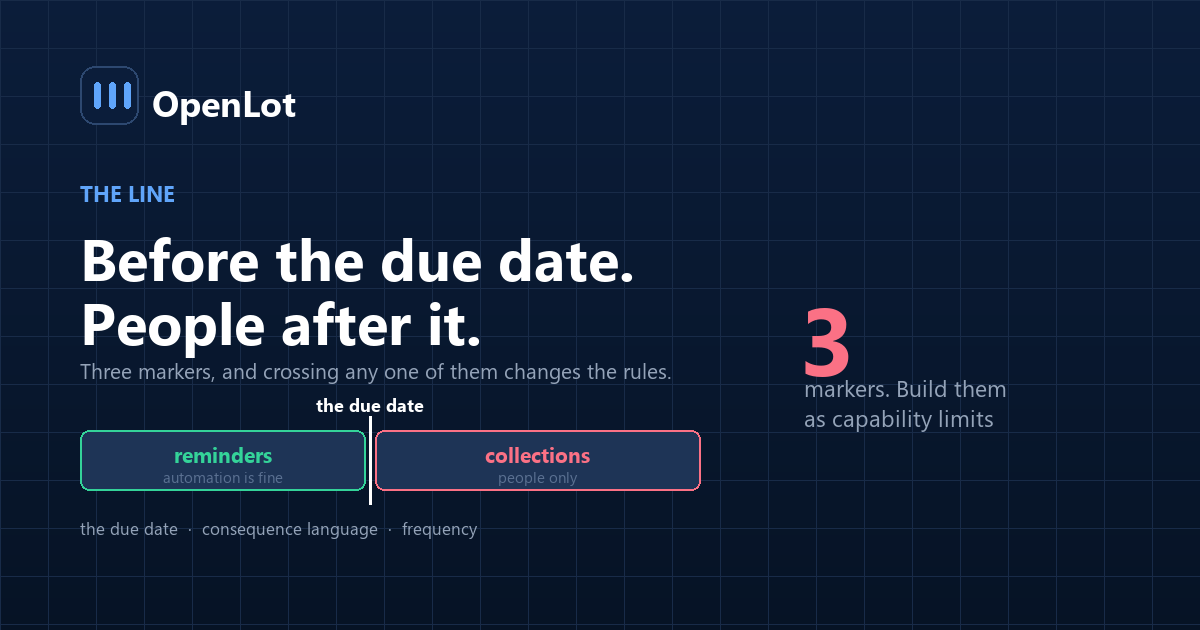
Payment reminders are not collections. The distinction is legal, it is narrower than it looks, and an automated system has no judgment about which side it is on.
Read
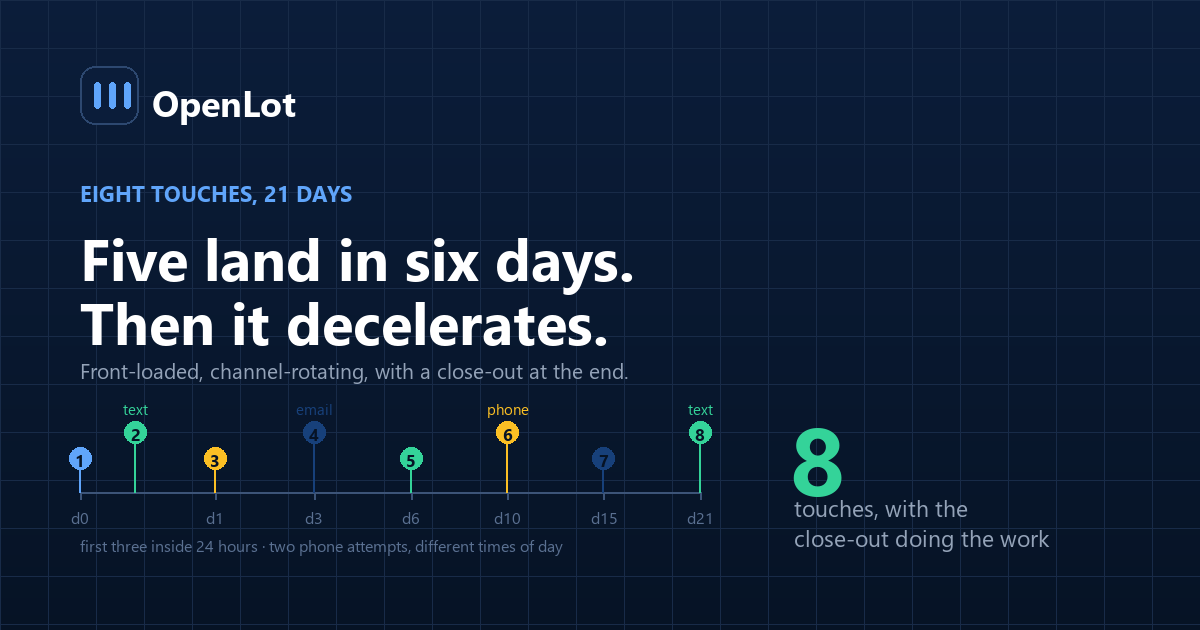
A usable cadence is eight touches over 21 days, rotating channel, with the first three inside 72 hours. Here it is in full, with the reasoning for every interval.
Read
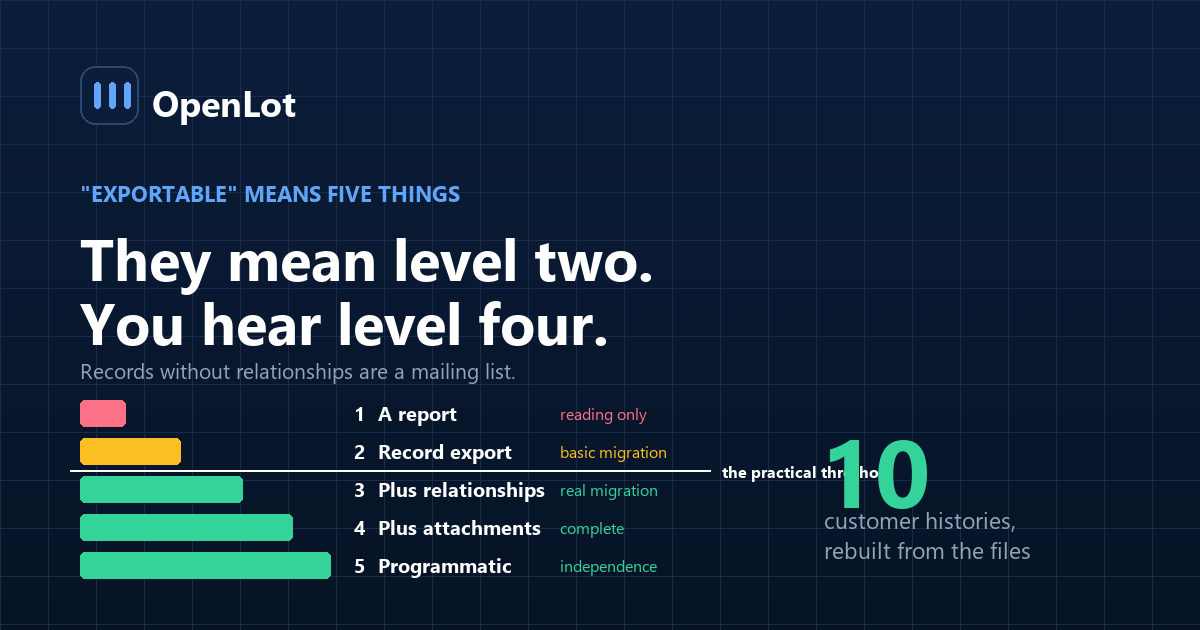
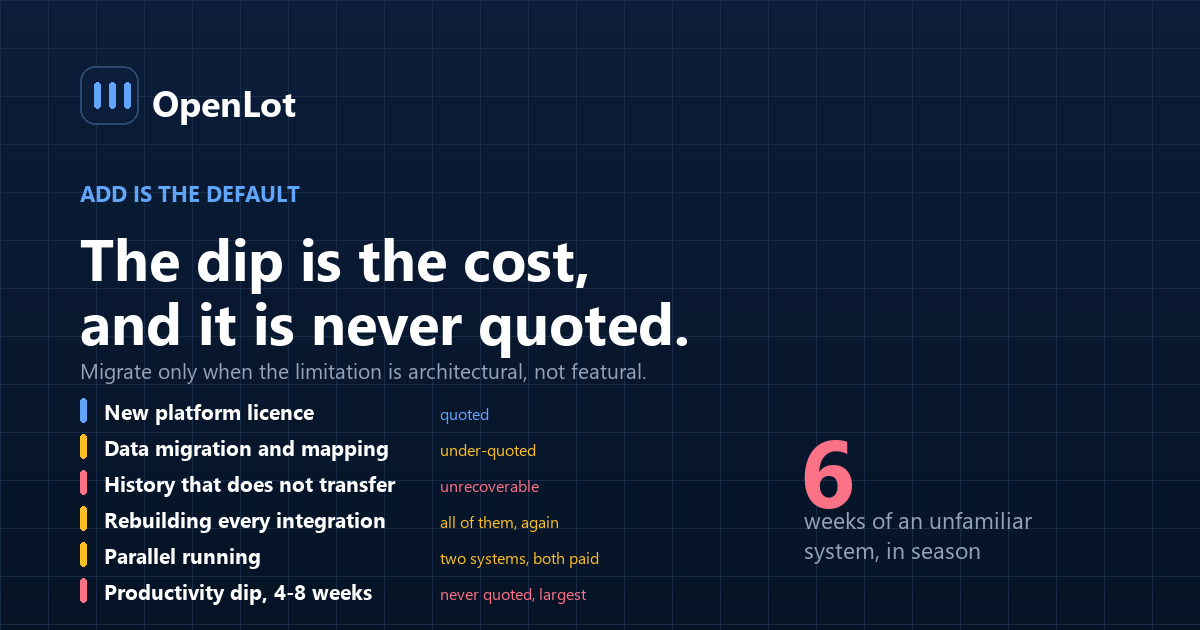
Changing the system of record is the most disruptive project a store can run. Most AI CRM pitches are asking you to do it for a feature set you could add.
Read
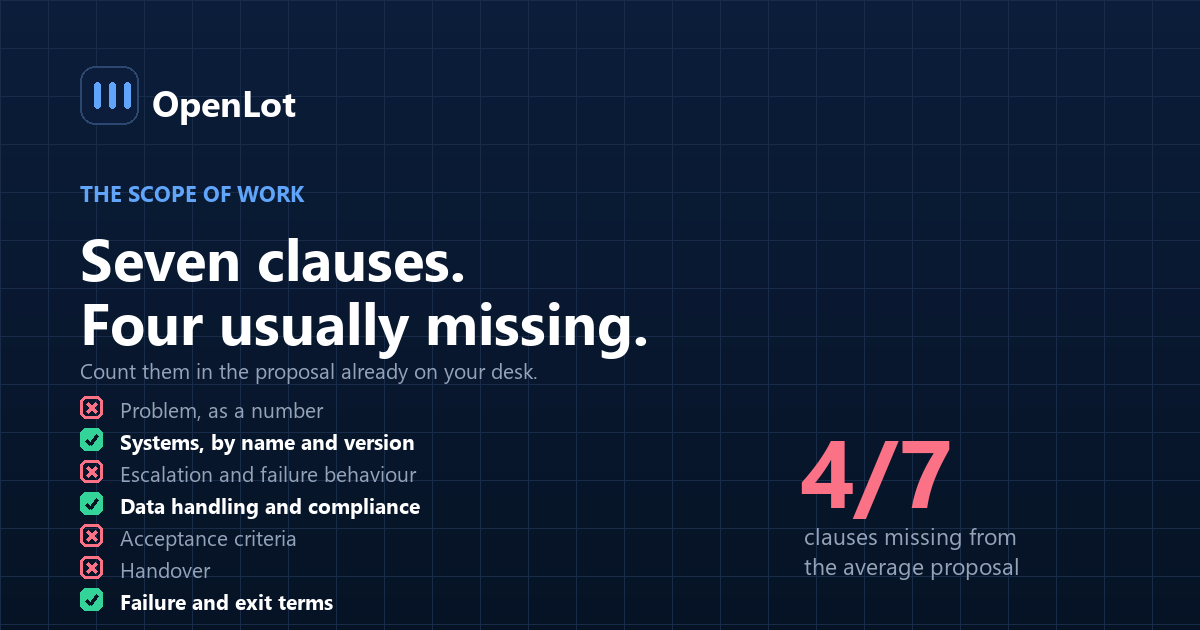
A consulting engagement either ends with software running in your store or with a deck. The difference is visible in the scope of work, before you sign it.
Read
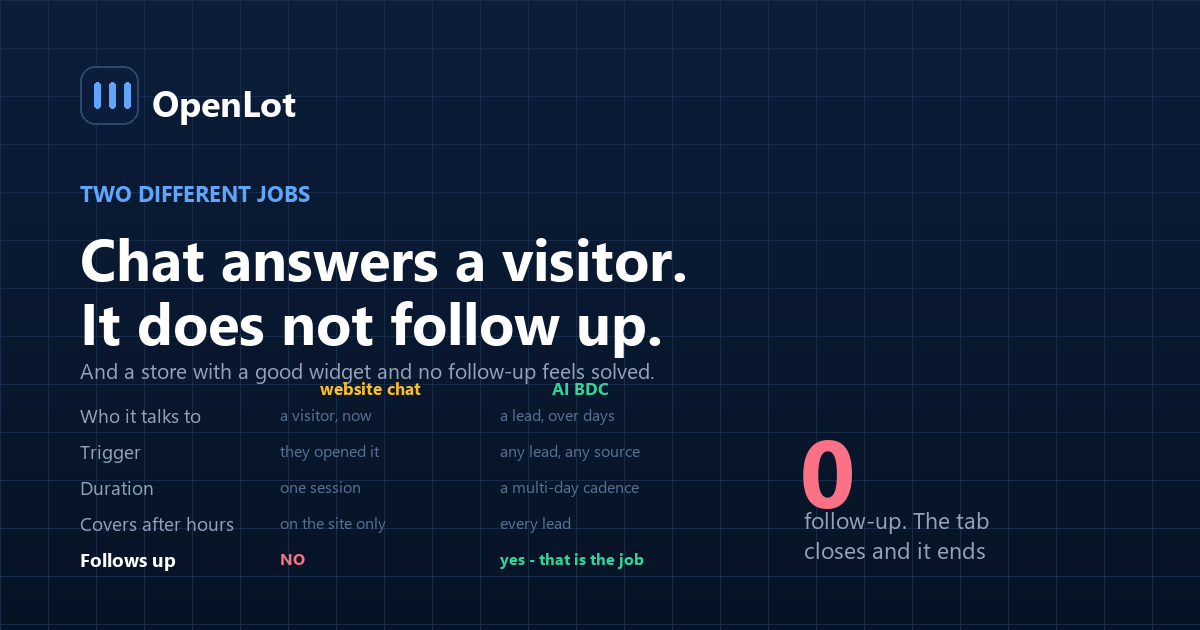
Website chat answers a visitor who is already on your site. That is a narrower job than it sounds, and confusing it with lead follow-up is why stores think they have AI.
Read
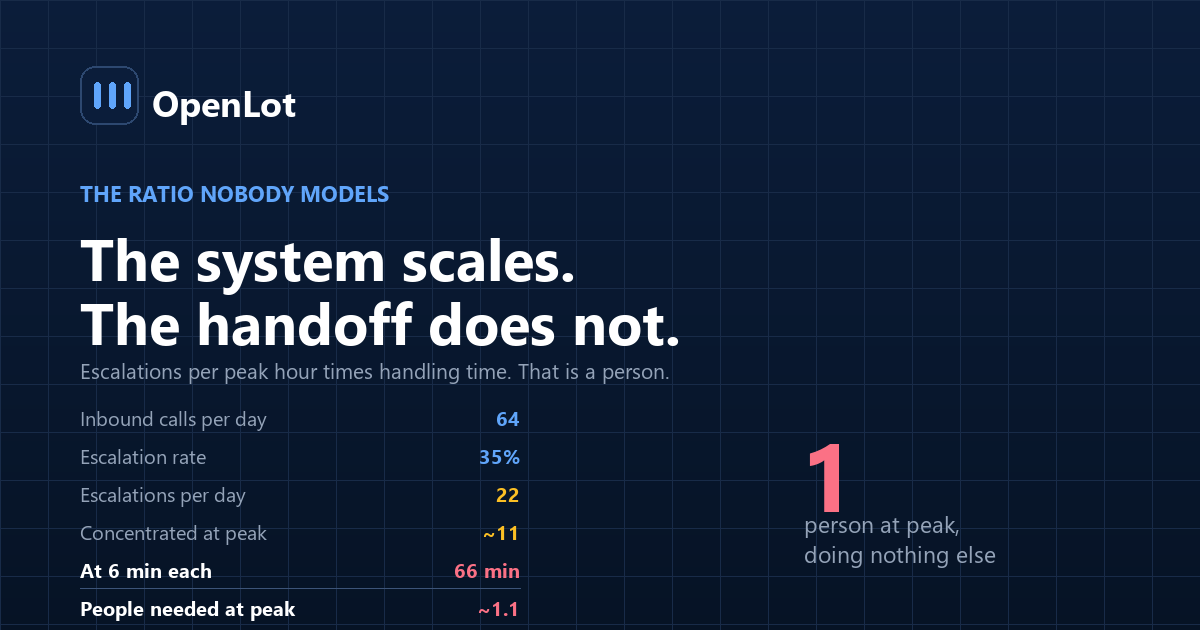
Call centre thinking brings a volume mindset to a business where the valuable calls are few. The ratio that matters is not calls handled, it is escalations staffed.
Read
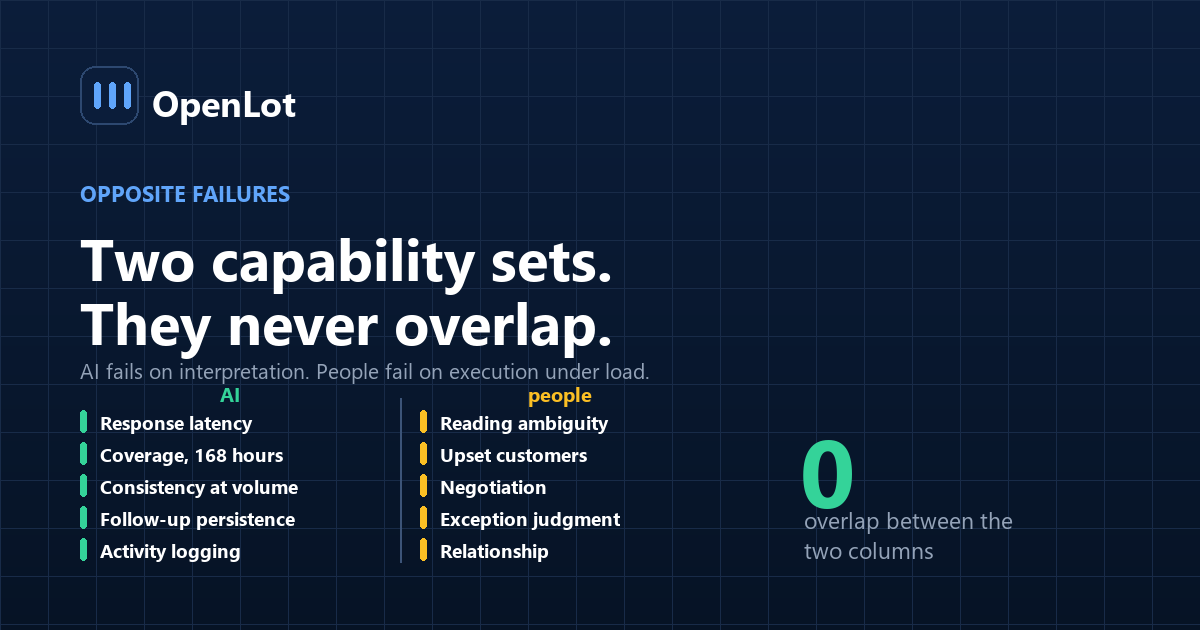
The comparison is not which is better. It is which fails where — and the failures are almost perfectly complementary, which is why the answer is both.
Read
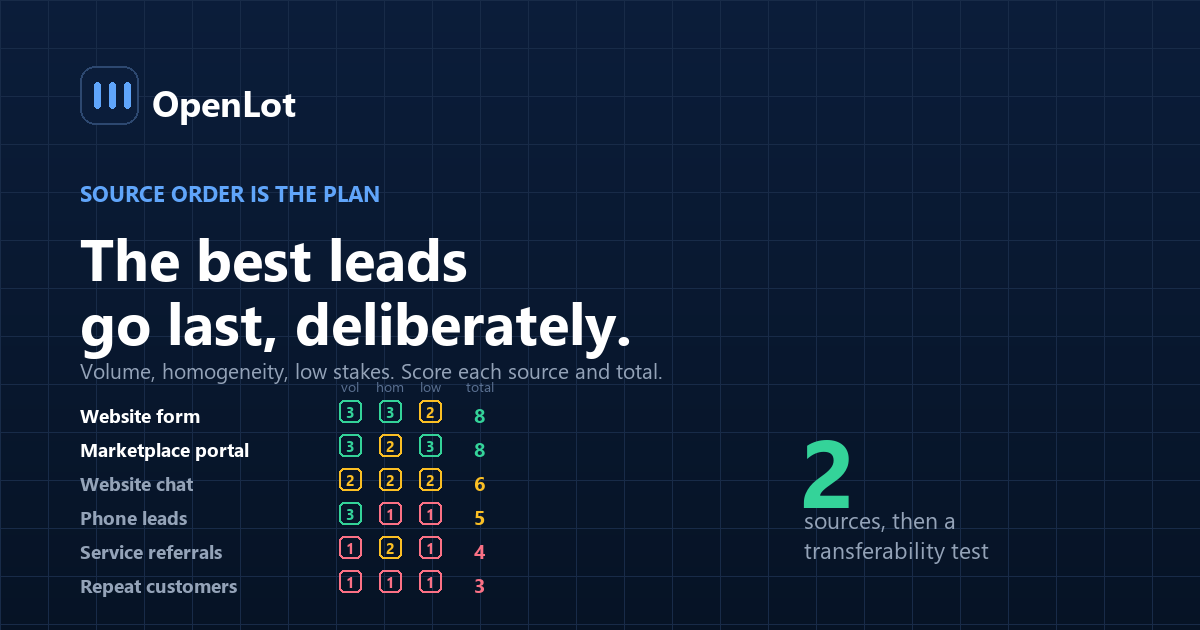
Source order is the whole implementation decision. Start with the wrong one and you cannot tell what the system did, or fix what it got wrong.
Read
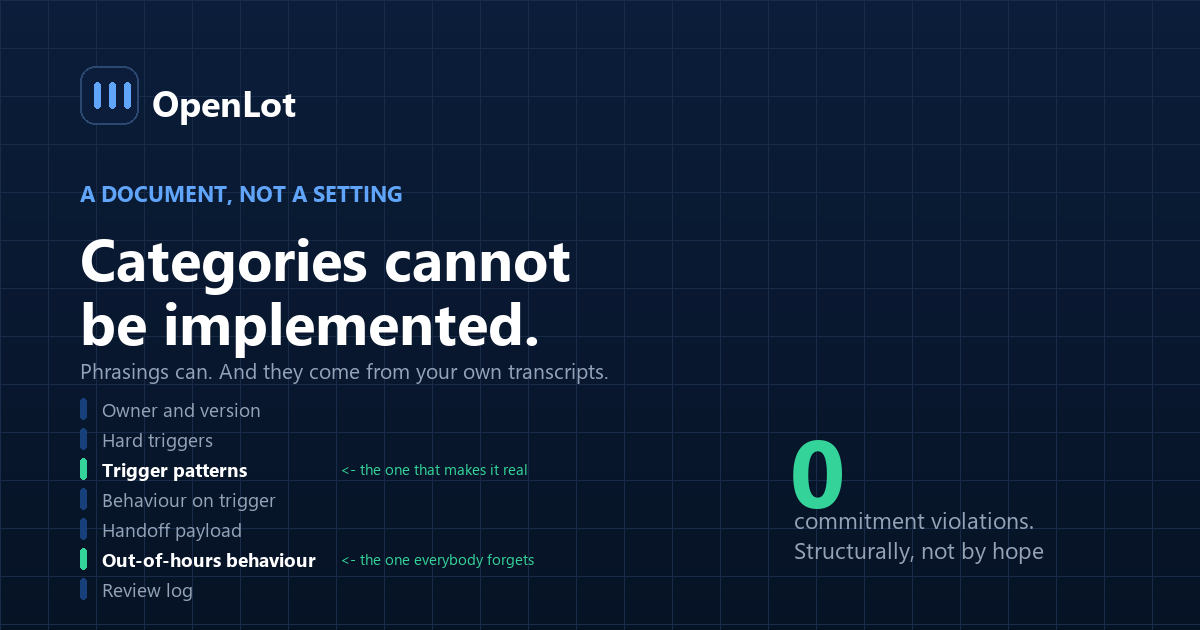
The escalation list is an artifact with an owner, a version and a revision process. Treated as a vendor setting, it is a list of what someone imagined.
Read
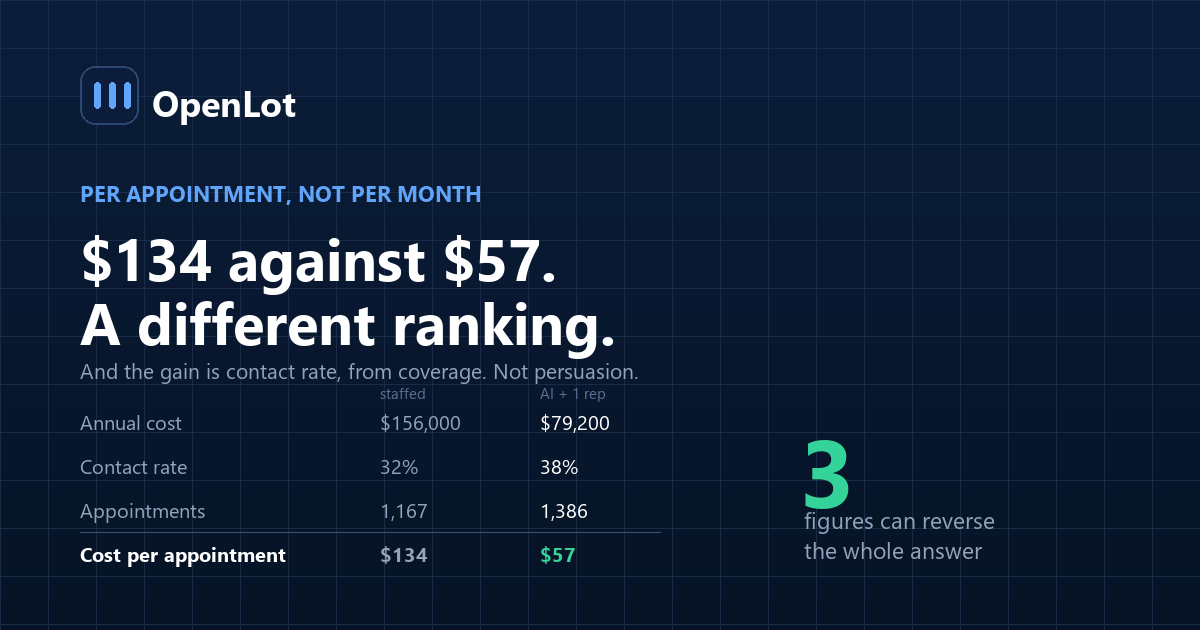
Built properly, both columns include things nobody puts in them. Cost per appointment is the only comparison that survives contact with reality.
Read
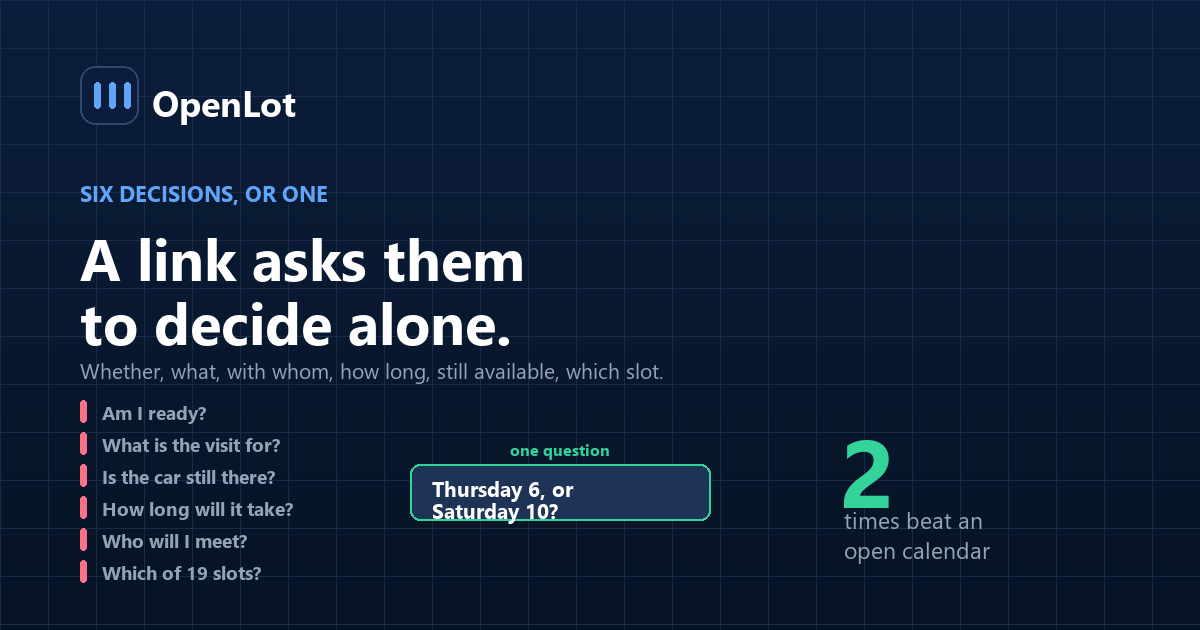
Calendar links work when the buyer knows exactly what the meeting is. A car shopper does not — they know a vehicle interested them and not much else.
Read
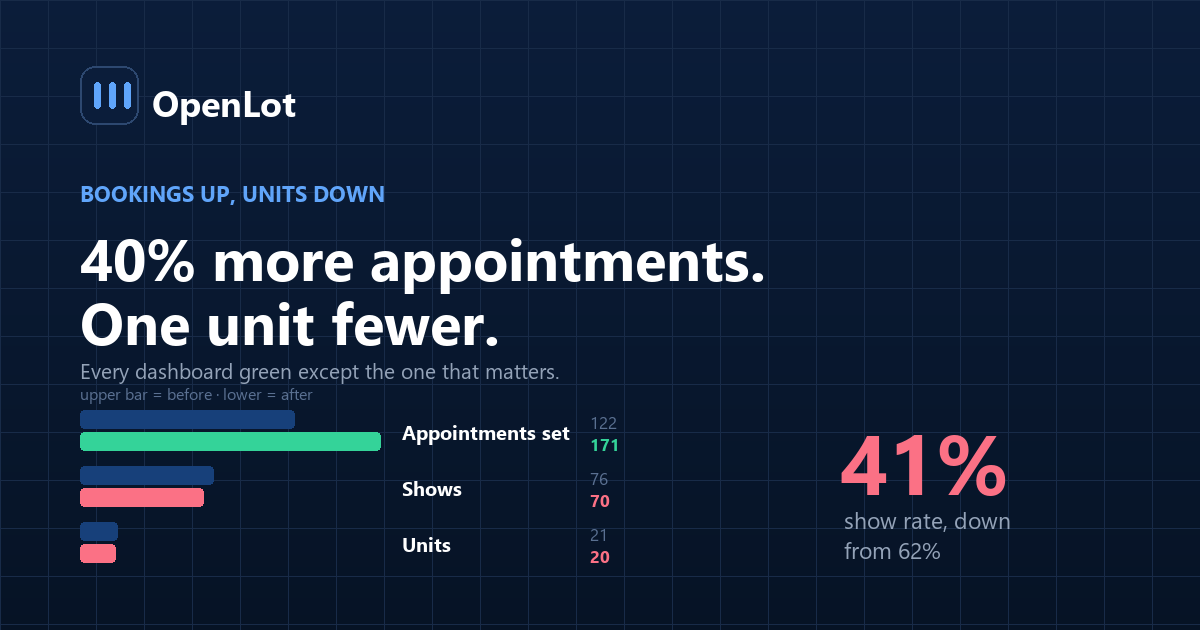
Any system can book more appointments. The question is how many people arrive, and a booking lift with a show-rate drop is a pipeline converted into activity.
Read
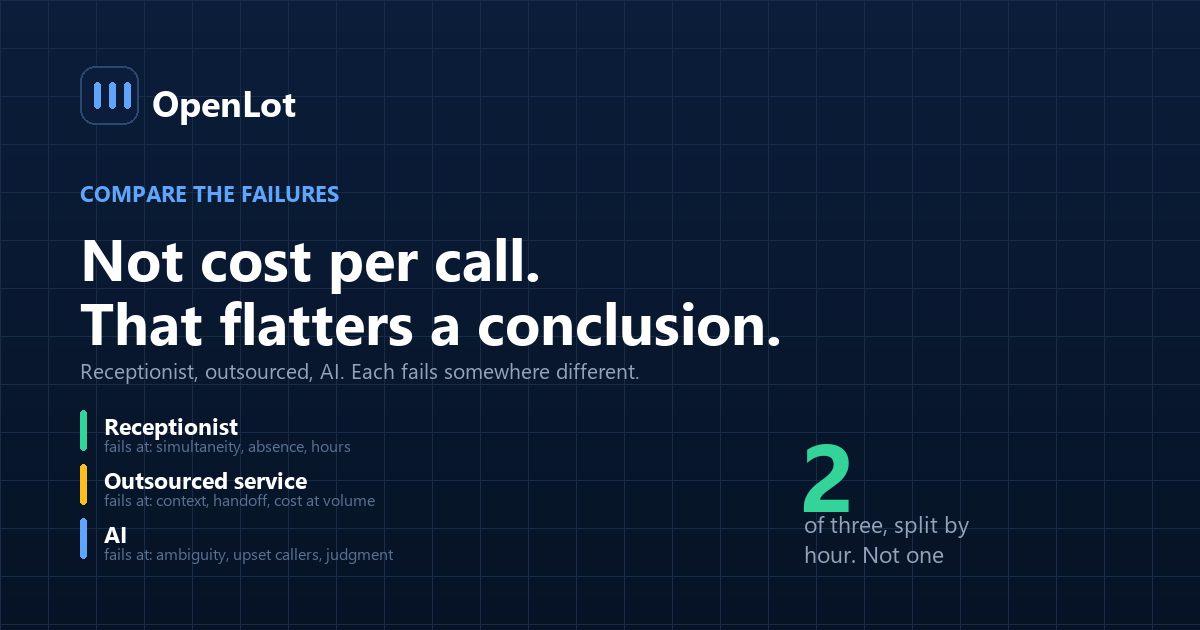
The three options fail in different places, and the failure modes are what should decide it — not the hourly comparison, which flatters whichever one you prefer.
Read
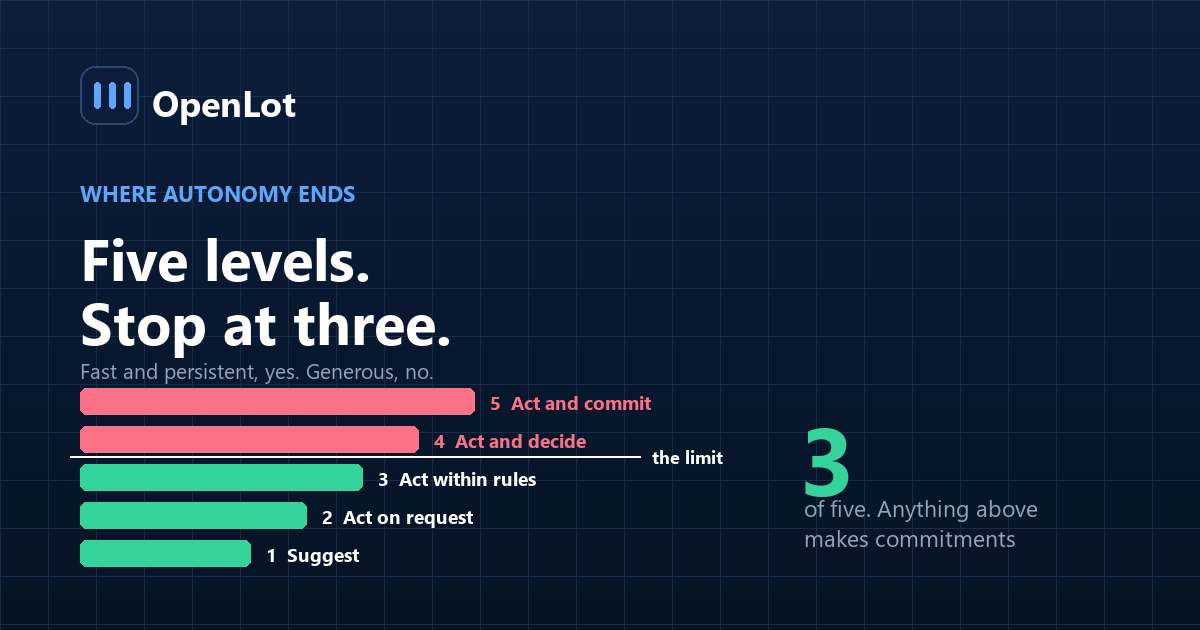
The interesting question is not what an agent can do. It is what it is allowed to do without asking, and that line should be a design decision rather than a model capability.
Read
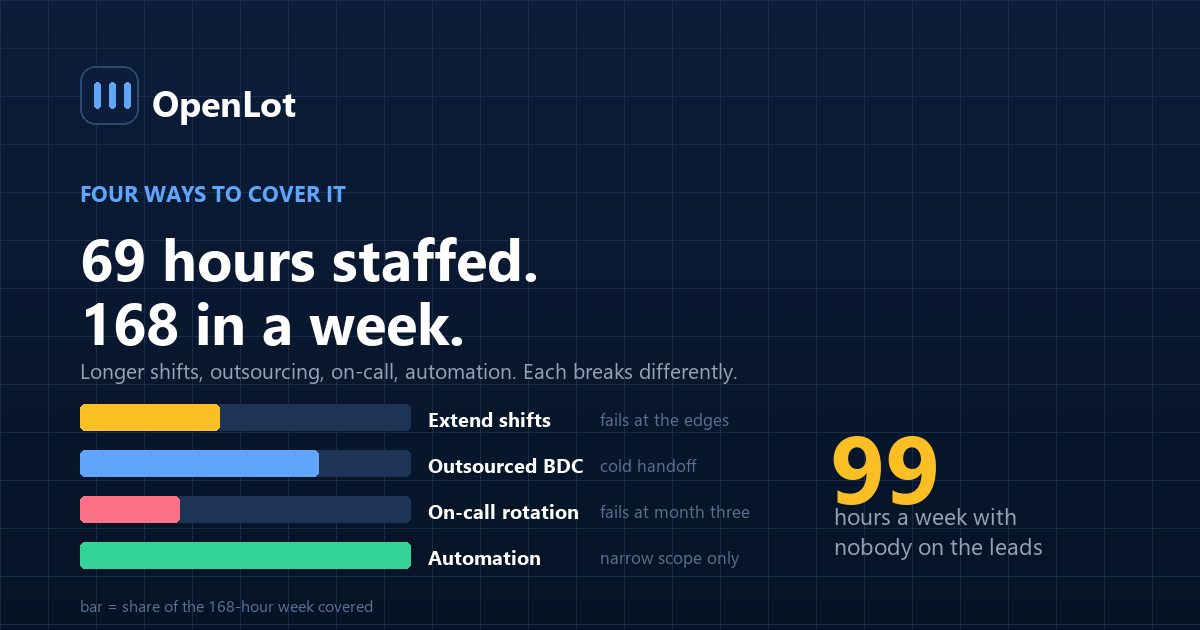
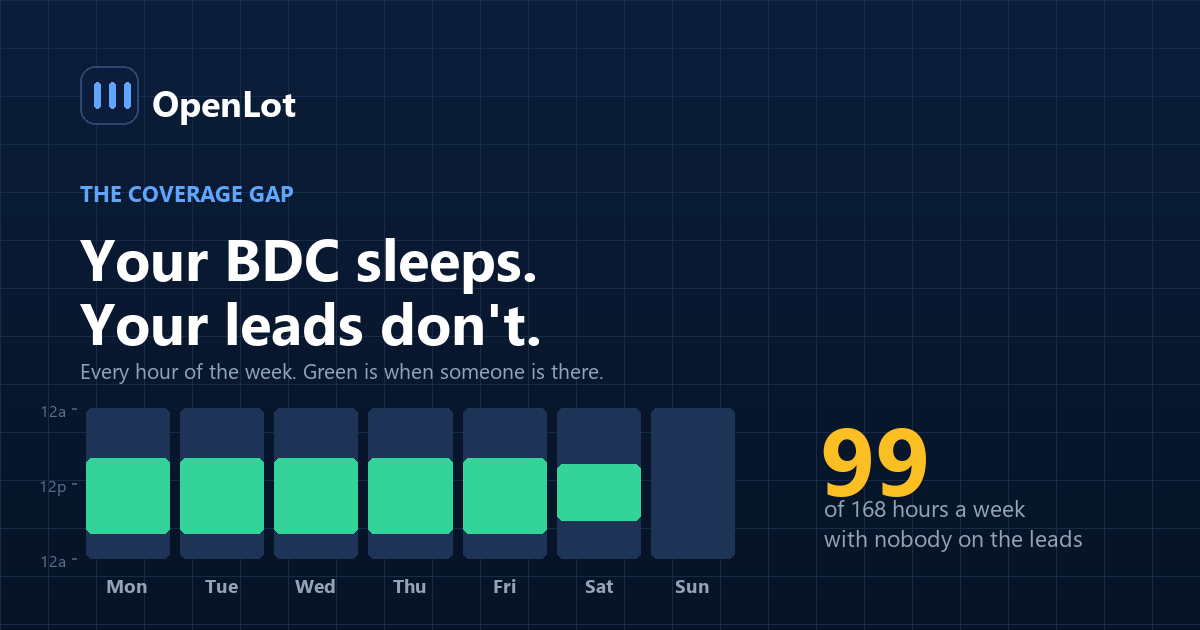
A well-staffed BDC covers 69 of 168 hours. The question is not whether you have a gap — it is which of four ways to cover it your store can actually sustain.
Read
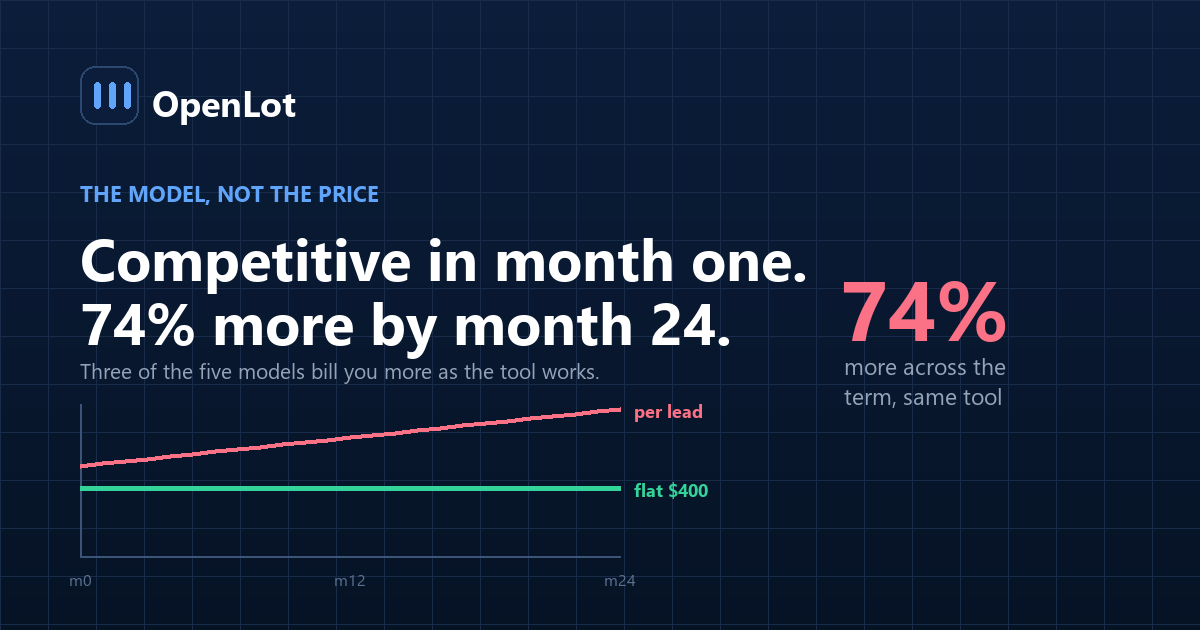
The headline price is the least useful number in the proposal. The pricing model decides what you pay in month eighteen, and one of the five punishes success.
Read
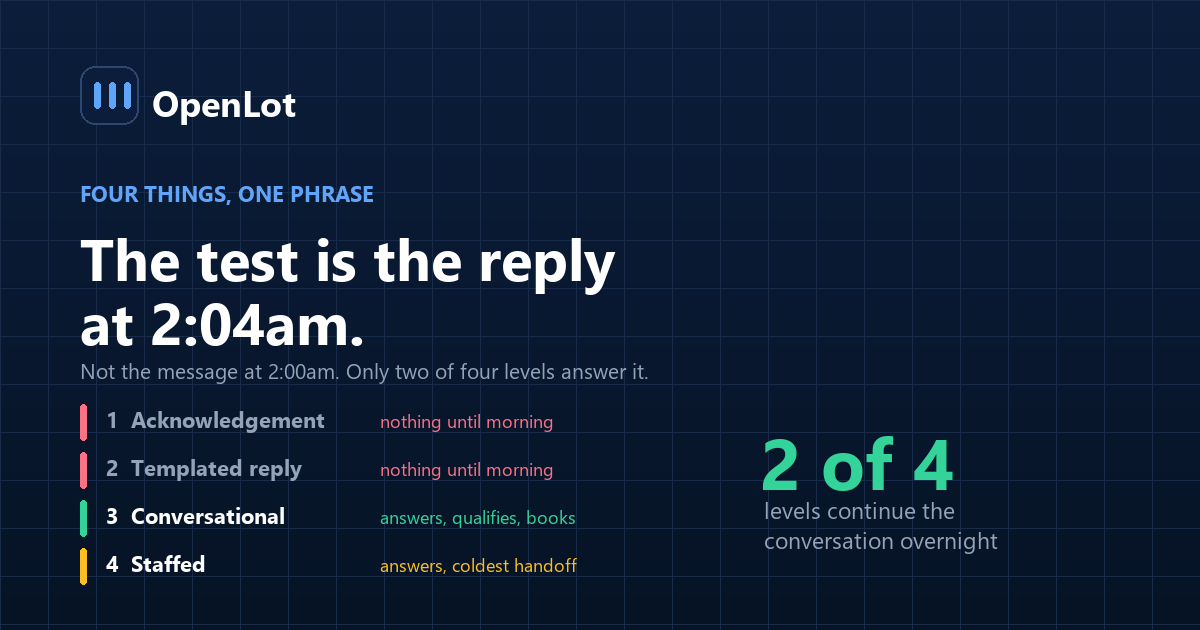
Four different products are sold as 24/7, and they are not equivalent. Six questions separate genuine coverage from an auto-responder with ambitious marketing.
Read
Most dealerships should buy. Custom earns its cost in a narrow set of conditions — and on the usual numbers, the break-even sits further out than anyone selling it will tell you.
Read
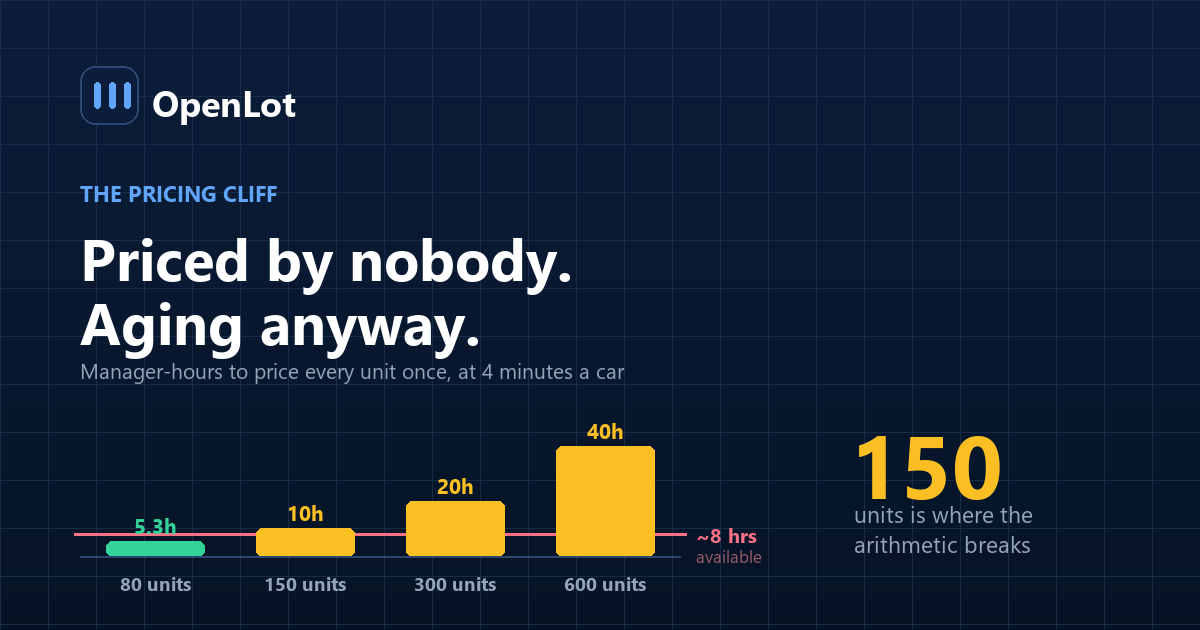
Repricing is not a weekly meeting. At 300 units it is twenty hours of manager time to touch every car once — which is why, in most stores, most cars never get touched.
Read
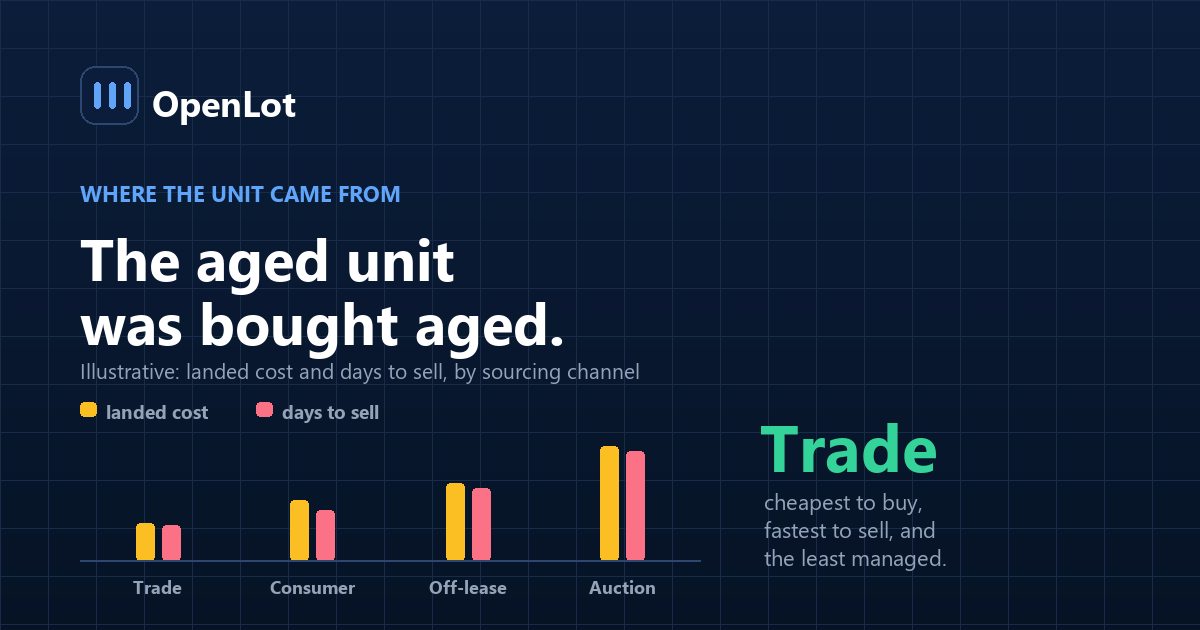
By the time a unit is 70 days old, the decision that put it there was made weeks earlier, at appraisal. Aging is usually an acquisition outcome wearing a pricing costume.
Read
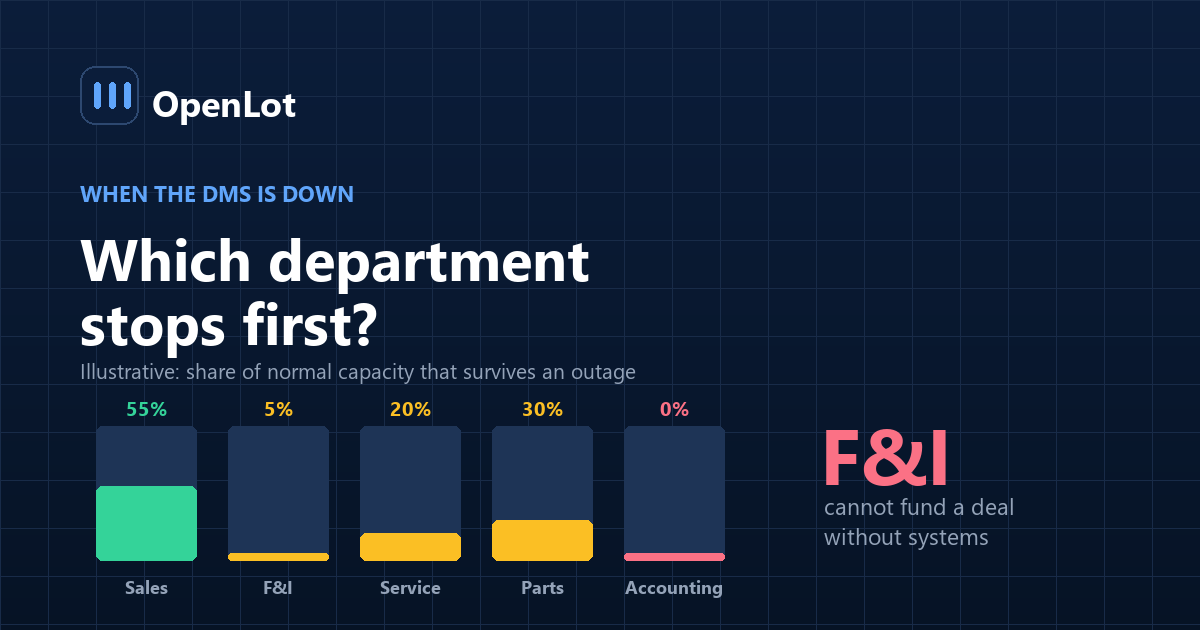
The question is not whether your DMS provider will have an outage. It is which department stops first, and whether anyone has written down what to do when it happens.
Read
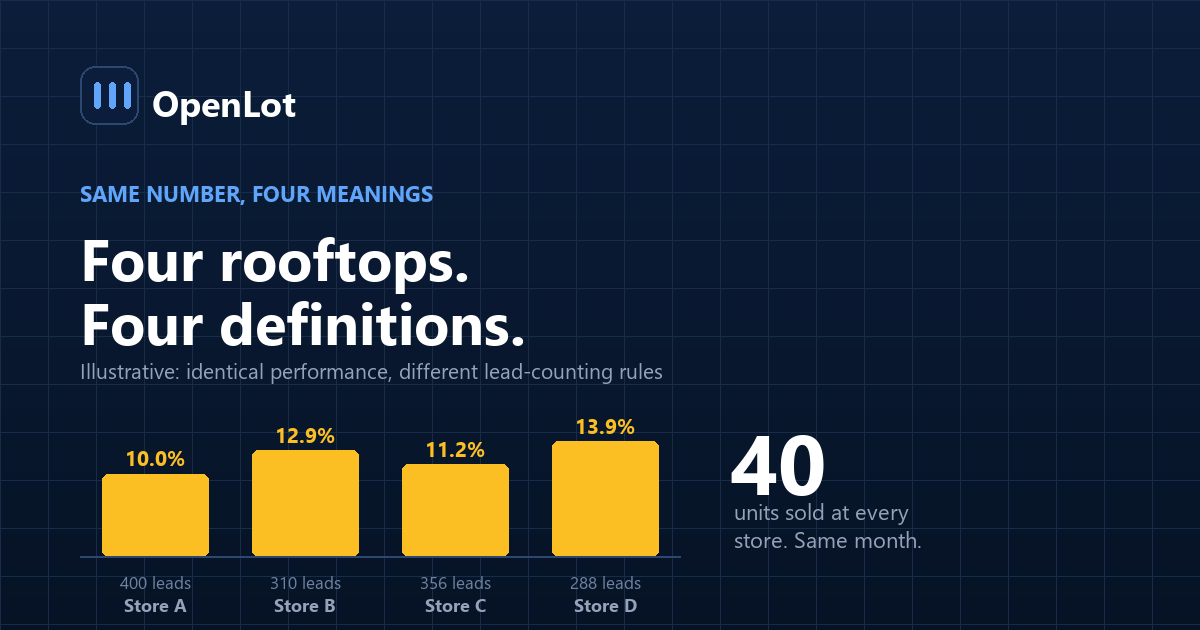
Every group eventually builds the Monday morning spreadsheet. It survives not because nobody tried to replace it, but because the stores underneath it do not agree on what a lead is.
Read
Most stores do not have a staffing problem. They have a coverage problem — roughly 59% of the week has nobody on it. That gap, not headcount, is what AI actually closes.
Read
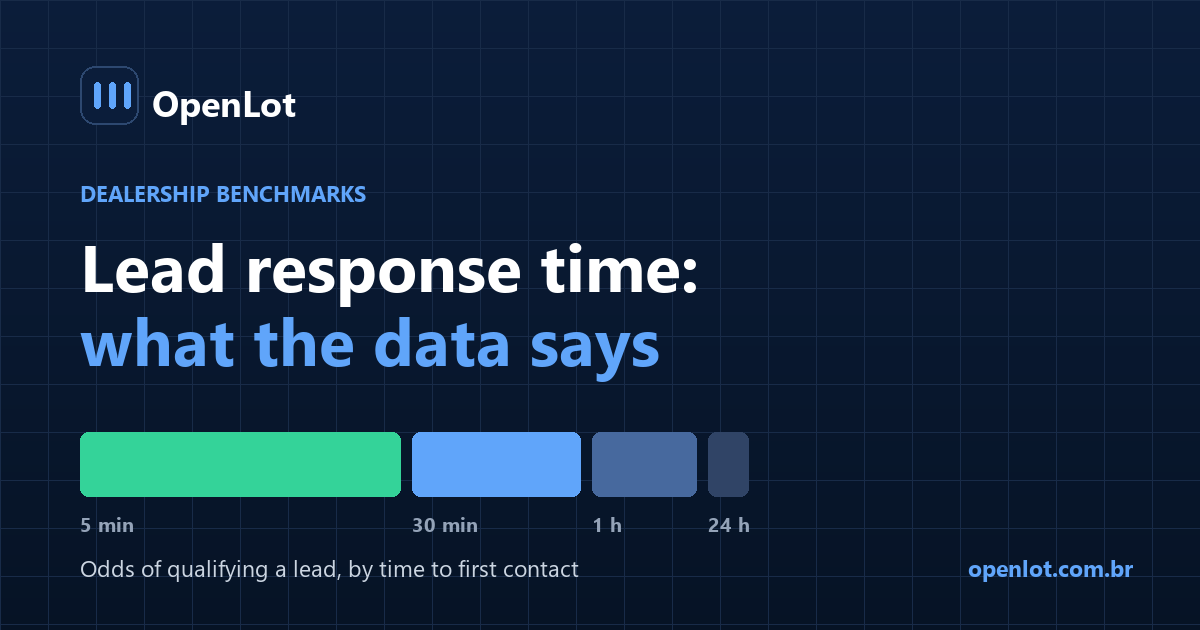
The benchmark is five minutes, and the qualification curve decays steeply past it. Most stores are nowhere near — and their CRM dashboard is telling them otherwise.
Read
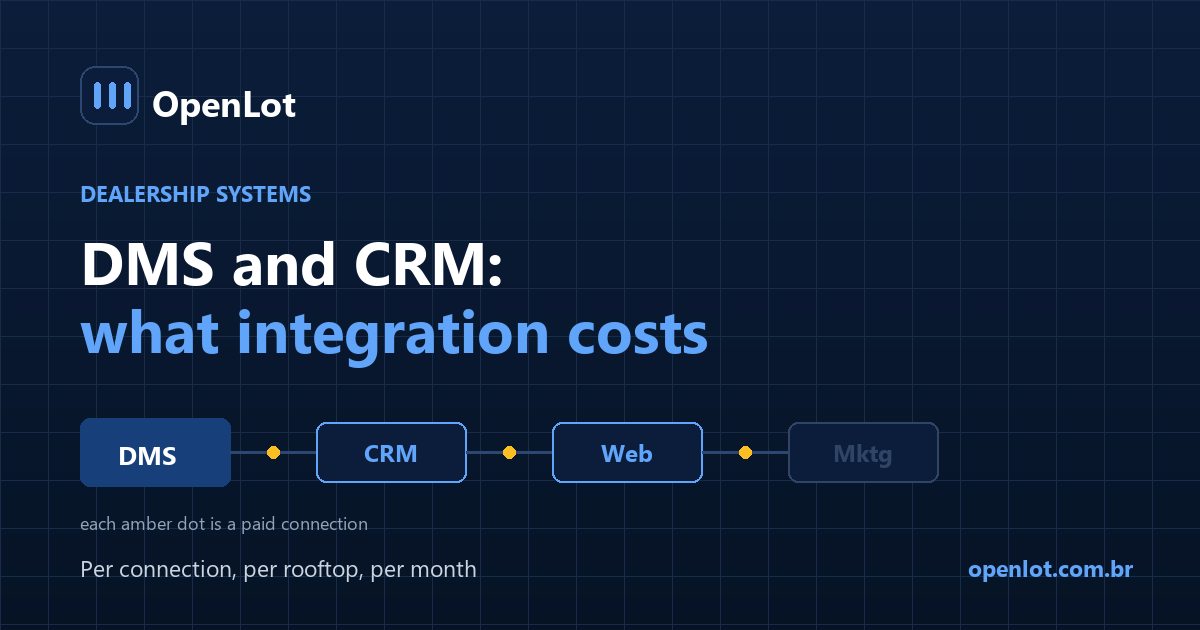
Dealers routinely pay $175–$700 per month, per rooftop, to let one tool talk to their DMS. Here is where that price comes from, what the alternatives are, and what to ask before you sign.
Read
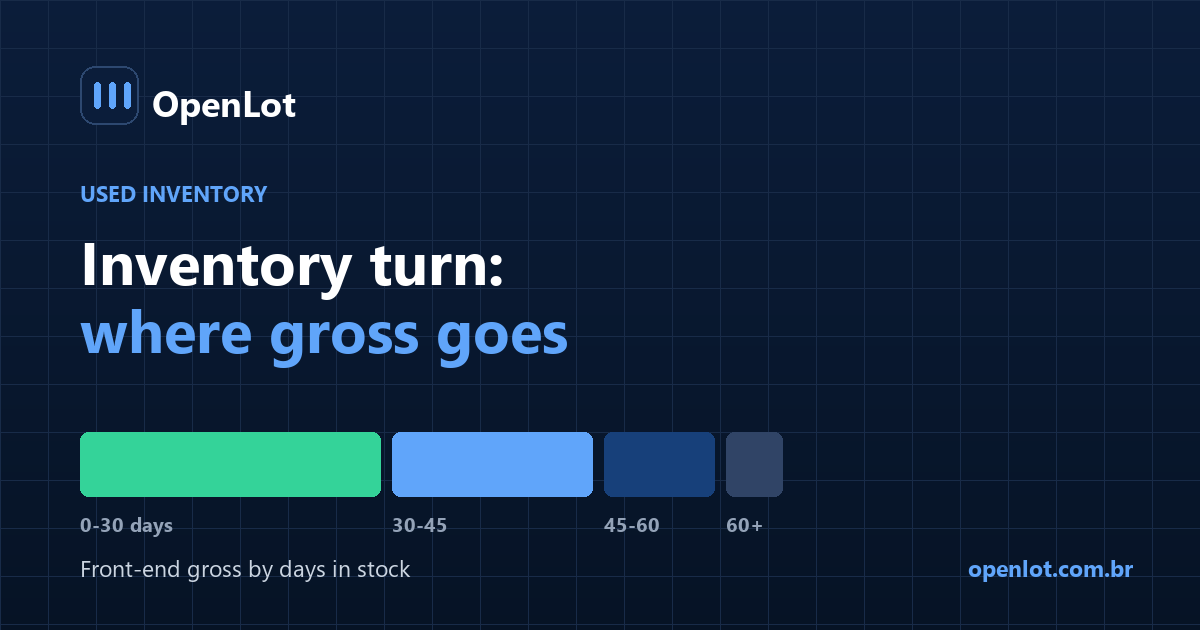
Most used lots turn 8 to 12 times a year. The top quartile turns twice that. The gap is rarely about pricing skill — it is about how fast a unit gets from purchase to front line.
Read
If your store arranges financing or leases vehicles, the FTC treats you as a financial institution. That triggers nine specific requirements — and a 30-day breach reporting clock.
Read
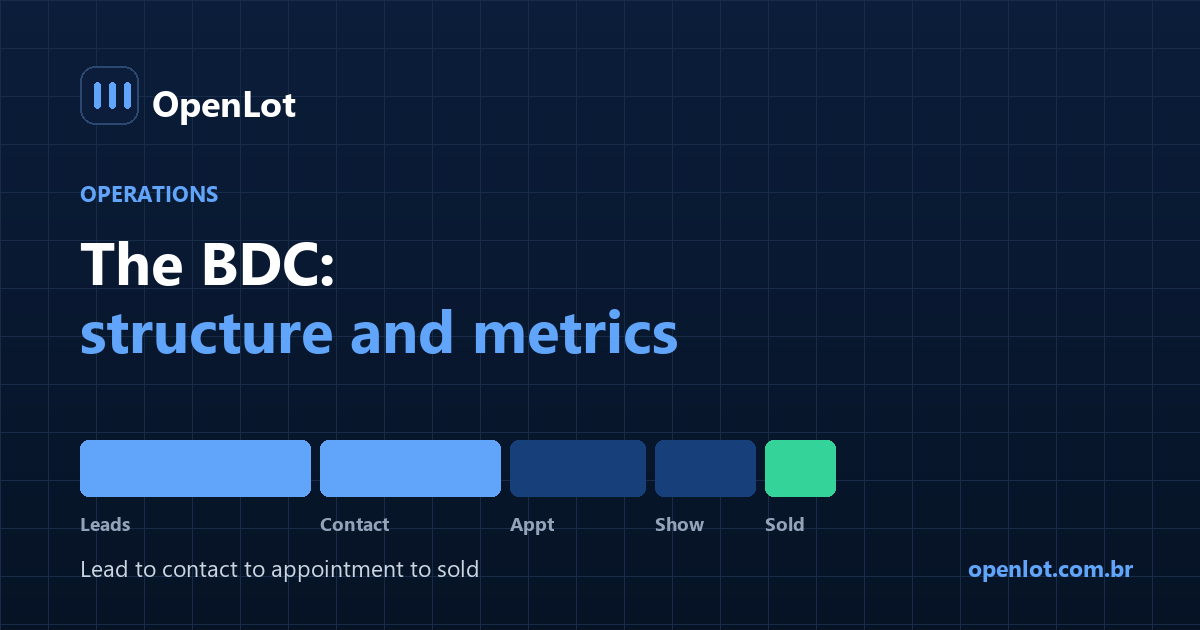
A BDC fails for structural reasons far more often than personnel ones. Here is how to size it, what to measure, and the cases where hiring more agents will not help.
Read
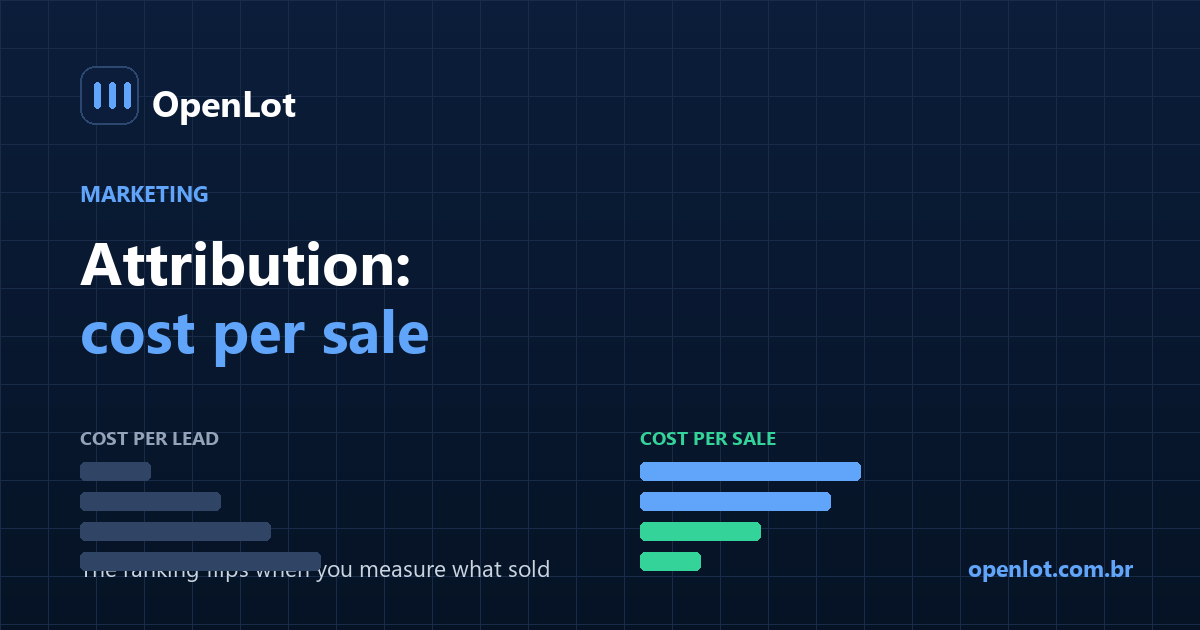
Every vendor claims your sales. Add up the reports and you sold more cars than you did. Here is how to build attribution your CFO can defend.
Read
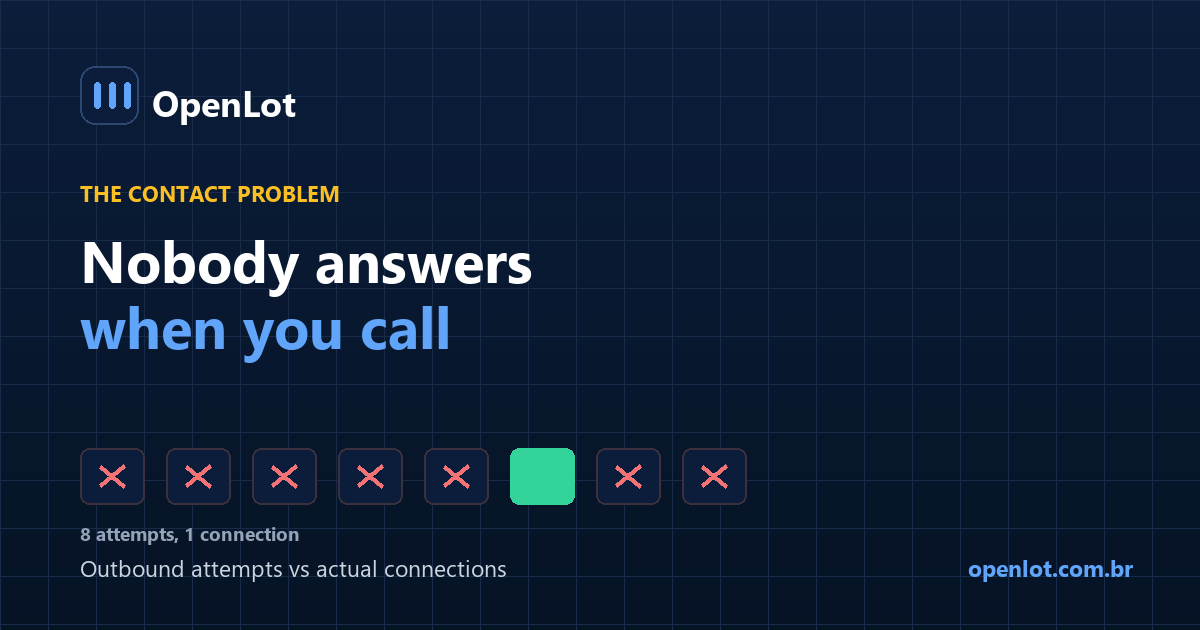
Your team calls six times and reaches nobody. The instinct is to blame lead quality or effort. Usually it is neither — the call is being screened before it rings.
Read
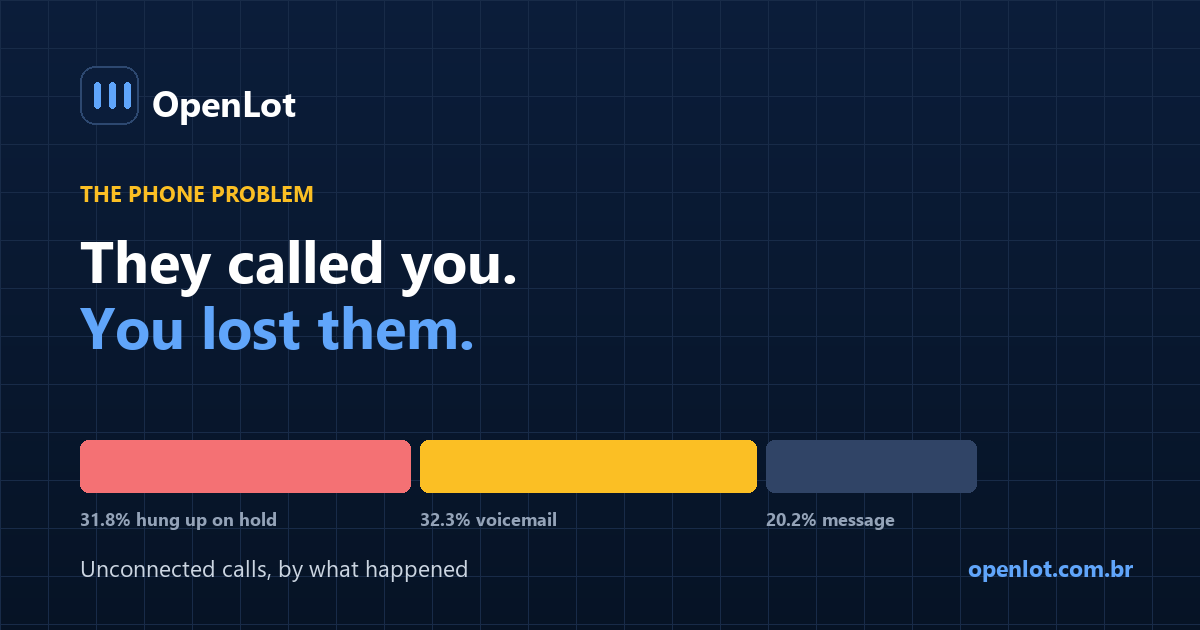
Nearly a third of unconnected dealership calls are customers who hung up while on hold. That customer already found you, already wanted to talk, and you paid to make it happen.
Read
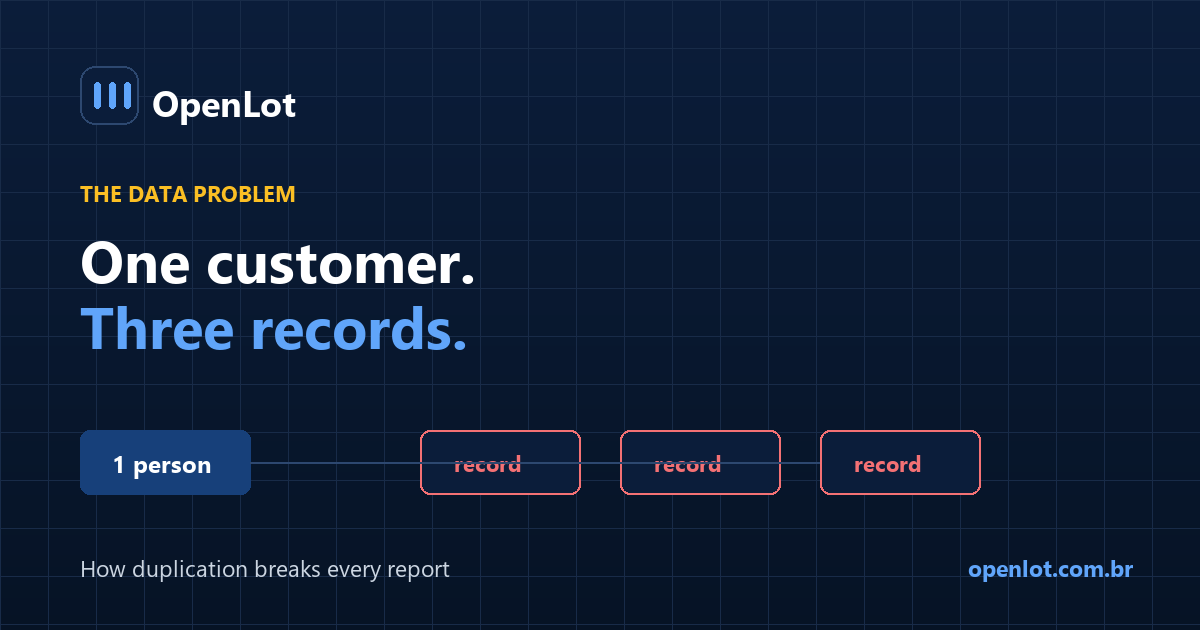
Duplicate customers inflate your lead count and deflate your close rate. Every report built on that data is wrong in the same direction — and it always looks like a performance problem.
Read
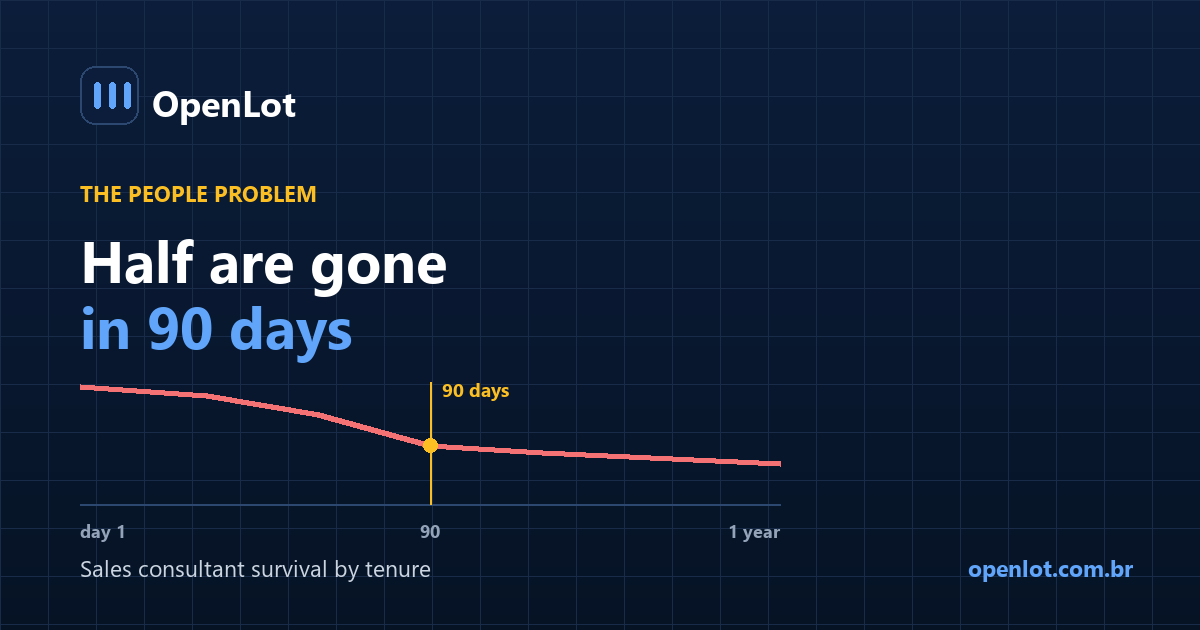
Half of new sales hires leave within 90 days. The exit interview says pay. The pattern says something else — and the stores that fix it rarely fix it with money.
Read
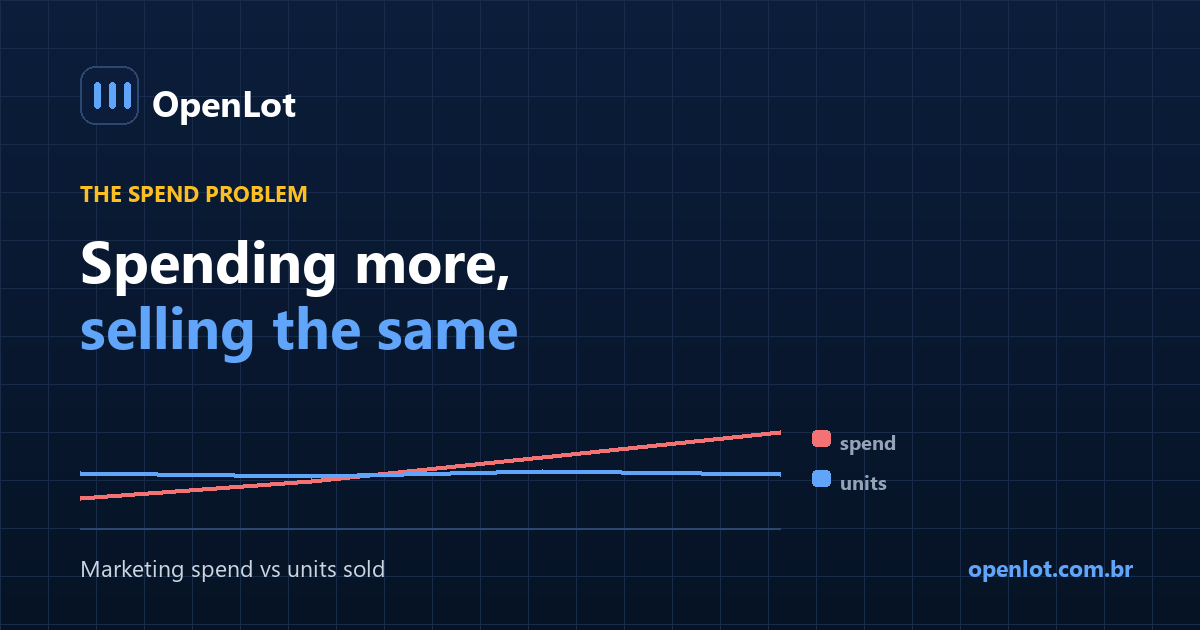
Marketing spend is up 30% and you are selling the same number of cars. Adding budget to a conversion problem is the most expensive mistake in the store.
Read